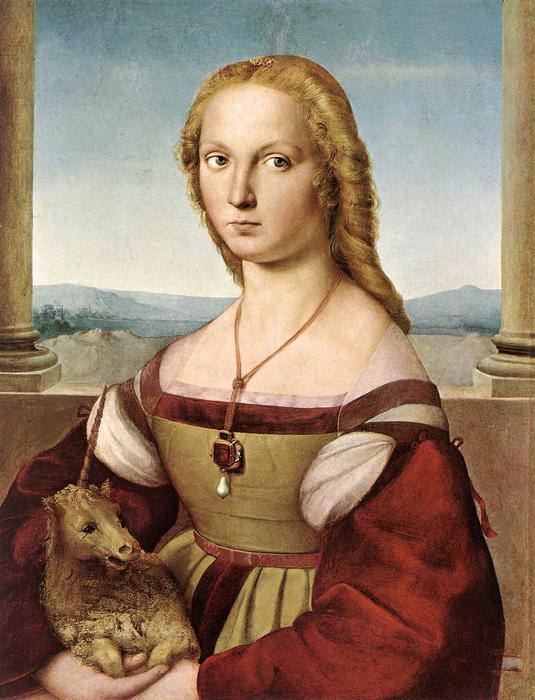
Portrait of a Lady with a Unicorn: A Renaissance Icon
Raphael’s “Portrait of a Lady with a Unicorn,” completed in 1506, stands as one of the most celebrated paintings of the High Renaissance—a testament to artistic mastery and profound symbolic representation. More than just a depiction of a noblewoman, it embodies ideals of beauty, purity, and contemplation that captivated audiences centuries later.
The Painting’s Composition: Harmony and Balance
The artwork presents a woman seated gracefully in a loggia bathed in diffused light—a compositional choice reflecting the humanist principles prevalent during Raphael's time. Her gaze directs towards the viewer with an expression of serene composure, conveying intelligence and inner peace. The unicorn, positioned prominently below her lap, dominates the lower half of the canvas, symbolizing chastity and grace – virtues considered paramount in Renaissance ideals.
Artistic Technique: Oil on Panel—A Legacy of Brilliance
Raphael skillfully employed oil paint on panel, a technique favored by artists throughout Europe during this period. This medium allowed for exceptional color vibrancy and textural detail, capturing the subtle nuances of light and shadow with remarkable precision. The meticulous layering of pigments created an illusionistic depth that draws the eye into the scene—a hallmark of Renaissance painting.
Historical Context: Florentine Splendor and Artistic Patronage
Created in Florence under the patronage of Pope Julius II, “Portrait of a Lady with a Unicorn” reflects the artistic fervor of the era. Raphael’s workshop was at the epicenter of humanist scholarship and artistic innovation—a period marked by an unwavering belief in classical ideals and a desire to elevate art as a vehicle for moral instruction. The painting's commission underscores the importance of artistic patronage in fostering creativity and preserving cultural heritage.
Symbolism: Beyond Beauty—A Reflection of Virtue
The unicorn itself transcends mere visual representation; it embodies spiritual significance – purity, innocence, and divine grace. Its presence alongside the lady symbolizes her moral integrity and reinforces the overarching theme of virtue—a cornerstone of Renaissance thought. The careful arrangement of elements contributes to a harmonious composition that speaks volumes about the values cherished by Raphael’s contemporaries.
Conclusion: An Enduring Masterpiece
"Portrait of a Lady with a Unicorn" continues to inspire admiration for its exquisite beauty and intellectual depth. Its enduring appeal lies in its ability to convey timeless ideals—a testament to Raphael's genius and the legacy of High Renaissance art. For those seeking reproductions of exceptional quality, visit ArtsDot.com for handmade oil paintings reproductions.