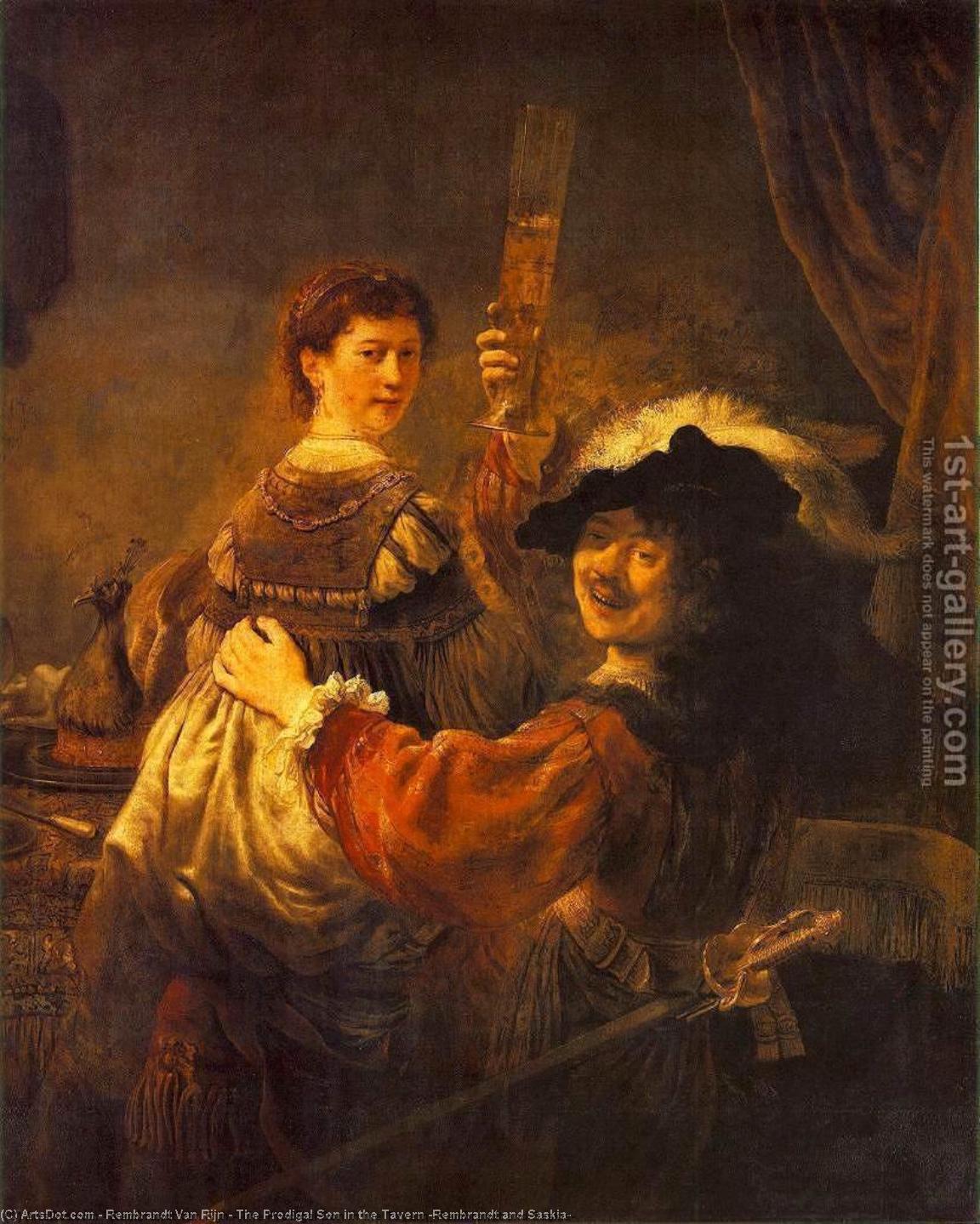
The Prodigal Son in the Tavern (Rembrandt and Saskia)
The painting
The Prodigal Son in the Tavern (Rembrandt and Saskia) by Rembrandt van Rijn stands as a cornerstone of Dutch Baroque art—a masterful exploration of faith, repentance, and familial reconciliation. Executed in 1635-36, this monumental oil on canvas resides within the Gemäldegalerie Alte Meister in Dresden, Germany, attracting scholars and admirers alike. Its enduring appeal stems from Rembrandt’s unparalleled ability to convey profound emotion through meticulously crafted light and shadow—a technique known as chiaroscuro—and his astute observation of human psychology.
Artistic Significance: A Dialogue Between Light and Shadow
Rembrandt's artistic vision transcends mere representation; it delves into the spiritual realm. The painting isn’t simply a depiction of a biblical scene—the parable of the Prodigal Son—but rather an internal reflection on Rembrandt’s own life and marriage to Saskia van Uylenburgh. Critics have noted that the composition mirrors Rembrandt's personal struggles, capturing both his ambition and vulnerability. This duality is powerfully conveyed through Rembrandt’s masterful manipulation of light, which illuminates Saskia’s serene beauty while casting dramatic shadows over Rembrandt himself—a deliberate gesture symbolizing introspection and moral contemplation. The painting embodies the Baroque ideal of conveying emotion and psychological complexity through visual means.
Composition and Figures: Anatomy of Emotion
The scene unfolds within a tavern interior, populated by figures engaged in lively conversation. Rembrandt’s meticulous attention to detail is evident in every aspect of the composition—from the textures of clothing to the subtle expressions on each face. Saskia, positioned on Rembrandt's lap, exudes grace and composure, her gaze directed towards the viewer—a gesture intended to draw us into the narrative. Rembrandt himself holds a measuring tape, symbolizing his artistic precision and intellectual curiosity, while simultaneously conveying a sense of quiet contemplation. The inclusion of additional figures—a man near the center and two more on the right—adds depth to the scene and reinforces the idea that Rembrandt was attempting to capture not just a visual likeness but also the essence of human experience.
Historical Context: The Dutch Golden Age
Rembrandt van Rijn flourished during the Dutch Golden Age (approximately 1635-1672), a period marked by unprecedented artistic creativity and economic prosperity. This era witnessed an explosion of talent across various disciplines—painting, sculpture, literature, and music—fueled by the burgeoning merchant class and the nation’s independence from Spanish rule. Rembrandt's work reflects the intellectual currents of his time, engaging with humanist ideals and exploring themes of morality, faith, and human suffering. He was influenced by artists like Caravaggio and Rubens, adopting their dramatic use of light and shadow to heighten emotional impact—a stylistic hallmark that distinguishes him from many of his contemporaries.
Relevance in Art History: An Icon of Baroque Expression
“The Prodigal Son in the Tavern” remains an undisputed masterpiece of Baroque art, securing its place among Rembrandt’s most celebrated compositions. Its influence extends far beyond the confines of Dresden's Gemäldegalerie Alte Meister; reproductions adorn homes and galleries worldwide. The painting serves as a testament to Rembrandt’s genius—his ability to transform biblical narrative into a profound meditation on human emotion and spiritual truth. For those seeking inspiration or contemplating acquiring a stunning artwork reproduction, “The Prodigal Son in the Tavern” offers an unparalleled opportunity to immerse oneself in the artistic legacy of one of history's greatest painters.
References: