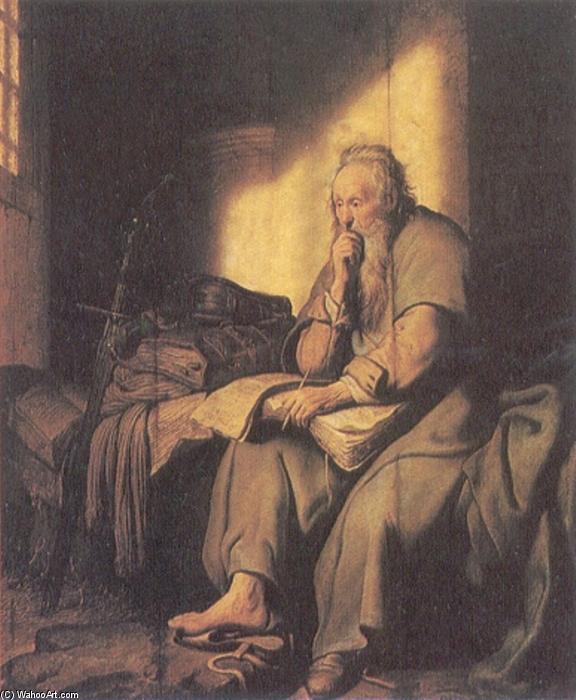
St. Paul in Prison: A Masterpiece of Light and Emotion
Rembrandt van Rijn’s *St. Paul in Prison*, painted in 1627, stands as an enduring testament to the artist's unparalleled ability to convey profound psychological depth through masterful use of chiaroscuro—the dramatic interplay between light and shadow—a technique that cemented Rembrandt’s reputation as one of the foremost painters of his era. More than just a depiction of biblical scripture, this canvas delves into themes of solitude, contemplation, and unwavering faith amidst adversity, resonating powerfully with viewers centuries later.
- Subject Matter: The painting portrays Saint Paul, imprisoned in Rome for his defiance of imperial authority and his advocacy for Christian beliefs. Rembrandt’s choice to depict the apostle in such a vulnerable posture—seated on a bed, hands clasped together, gaze downward—immediately establishes an atmosphere of introspection and spiritual struggle.
- Style: Rembrandt's style is characterized by its realism combined with expressive brushwork. Unlike many artists of his time who prioritized idealized representations, Rembrandt captured the textures and nuances of human flesh with remarkable accuracy, reflecting a humanist sensibility that was gaining prominence in Dutch art during the Baroque period.
- Technique: The painting’s brilliance lies primarily in its masterful application of chiaroscuro. Rembrandt skillfully utilizes a single window source of light to illuminate Paul's face and upper torso, casting deep shadows across his body and creating an illusion of three-dimensionality that draws the viewer’s eye inward. This technique wasn’t merely decorative; it served as a vehicle for conveying emotional intensity—the apostle’s inner turmoil is palpable in the darkness surrounding him.
Historical Context: The Religious Landscape of Holland
Painted during the Dutch Golden Age, *St. Paul in Prison* reflects the fervent religious convictions prevalent throughout Holland at the time. The Protestant Reformation had irrevocably altered the spiritual landscape of the nation, fostering a climate of intellectual debate and artistic exploration centered on biblical themes. Rembrandt’s depiction aligns perfectly with this cultural milieu, capturing the spirit of resilience and moral fortitude demanded by faith in challenging circumstances—a sentiment that mirrored the experiences of many Dutch citizens facing persecution from Catholic rulers.
Symbolism: Light and Darkness as Representations of Spiritual Struggle
The symbolism embedded within *St. Paul in Prison* is rich and multilayered. The light emanating from the window symbolizes divine illumination, representing hope and spiritual guidance amidst darkness—the apostle’s isolation underscores the difficulty of maintaining faith when confronted with opposition and hardship. Furthermore, the book held by Paul's hand signifies knowledge and scripture, serving as a reminder of God’s word as a source of strength and inspiration. Rembrandt’s careful composition reinforces these symbolic meanings, elevating the painting beyond mere visual representation into a profound meditation on human spirituality.
Legacy: An Icon of Artistic Genius
Today, *St. Paul in Prison* resides at the Staatsgalerie Stuttgart (Germany), offering visitors an unparalleled opportunity to experience Rembrandt’s artistic genius firsthand. Its enduring appeal stems from its ability to transcend time and culture—a testament to Rembrandt's mastery of technique and his profound understanding of human emotion. Reproductions from ArtsDot.com allow art enthusiasts worldwide to appreciate this masterpiece, ensuring that Rembrandt’s legacy continues to inspire awe and contemplation for generations to come.