Les Liaisons Dangereuses: A Mirror Image of Desire and Illusion
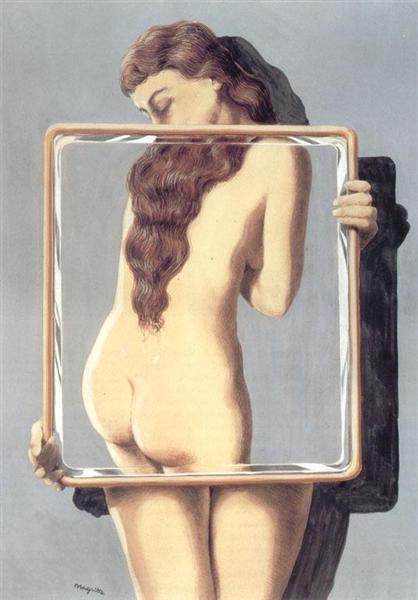
René Magritte’s “Les Liaisons Dangereuses” (1935) isn't merely a depiction of a woman gazing into a mirror; it’s an invitation to contemplate the very nature of perception and representation—themes central to Surrealist thought. Painted during Magritte’s formative years, this enigmatic artwork embodies his fascination with unsettling juxtapositions and challenges viewers to question what they see as real. The painting's influence extends beyond its aesthetic beauty, resonating with philosophical inquiries into identity and the subconscious mind.
- Subject Matter: The central figure—a woman—stands before a mirror reflecting her own image. This seemingly simple composition is rife with symbolic significance.
- Style & Technique: Magritte employed meticulous oil painting techniques, characterized by smooth gradations and subtle tonal variations that contribute to the artwork’s ethereal quality. His deliberate use of perspective creates an illusionistic space where the mirror faithfully reproduces reality—yet simultaneously obscures it.
- Historical Context: “Les Liaisons Dangereuses” draws inspiration from Pierre Choderlos de Laclos’ scandalous novel, exploring themes of manipulation, desire, and moral ambiguity within aristocratic society. Magritte's artistic response aligns with Surrealism's rejection of rational thought and embrace of dreamlike imagery.
- Symbolism: The mirror serves as a powerful symbol—representing duality, reflection, and the elusive nature of truth. It suggests that appearances can deceive us and that what we perceive is often not what actually exists beneath the surface. The woman’s gaze into the mirror embodies introspection and an awareness of self-representation.
- Emotional Impact: Magritte's artwork evokes a sense of unease and contemplation, prompting viewers to consider their own relationship with reality and illusion. It lingers in the mind long after viewing, inviting repeated observation and stimulating intellectual debate about its underlying meanings.
Magritte’s Surrealist Vision: Challenging Reality Through Illusion
René Magritte's artistic trajectory began with an early exposure to Impressionism, but he swiftly moved beyond conventional representation—a hallmark of his distinctive Surrealist style. Influenced by thinkers like Sigmund Freud and Carl Jung, Magritte sought to tap into the realm of dreams and unconscious desires, mirroring Laclos’ novel’s exploration of hidden motivations and psychological complexities. He deliberately disrupts visual expectations, creating images that unsettle viewers and provoke questions about perception—a technique that would become synonymous with Surrealist art.
The Mirror as Metaphor: Exploring Identity and Representation
“Les Liaisons Dangereuses”’s central motif—the mirror—extends beyond its literal depiction to serve as a metaphor for identity and the complexities of self-perception. Magritte skillfully utilizes perspective to heighten this effect, presenting the woman's reflection as an idealized version of herself—a projection of her desires and fantasies. This visual paradox underscores Surrealism’s preoccupation with exploring hidden psychological dimensions and questioning the stability of conscious thought.
Legacy & Influence: Beyond the Canvas
Magritte’s influence transcends the boundaries of painting, impacting subsequent artistic movements like Pop Art and Conceptual Art. His masterful manipulation of imagery—creating unsettling juxtapositions that defy logic—continues to inspire artists today who strive to challenge conventional notions of reality and representation. “Les Liaisons Dangereuses” remains a testament to Magritte’s enduring vision—a captivating exploration of illusion, desire, and the profound mysteries of human consciousness.