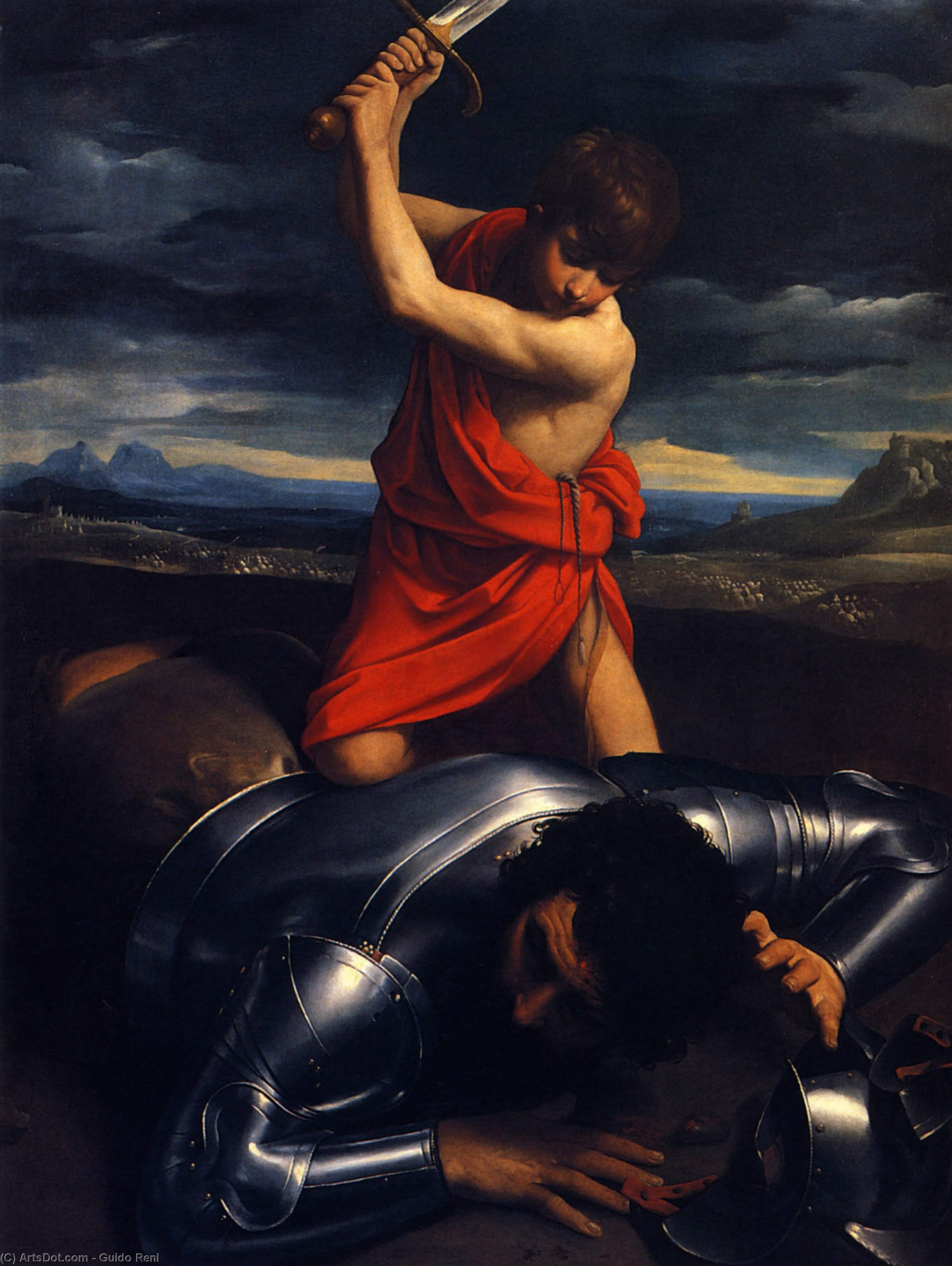
The painting
David and Goliath by
Guido Reni is a stunning example of Baroque art, characterized by its dramatic lighting and intense emotions. Created in 1610, this oil on canvas piece measures 174 x 132 cm and is a testament to
Guido Reni's mastery of capturing dynamic movement and energy.
The Scene
The painting depicts a scene from the biblical story of
David and Goliath, where the young David defeats the giant Goliath with a stone and a sling. The composition is dramatic, with Goliath lying on the ground and David standing over him, holding a sword above his head. The background features a mountain, adding depth and context to the image.
Baroque art is known for its use of dramatic lighting and intense emotions, and
Guido Reni's painting is no exception. The use of chiaroscuro, a technique that uses strong contrasts between light and dark, creates a sense of tension and drama in the scene. This style is reminiscent of other famous Baroque artists, such as Caravaggio, who also used dramatic lighting to create emotionally charged scenes.
- Other notable examples of Baroque art can be found at the Pinacoteca di Brera in Milan, Italy, which houses works by artists such as Caravaggio and Peter Paul Rubens.
- For more information on Baroque art and artists, visit /art/list/?Filter=8XY5ZB-Reni-Guido-(Le-Guide)-David-and-Goliath or https://en.wikipedia.org/wiki/Gian_Lorenzo_Bernini.
Conclusion
The painting
David and Goliath by
Guido Reni is a masterpiece of Baroque art, showcasing the artist's skill in capturing dynamic movement and intense emotions. With its dramatic lighting and composition, this painting is a must-see for anyone interested in Baroque art. To see more works like this, visit https://ArtsDot.com, which offers handmade oil painting reproductions of famous artworks, including those by
Guido Reni and other Baroque masters.
For a deeper understanding of the Baroque style, it's worth exploring the works of other notable artists, such as
Gian Lorenzo Bernini, who was a leading sculptor and architect of the time. His work can be found on Wikipedia at https://en.wikipedia.org/wiki/Gian_Lorenzo_Bernini.