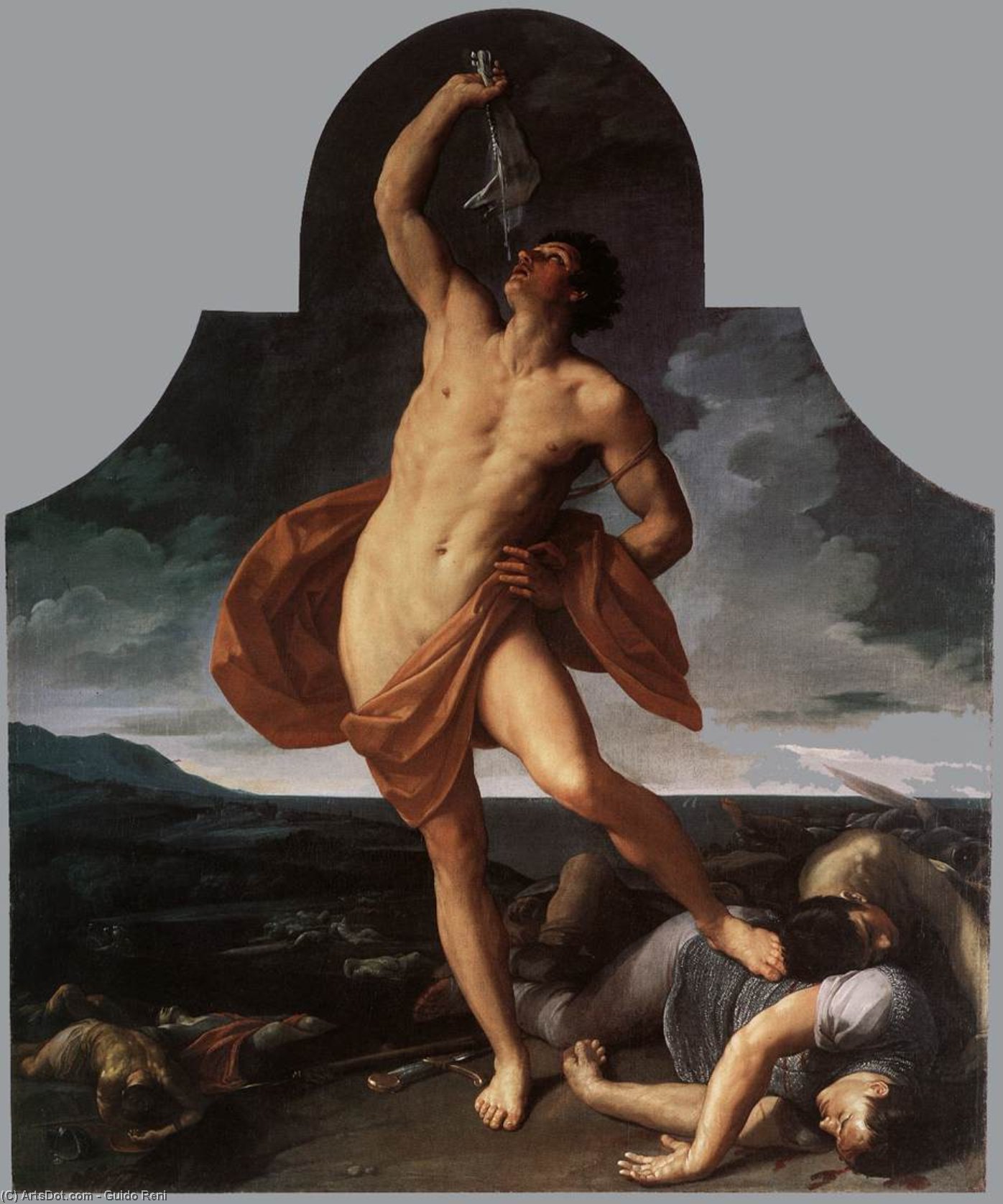
Guido Reni’s monumental ‘The Triumph of Samson,’ executed in 1611, showcases breathtaking classical elegance and dramatic storytelling—a masterful depiction of biblical heroism bathed in rich hues against a backdrop of Roman Baroque.
The Triumph of Samson
- Artist: Guido Reni (Le Guide)
- Born Year: 1575
- Death Year: 1642
- Birth City: Bologna
- Birth Country: Italy
Guido Reni’s “The Triumph of Samson” stands as a testament to the burgeoning Baroque aesthetic in Rome during its golden age. Painted in 1611, this monumental canvas captures a dramatic biblical narrative—the subjugation of Philistines by the Israelite hero Samson—with breathtaking precision and emotional resonance.
Subject Matter and Narrative Composition
The painting depicts Samson triumphantly wielding his sword over the fallen body of Delilah, symbolizing victory over adversity and divine retribution. The scene unfolds with meticulous detail: Samson dominates a group of figures representing Philistines, some lying motionless on the ground, highlighting the devastating consequences of disobedience. Careful positioning emphasizes Samson’s central role as savior and reinforces the overarching theme of triumph.
Style and Technique – Baroque Elegance
Reni's masterful technique exemplifies the hallmarks of Baroque art—a commitment to illusionistic realism combined with dynamic movement and expressive emotion. Employing oil paint on canvas, he achieved remarkable tonal gradation and sculptural modeling, creating a palpable sense of depth and volume. The artist skillfully utilized chiaroscuro – dramatic contrasts between light and dark – to sculptively define forms and heighten the emotional impact of the scene.
Historical Context: Rome’s Artistic Renaissance
“The Triumph of Samson” emerged during a period of intense artistic innovation in Rome, fueled by papal patronage and influenced by humanist ideals. Reni was part of the Carracci family workshop, which championed classical principles alongside Baroque dynamism. This synthesis reflects the broader cultural landscape of the time—a desire to recapture the grandeur of antiquity while embracing new expressive possibilities.
Symbolism: Virtue and Divine Justice
Beyond its narrative depiction, “The Triumph of Samson” is laden with symbolic significance. Samson’s sword represents strength and righteousness, embodying God's justice against wickedness. The fallen Philistines symbolize the vanquished enemies of faith, while Delilah’s lifeless body underscores the consequences of betrayal. Reni’s deliberate use of symbolism elevates the artwork beyond mere storytelling, inviting contemplation on moral themes.
Emotional Impact and Artistic Legacy
The painting's emotive power derives from its masterful portrayal of human drama—the hero’s triumph juxtaposed with the victim’s demise. Reni’s ability to convey profound emotion through visual means solidified his reputation as one of Rome’s foremost Baroque painters. Today, reproductions of “The Triumph of Samson” continue to inspire admiration for its artistic excellence and offer a glimpse into the spirit of an era defined by grandeur and spiritual fervor.