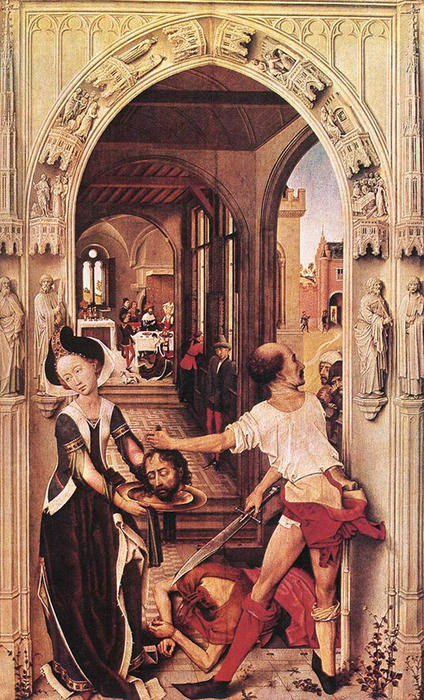
St John Altarpiece - Right Panel: A Dramatic Confrontation of Faith and Mortality
The right panel of Rogier van der Weyden’s monumental St John Altarpiece, housed in the Gemäldegalerie Berlin, presents a visceral depiction of Saint John the Baptist's gruesome execution at the behest of King Herod. More than just a chronicle of violence, this scene embodies profound theological concerns regarding divine justice and human folly—themes central to Early Netherlandish art’s exploration of morality.
- Composition & Setting: The panel unfolds within a meticulously rendered interior space resembling a banquet hall, dominated by arched doorways and illuminated by diffused light. This architectural framing reinforces the solemnity of the event, emphasizing the theatrical presentation of Herod's cruelty against God’s servant.
- Figures & Expression: At the forefront stands Salome, dressed in opulent attire reminiscent of French royal fashion—a deliberate allusion to the grandeur and decadence of Herod’s court. Her gaze is averted from John’s corpse, conveying a palpable sorrow mingled with complicity. Beside her kneels a mourner, mirroring the Virgin Mary's posture in the Annunciation scene, highlighting a symbolic connection between humility and grief.
- Technical Brilliance: Van der Weyden’s masterful technique—characterized by painstaking detail and subtle shading—captures the immediacy of the moment with remarkable realism. The executioner’s sword descends upon John's torso in a dynamic pose, skillfully conveying movement and tension. Simultaneously, the artist employs atmospheric perspective to create depth and enhance the dramatic impact of the scene.
- Symbolism & Narrative Depth: Beyond its gruesome depiction, the panel speaks volumes about theological interpretation. Herod’s act represents humanity’s defiance against God's will—a transgression punishable by divine retribution. The severed head displayed on a platter symbolizes the triumph of evil over righteousness, yet also serves as a poignant reminder of John’s martyrdom and unwavering faith.
- Emotional Resonance: Viewing this panel evokes a powerful emotional response – horror mingled with pity for John's plight and contemplation of the inescapable consequences of moral transgression. Van der Weyden’s ability to convey such profound psychological complexity solidified his reputation as one of the foremost artists of his time, cementing St John Altarpiece’s place among the most iconic images of Early Netherlandish art.
This reproduction captures the essence of Van der Weyden's artistic vision—a testament to his unparalleled skill in portraying human emotion and theological contemplation. It offers a captivating glimpse into the artistic heritage of Northern Europe during the Burgundian Renaissance.