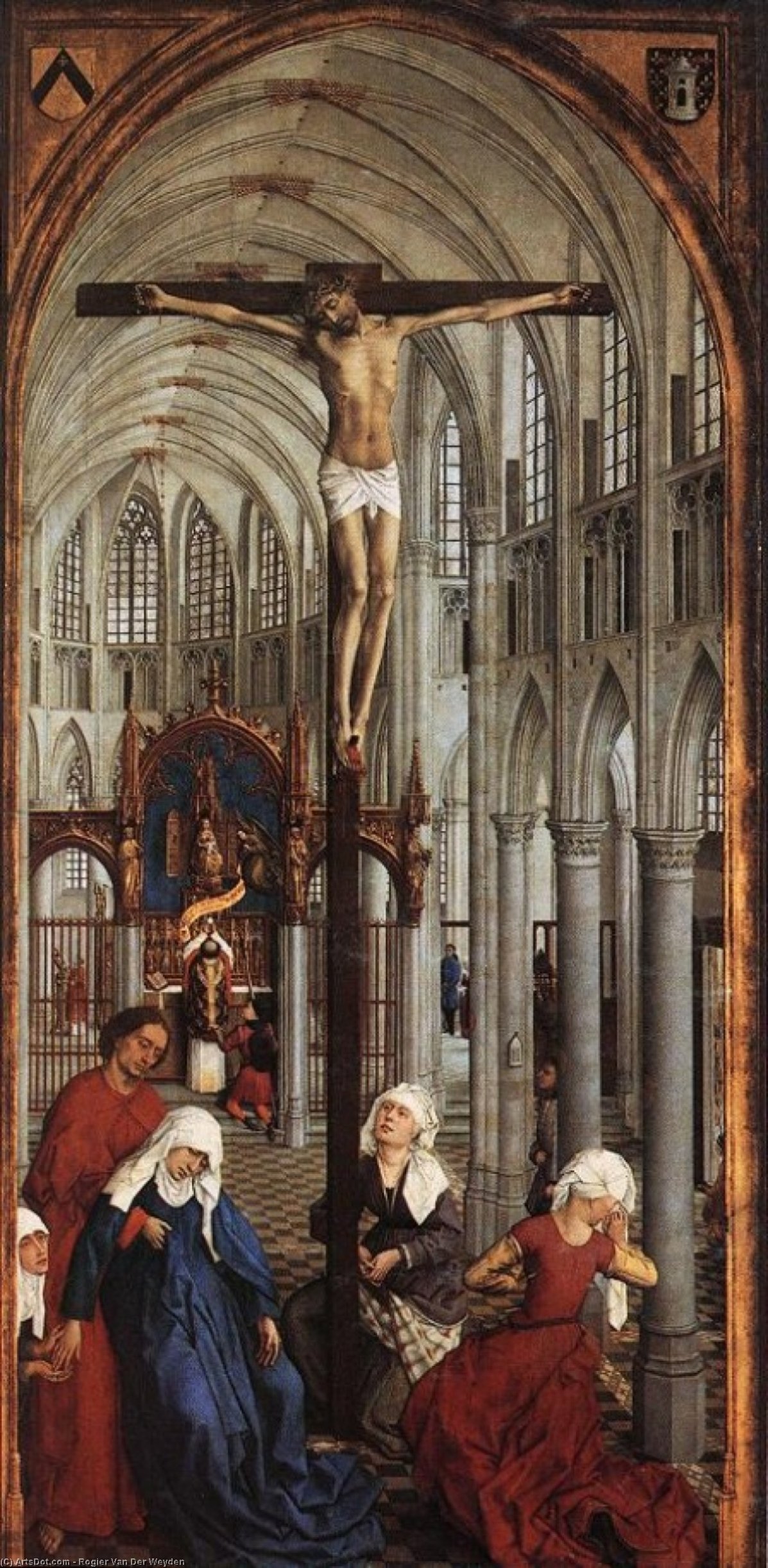
Seven Sacraments (central panel)
Rogier van der Weyden’s Seven Sacraments stands as a monumental achievement of the Early Netherlandish Renaissance, encapsulating not only artistic mastery but also profound theological contemplation. Painted in 1445 for what is believed to be St Hippolytus’s chapel in Poligny, Belgium, this oil on panel masterpiece resides within the Royal Museum of Fine Arts Antwerp and continues to inspire awe with its meticulous detail and emotive power.
The Composition: A Basilica Within a Painting
Van der Weyden skillfully crafted an interior space mirroring the grandeur of Gothic churches. The basilica’s nave, flanked by side aisles, establishes a visual hierarchy that directs the viewer's gaze towards the central crucifix – the focal point of the composition and the embodiment of Christ’s sacrifice. Surrounding this centerpiece are figures representing the seven sacraments: Baptism, Confirmation, Holy Communion, Matrimony, Extreme Unction, Holy Orders, and Reconciliation. The artist’s deliberate use of perspective—a technique pioneered by Jan van Eyck—creates an illusion of depth, enhancing the realism of the scene.
Artistic Significance: Emotion and Naturalism
Unlike many contemporary artists who prioritized stylized representations, Van der Weyden championed naturalism, striving to depict human emotions with unprecedented accuracy. The faces of Jesus Christ and his disciples convey sorrow, grief, and humility—expressions that resonate deeply with viewers centuries later. This emphasis on psychological realism distinguishes Seven Sacraments from its peers and elevates it to a pinnacle of artistic achievement.
Symbolism: Faith and Redemption
The painting’s symbolism is multilayered, reflecting the core tenets of Christian theology. Each figure and gesture contributes to the narrative of salvation—the sacraments represent the channels through which God imparts grace to humanity. The crucifix itself symbolizes Christ's atonement for sins, while the angels hovering above convey divine compassion. The meticulous attention to detail—from the folds of drapery to the expressions on the faces—underscores the importance of faith and spiritual contemplation.
Relevance in Modern Times: Inspiration and Reproduction
Today, Rogier Van Der Weyden’s legacy persists in the art world and beyond. At ArtsDot.com, you can acquire exceptional reproductions of his paintings—including Seven Sacraments Altarpiece (detail) (10) and Seven Sacraments (right wing)—crafted by skilled artisans using traditional techniques. These reproductions offer a tangible connection to one of the most influential artworks of the fifteenth century.
For further exploration of Rogier Van Der Weyden’s oeuvre and the acquisition of stunning reproductions, visit ArtsDot.com.