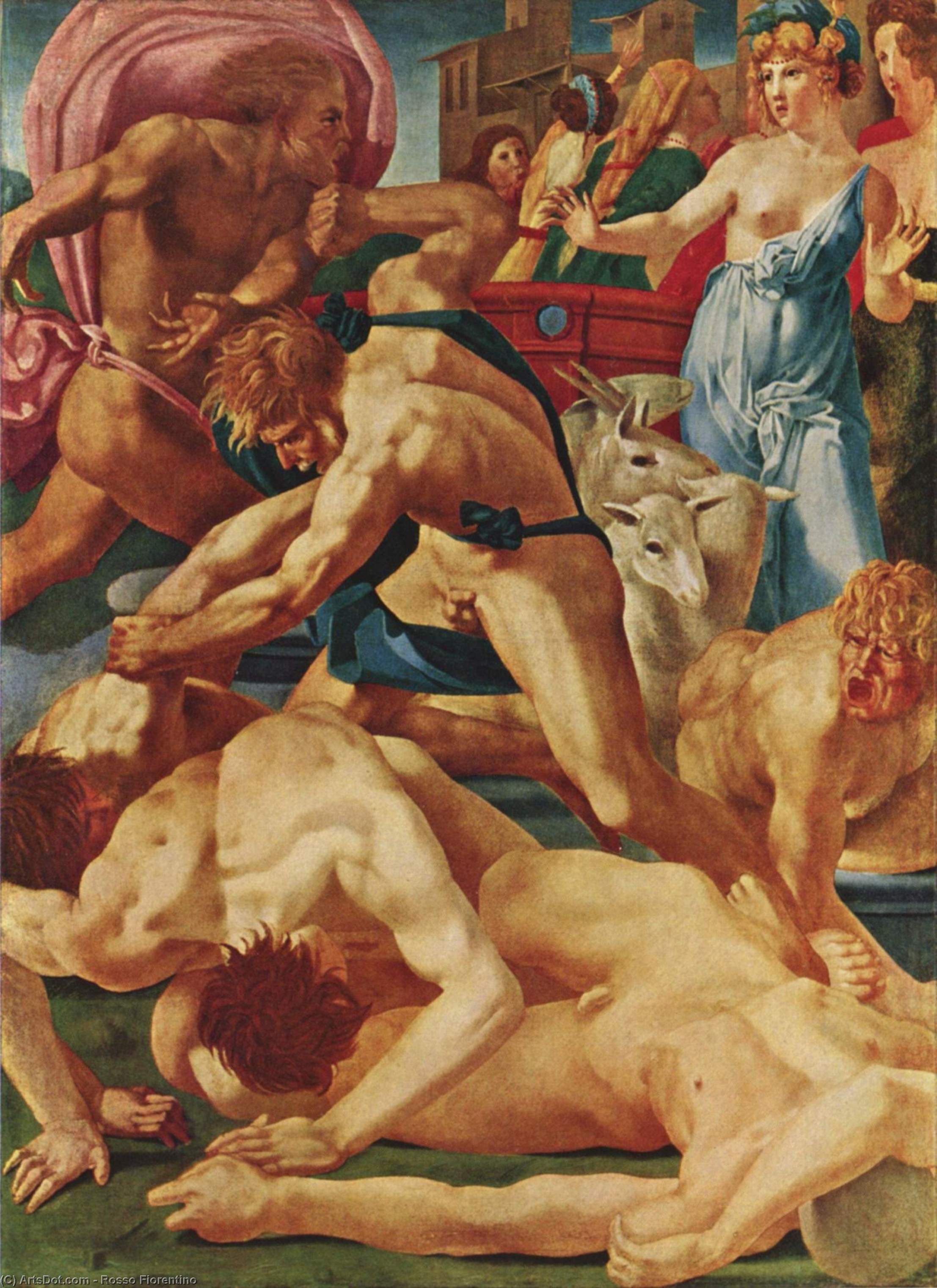
Rosso Fiorentino’s "Moses Defending the Daughters of Jethro" captures a dramatic Renaissance moment with Michelangelo-inspired grandeur and Leonardo’s psychological depth. This monumental 1523 painting showcases Moses' heroism, perfect for art lovers.
Descubre a Rosso Fiorentino (1495-1540), pintor manierista italiano clave conocido por obras dramáticas y gran intensidad emocional, influenciado por Miguel Ángel y Rafael.
Descubre el Renacimiento florentino en la Galería Uffizi: Botticelli, Leonardo y Miguel Ángel te esperan. ¡Un viaje artístico inolvidable!
A Tempestuous Triumph of Renaissance Drama: Rosso Fiorentino’s “Moses Defending the Daughters of Jethro”
Giovanni Battista di Jacopo, universally known as Rosso Fiorentino – "The Red Florentine" – wasn't merely a painter; he was an artist who wrestled with the very essence of his time. Born in Florence on March 8th, 1495, his moniker itself hinted at the fervent passion that would permeate not only his palette but also his groundbreaking approach to artistic expression. Rosso Fiorentino stands apart from many of his contemporaries, firmly rooted within the High Renaissance yet simultaneously anticipating the stylistic upheavals of Mannerism – a transitional figure who skillfully blended classical ideals with burgeoning psychological depth. His life’s work—a testament to relentless experimentation and unwavering conviction—continues to fascinate scholars and inspire artists alike.
### The Biblical Narrative Embodied in Paint
Rosso Fiorentino's “Moses Defending the Daughters of Jethro” isn’t simply a depiction of a biblical tale; it’s an immersive experience rendered in oil on canvas. Executed around 1523-1524, this monumental artwork portrays a pivotal moment from Exodus – Moses bravely shielding the daughters of Jethro from unwanted advances by men attempting to kidnap them. The scene unfolds against a backdrop of architectural grandeur, subtly reminiscent of Michelangelo’s Sistine Chapel ceiling, suggesting an ambition to elevate the narrative beyond mere storytelling into a profound meditation on heroism and protection. This careful compositional choice underscores the importance of safeguarding innocence and upholding moral righteousness – themes central to Renaissance humanist thought.
### Style and Technique: Echoes of Michelangelo and Leonardo
The painting's stylistic lineage is undeniable. Rosso Fiorentino’s hand demonstrates a masterful grasp of techniques honed under Andrea del Sarto, absorbing influences from titans like Michelangelo and Leonardo da Vinci. Like Michelangelo’s frescoes, Rosso employs dramatic chiaroscuro – the interplay of light and shadow – to sculpt form and heighten emotional intensity. The figures are rendered with meticulous detail, capturing subtle nuances of expression and posture that convey palpable anxiety and determination. Furthermore, Rosso's use of color is deliberately muted, favoring earthy tones punctuated by flashes of crimson—a deliberate nod to Michelangelo’s palette—creating a sense of solemn grandeur and reinforcing the painting’s thematic core.
### Symbolism: Beyond the Biblical Storytelling
Beyond its immediate narrative depiction lies a rich tapestry of symbolic significance. The architectural setting serves as a visual anchor, grounding the scene in a recognizable space while simultaneously elevating it to a realm of idealized beauty. The figures themselves embody archetypal virtues – Moses represents unwavering courage and divine leadership, while the daughters symbolize vulnerability and purity—values cherished during the Renaissance period. The inclusion of a parked automobile adds an unexpected element, subtly commenting on the intersection between tradition and modernity, prompting contemplation about how timeless narratives adapt to evolving cultural contexts.
### Emotional Resonance: A Portrait of Resolve
“Moses Defending the Daughters of Jethro” transcends mere visual representation; it communicates profound emotional resonance. Rosso Fiorentino’s masterful brushstrokes convey a palpable sense of urgency and drama, capturing the psychological turmoil experienced by Moses as he confronts danger. The painting compels viewers to confront questions of morality, responsibility, and the enduring power of compassion—themes that continue to resonate powerfully today. It stands as a testament to Rosso Fiorentino's ability to transform biblical scripture into an unforgettable artistic experience – a triumph of Renaissance drama frozen in time.