A Symphony of Color and Light
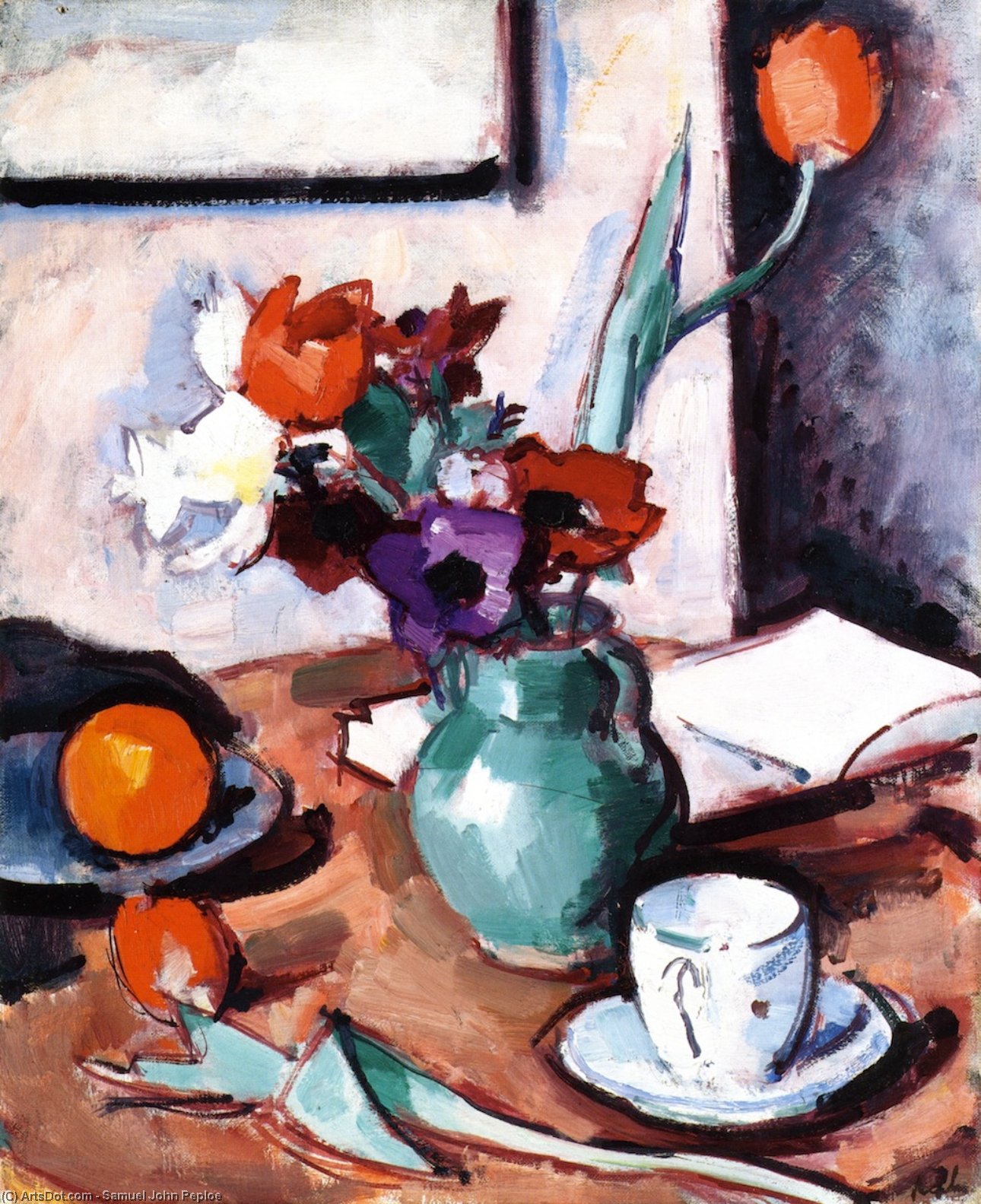
In the quiet intimacy of Samuel John Peploe’s Flowers in a Green Vase, we are invited into a world where the mundane is transformed into the magnificent. Created in 1920, this exquisite oil on canvas serves as a masterclass in the Scottish Post-Impressionist tradition. At first glance, the viewer is met with a vibrant arrangement of flora, where fiery reds and warm oranges dance against the cool, grounding presence of a verdant green vase. The composition is not merely a depiction of objects but an exploration of how light interacts with form, creating a rhythmic pulse that breathes life into the still life setting. Peploe, a leading figure of the Scottish Colourists, utilizes a palette that feels both energetic and harmonious, ensuring that each brushstroke contributes to a larger, cohesive sensory experience.
The technique employed here is nothing short of captivating. Peploe was renowned for his ability to use thick, confident brushstrokes to build texture and depth, a method that allows the light to seemingly catch on the surface of the paint itself. This tactile quality gives the flowers a sculptural presence, making them appear as though they are emerging from the canvas toward the observer. The interplay between the bold, saturated hues of the petals and the more muted, earthy tones of the surrounding table creates a sophisticated tension. For the discerning collector or interior designer, this piece offers a profound sense of movement; it is a painting that refuses to remain static, instead shifting in character as the ambient light in a room changes throughout the day.
Historical Resonance and Aesthetic Elegance
To understand the soul of Flowers in a Green Vase, one must look to the artist's transformative journey through the Parisian art scene. Having absorbed the radical innovations of French Post-Impressionism while studying in Paris, Peploe brought a newfound liberation to his Scottish roots. This work embodies that synthesis—the structural discipline of classical still life married to the expressive, emotive freedom of modernism. The inclusion of subtle secondary elements, such as the delicate presence of a cup, an apple, and a book, adds layers of narrative depth, suggesting a moment of quiet reflection or a pause in a lived-in space. These objects act as anchors, grounding the ethereal beauty of the flowers within a relatable, human context.
For those looking to curate a space with character and historical weight, this reproduction offers more than just decoration; it provides an emotional centerpiece. The painting evokes a sense of timelessness and tranquility, making it an ideal choice for sophisticated living areas or study rooms where one seeks inspiration from the masters. It is a celebration of nature's fleeting beauty, captured through a lens of permanent brilliance. Whether placed in a contemporary minimalist setting to provide a burst of organic warmth or within a more traditional gallery-style arrangement, Peploe’s work remains an enduring testament to the power of color to stir the human spirit.