A Timeless Portrait of Devotion: Botticelli’s Madonna and Child
Sandro Botticelli's Madonna and Child stands as an enduring emblem of Renaissance piety and artistic grace, a testament to the profound spiritual and aesthetic currents that defined Florence during the early 15th century. This captivating portrayal of the Virgin Mary with the infant Jesus transcends mere representation; it embodies a deeply felt reverence for the divine feminine and offers a glimpse into the complex symbolism woven throughout the era’s most celebrated artworks. The painting's serene composition, coupled with Botticelli’s signature lyrical style, continues to resonate with viewers centuries later.
- The Artist’s Florentine Roots: Born Alessandro di Mariano di Vanni Filipepi in 1445 within the heart of Florence, Botticelli's formative years were inextricably linked to the city’s burgeoning artistic scene. His apprenticeship under Fra Filippo Lippi, a master painter and influential figure within the Medici circle, instilled in him a rigorous understanding of technique and an appreciation for the elegant forms favored by the Florentine school. This early training profoundly shaped his approach to composition and color, elements that would become hallmarks of his distinctive style.
- A Study in Graceful Line: Botticelli’s mastery lies primarily in his ability to translate complex religious concepts into a visual language characterized by flowing lines and delicate modeling. The figures are rendered with an almost ethereal quality, their forms imbued with a sense of movement and serenity. This emphasis on line—a departure from the more solid, three-dimensional representations favored by earlier artists—contributes significantly to the painting’s dreamlike atmosphere.
Symbolism and Iconography
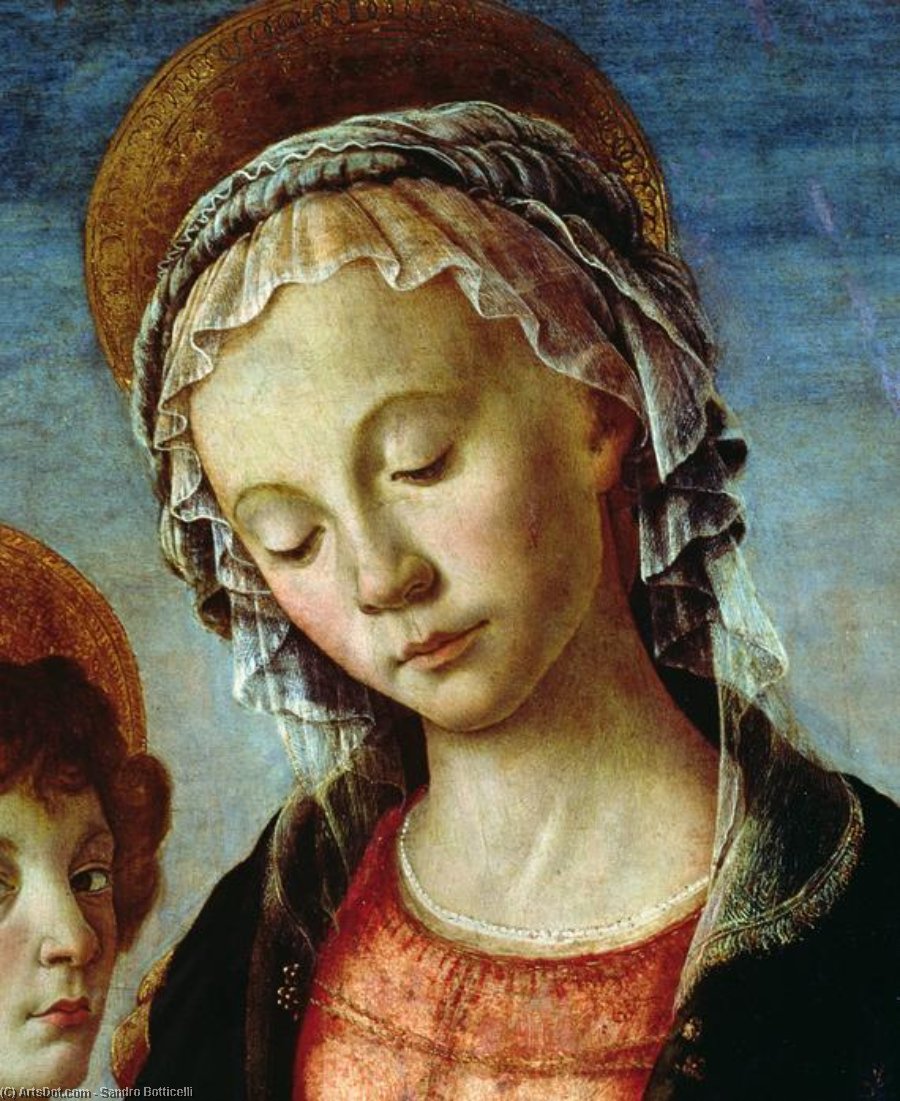
The Madonna and Child is rich in symbolic meaning, reflecting the profound religious beliefs of the time. The Virgin Mary, depicted with long flowing hair and a veil, represents purity, humility, and divine grace. Her crown signifies her role as Queen of Heaven, while her downward gaze suggests both compassion and connection with the viewer. The infant Jesus, held tenderly in her arms, embodies Christ’s divinity and foreshadows his future sacrifice. The blue background, a common feature in Renaissance paintings, symbolizes heaven and the Virgin Mary's celestial realm. The presence of two additional figures – one standing behind the mother and child, and another further back – adds layers to the narrative, possibly representing Joseph or other angelic beings, reinforcing the divine nature of the scene.
Technique and Materials
Botticelli employed tempera on panel as his primary medium, a technique known for its luminous colors and fine detail. Tempera paints, made from pigments mixed with egg yolk, allowed for precise blending and layering, contributing to the painting’s remarkable clarity and depth. The artist's meticulous attention to detail is evident in the rendering of Mary’s drapery, which flows gracefully around her form, and in the delicate modeling of Jesus’ face. The use of gold leaf, though not explicitly visible in reproductions, would have been a common practice during this period, further enhancing the painting’s spiritual significance and adding to its overall splendor.
Emotional Impact and Legacy
More than simply a religious depiction, Botticelli's Madonna and Child evokes a profound sense of peace and contemplation. The serene expressions of Mary and Jesus, combined with the painting’s harmonious composition, create an atmosphere of quiet reverence. This work has captivated audiences for centuries, solidifying its place as one of the most beloved and influential paintings in Western art history. Its enduring appeal lies not only in Botticelli's technical skill but also in his ability to capture a timeless expression of faith and devotion.