The Raising of Lazarus: A Venetian Baroque Triumph
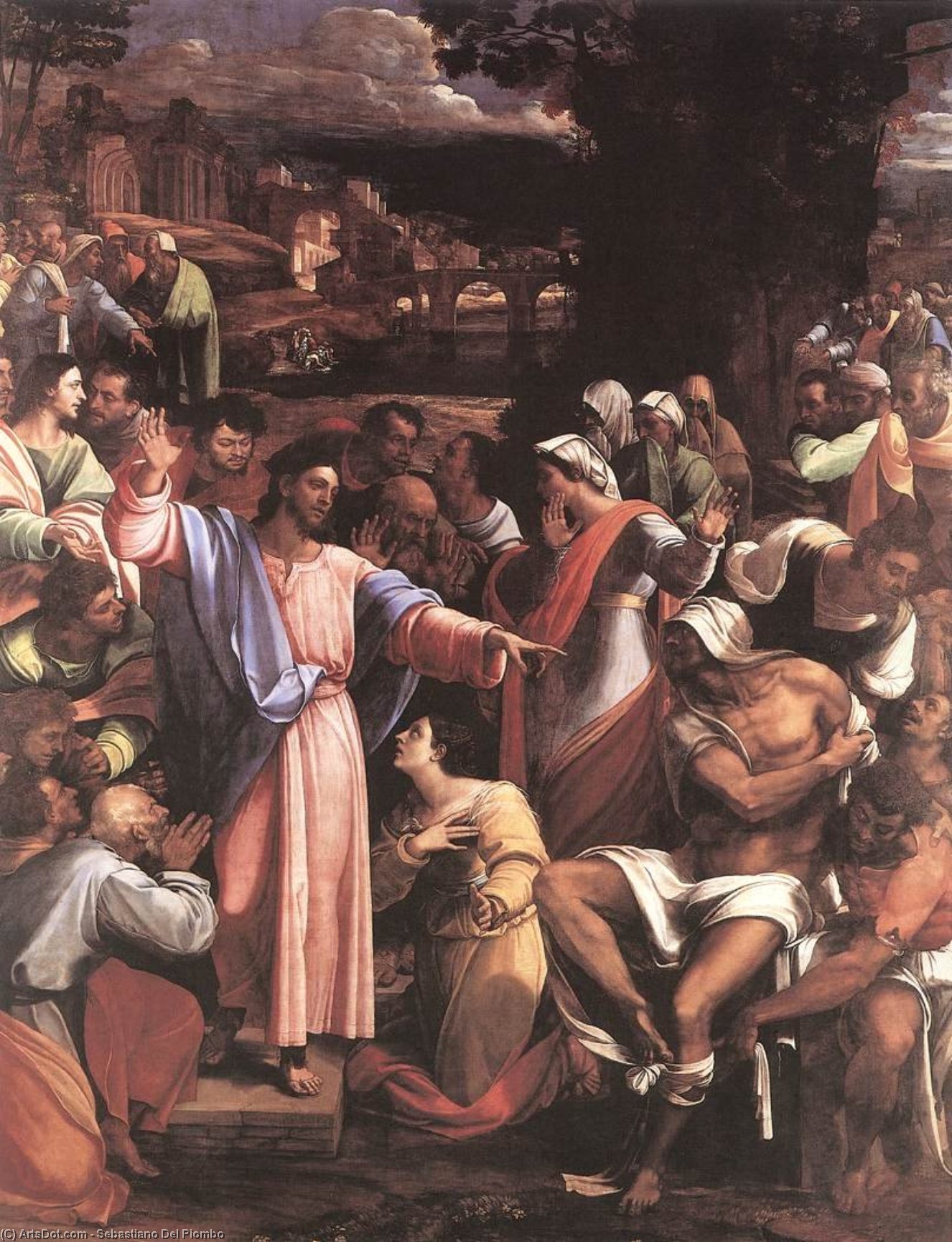
Sebastiano del Piombo’s “Raising of Lazarus,” completed in 1517–1519, stands as a monumental testament to the artistic fervor of the High Renaissance and its subsequent embrace of Baroque dynamism. More than just a depiction of biblical scripture—the miraculous resurrection of Jesus Christ—it embodies a profound synthesis of Venetian colorism and Roman grandeur, cementing del Piombo’s place among the foremost artists of his era.
A Dramatic Composition Rooted in Venetian Tradition
The painting's sheer scale – measuring 381 x 289 cm – immediately commands attention. Del Piombo eschews strict realism, favoring instead a flattened perspective characteristic of Renaissance painting combined with Baroque theatricality. The central figure of Jesus Christ dominates the composition, bathed in an ethereal light source that casts dramatic shadows across his face and torso. Surrounding him is a throng of onlookers—disciples, mourners, and figures representing the Jewish populace—rendered with meticulous detail but imbued with expressive gestures and postures conveying palpable emotion.
Technique: Impasto and Coloristic Brilliance
Del Piombo’s masterful technique relies heavily on impasto – thick application of paint – creating textured surfaces that capture the luminosity and vibrancy demanded by Venetian colorism. Layers upon layers of pigment build up to produce a rich tapestry of hues, predominantly reds, golds, and blues, reflecting the influence of Giorgione and signaling a departure from earlier Mannerist austerity. The artist skillfully manipulates light and shadow to heighten visual impact, emphasizing anatomical accuracy while simultaneously conveying spiritual fervor.
Symbolism: Hope Amidst Grief
“Raising of Lazarus” transcends mere narrative illustration; it’s laden with symbolic significance. The resurrected Lazarus represents not only physical resurrection but also the triumph of hope over despair—a central theme within Christian theology. Del Piombo's depiction underscores the transformative power of faith and illuminates the profound spiritual implications of Jesus’s miracle. The distant landscape serves as a backdrop, grounding the scene in earthly reality while simultaneously hinting at divine transcendence.
Emotional Resonance: A Masterpiece of Baroque Drama
Ultimately, “Raising of Lazarus” succeeds in evoking a powerful emotional response from the viewer. Del Piombo's artistic vision captures the awe and compassion inherent in witnessing such a miraculous event. The painting’s grandeur and expressive dynamism resonate with audiences centuries later, cementing its status as an enduring symbol of faith and artistic brilliance—a true jewel of Venetian Baroque art.