The Enigmatic Lady Firth
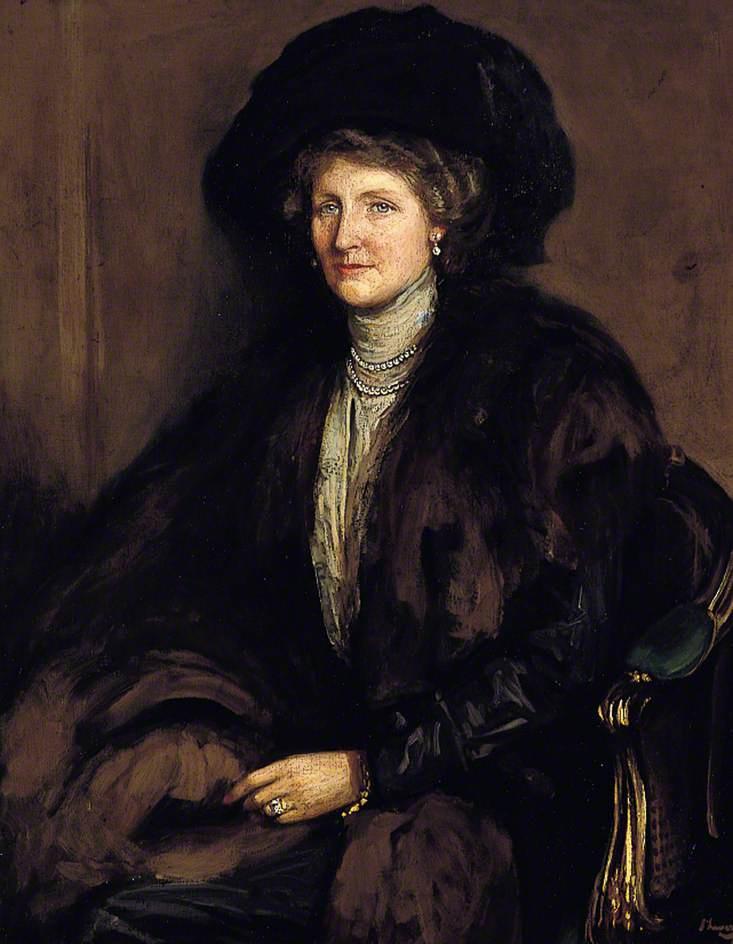
Sir John Lavery’s “Lady Firth,” painted in 1910, is more than a simple portrait; it's a carefully constructed tableau of elegance, social standing, and subtle emotional depth. The subject, Rosemary Firth (née Upcott), later known as Lady Firth, sits poised within a richly appointed interior, her gaze direct and unwavering – an invitation to contemplate the complexities of her life and the era she inhabited. Lavery’s masterful handling of light, color, and form creates an atmosphere of quiet sophistication, drawing the viewer into a moment suspended in time.
The painting immediately establishes a sense of formality through the subject's attire: a luxurious fur stole draped across her shoulders, a delicate lace collar framing her face, and a subtly patterned dress suggesting wealth and refinement. Yet, it’s not merely an exercise in depicting social status. Lavery imbues Lady Firth with a palpable dignity, conveyed through her posture, the directness of her gaze, and the subtle curve of her lips. She is not simply presented; she is observed, inviting us to consider her inner world.
Impressionistic Techniques & Atmospheric Depth
Lavery’s artistic approach is firmly rooted in Impressionism, yet tempered with a distinctly British sensibility. Loose, expressive brushstrokes dominate the canvas, creating a sense of movement and immediacy. He employs broken color – applying small dabs of paint side-by-side rather than blending them seamlessly – to capture the play of light on fabric and skin. This technique lends the painting an ethereal quality, softening edges and suggesting depth with remarkable subtlety.
- Color Palette: The muted tones—primarily shades of grey, brown, cream, and hints of green and gold—create a somber yet refined atmosphere, reflecting the formality of the era while avoiding overt flamboyance.
- Brushwork: Lavery’s signature loose brushstrokes are particularly evident in the fur stole, rendered with a tactile quality that invites the viewer to almost feel its softness.
- Light & Shadow: The diffused lighting, originating from an unseen source, sculpts Lady Firth's face and upper body, creating subtle highlights and shadows that add volume and drama.
A Window into Edwardian Society
“Lady Firth” offers a fascinating glimpse into the social landscape of early 20th-century Britain. The opulent setting—a richly decorated room with dark wood panelling and ornate furniture—reflects the wealth and privilege enjoyed by the upper classes. Rosemary Firth herself was a prominent figure, an anthropologist specializing in domestic economy, and her life intersected with significant historical events, including the Irish War of Independence.
The painting’s creation coincided with a period of immense social change, marked by rapid industrialization, growing urbanization, and increasing political unrest. Lavery's ability to capture both the outward appearance of wealth and the underlying complexities of human experience makes “Lady Firth” a remarkably insightful work of art.
Symbolism & Emotional Resonance
Beyond its surface beauty, "Lady Firth" is rich in symbolic meaning. Lady Firth’s direct gaze suggests confidence and intelligence, while her posture conveys a sense of quiet dignity. The fur stole, a symbol of status and luxury, hints at the privileges afforded by her social standing. The painting's overall mood evokes a feeling of contemplative grace—a reminder of a bygone era and the enduring power of portraiture to capture not just likeness but also character and spirit.
Reproductions of “Lady Firth” offer an accessible way to appreciate Lavery’s artistry and immerse oneself in the atmosphere of Edwardian society. Whether displayed as a statement piece in a formal living room or a subtle accent in a study, this painting continues to captivate viewers with its timeless elegance and profound emotional resonance.