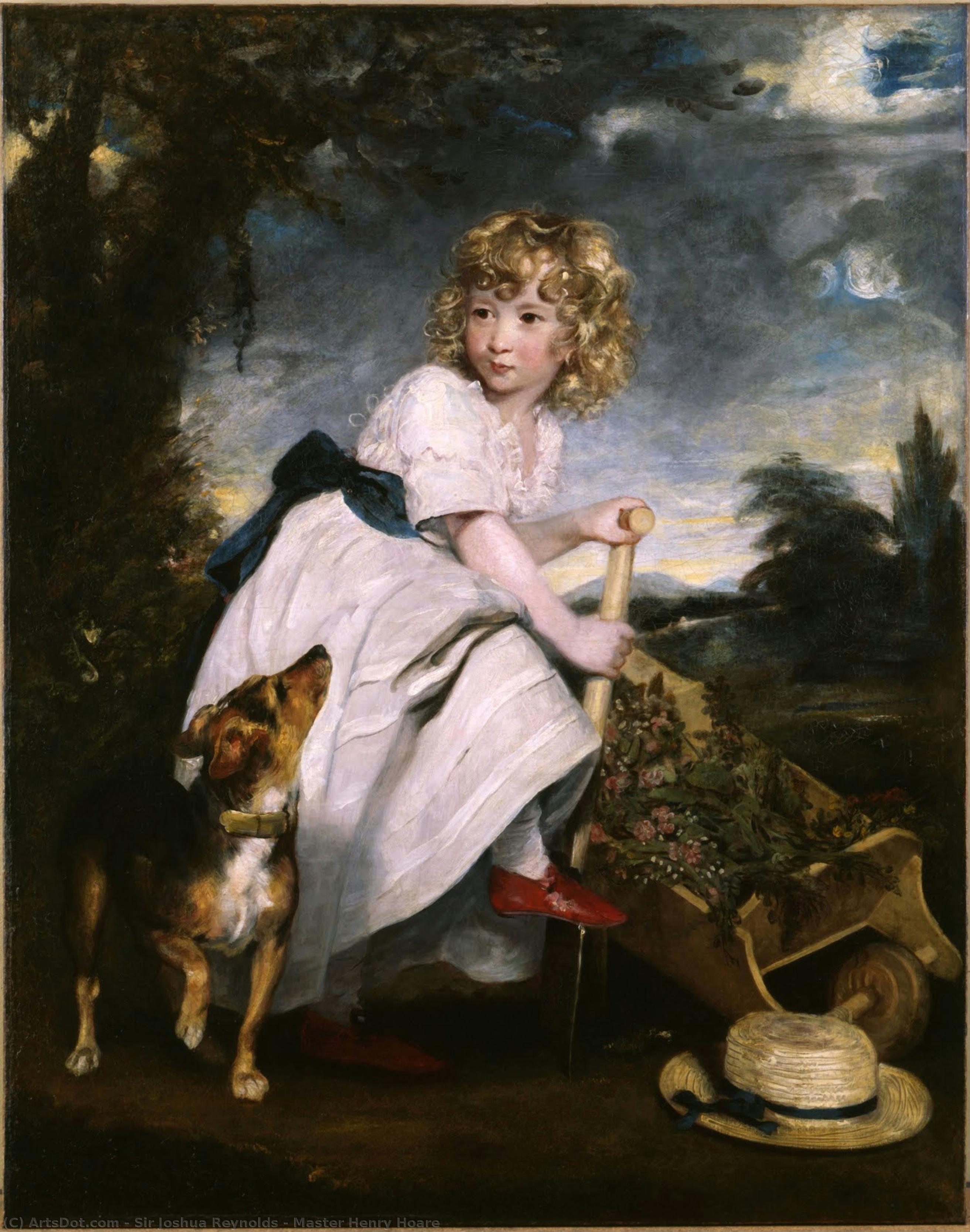
Master Henry Hoare: A Window Into Georgian Elegance
Sir Joshua Reynolds’s “Master Henry Hoare” stands as an exemplar of the Grand Style that dominated British painting during the reign of George III, capturing not merely likeness but embodying the ideals of aristocratic refinement and intellectual curiosity. Painted in 1788, this portrait transcends mere representation; it's a meticulously crafted tableau designed to convey status, virtue, and cultivated taste—characteristics highly prized within Georgian society.
- Subject Matter: The painting depicts Henry Hoare (1784–1836), son of Sir Richard Colt Hoare, a prominent banker and landowner whose family estate at Stourhead epitomized the grandeur of the English landscape movement. Reynolds skillfully portrays Hoare as a young man, radiating confidence and poised intellect.
- Style & Technique: Reynolds championed the Grand Style, prioritizing idealized beauty over slavish imitation of nature. He achieved this through careful observation and meticulous brushwork—a technique characterized by smooth surfaces and subtle gradations of color—creating an illusion of depth and luminosity that elevates the portrait beyond a simple likeness. The artist’s masterful use of chiaroscuro – dramatic contrasts between light and shadow – emphasizes Hoare's facial features and contributes to the overall sense of solemn dignity.
- Historical Context: Stourhead Estate, with its baroque gardens designed by Capability Brown, served as a symbol of aristocratic ambition and artistic patronage during Reynolds’s lifetime. The portrait reflects this cultural milieu, aligning itself with the prevailing aesthetic sensibilities that valued classical ideals and intellectual pursuits. It speaks to a broader fascination with humanist philosophy and the pursuit of moral excellence—themes central to Enlightenment thought.
Symbolism:
The inclusion of Henry Hoare’s father, Sir Richard Colt Hoare, alongside his son underscores the importance of lineage and tradition within Georgian society. The young man's posture exudes composure and self-assurance—attributes associated with leadership and responsibility. Furthermore, the subtle depiction of a tennis racket symbolizes leisure and intellectual engagement, reflecting Hoare’s interests beyond mere social status.
- Composition: Reynolds employs a pyramidal composition, placing Hoare centrally within the frame to convey stability and grandeur. The placement of his father on the right side reinforces this hierarchy while creating visual balance.
- Color Palette: Reynolds utilizes a restrained palette dominated by muted tones—primarily creams, browns, and blues—creating an atmosphere of understated elegance. These colors harmonize with the background landscape, subtly reinforcing the portrait’s connection to Stourhead Estate and its surroundings.
“Master Henry Hoare” remains a testament to Reynolds's artistic genius and his ability to capture not just appearance but also character—a captivating glimpse into the opulent world of Georgian England and an enduring symbol of aristocratic refinement.