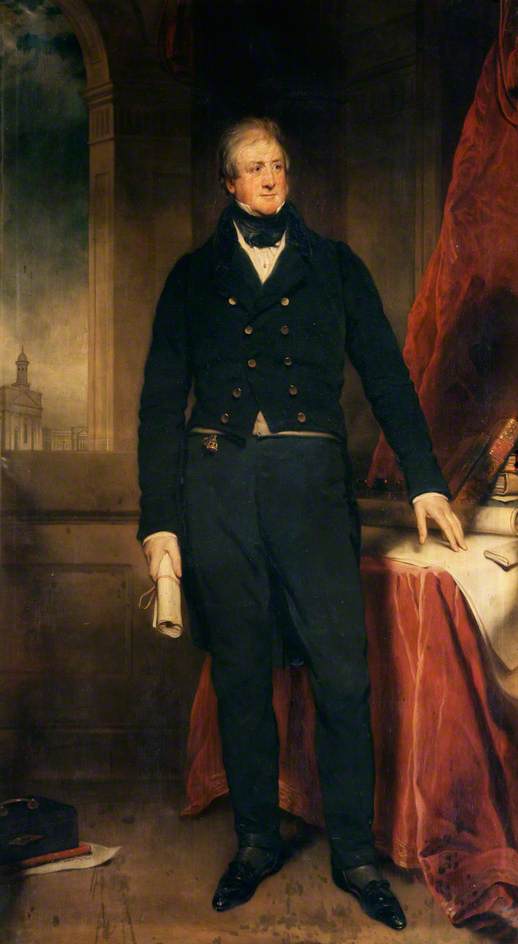
George Wilbraham of Delamere Lodge: A Portrait Steeped in Victorian Dignity
Delamere Lodge, nestled amidst Cheshire’s rolling hills, served as the backdrop for Sir Martin Archer Shee’s masterful depiction of George Wilbraham, Esq., completed in 1842. This portrait transcends mere likeness; it embodies the ethos of the Victorian era – a period defined by social hierarchy, moral seriousness, and an unwavering belief in classical ideals. Shee skillfully captured Wilbraham's commanding presence against a meticulously crafted interior setting, reflecting both his status as landowner and his commitment to intellectual pursuits.
- Subject Matter: The portrait focuses on George Wilbraham, a prominent figure within Cheshire society, showcasing him seated at a table laden with books – a deliberate gesture signifying erudition and engagement with the burgeoning scientific advancements of the time.
- Style & Technique: Shee adhered to the neoclassical tradition championed by Joshua Reynolds, prioritizing anatomical accuracy and idealized proportions. His brushstrokes are smooth and controlled, conveying a sense of composure and reflecting the prevailing aesthetic sensibilities of Victorian Britain. The artist employed oil paint on canvas, utilizing glazing techniques to achieve luminous tonal gradations that illuminate Wilbraham’s face and attire.
- Historical Context: Painted during Queen Victoria's reign, the portrait reflects the Victorian fascination with portraying individuals who embodied virtue and responsibility – qualities deemed essential for upholding social order. Wilbraham’s dignified posture and gaze convey confidence and respectability, aligning perfectly with the values of the aristocracy.
Symbolism Within Composition: Books as Vessels of Knowledge
The inclusion of numerous books surrounding Wilbraham is not accidental; it serves as a potent symbol of intellectual aspiration and social standing. These volumes represent Wilbraham’s dedication to scholarship, mirroring the Victorian belief in education as a cornerstone of moral character and civic duty. Furthermore, their placement around the table underscores the importance of reasoned discourse and contemplation – values considered paramount within the Victorian gentlemanly ideal. Shee's careful arrangement contributes significantly to the portrait's overall narrative depth.
Emotional Impact: Dignified Reflection and Quiet Confidence
Shee’s masterful rendering captures Wilbraham’s inner tranquility, conveying a sense of quiet confidence and unwavering self-assurance. The artist skillfully utilizes chiaroscuro – the dramatic interplay between light and shadow – to sculpt Wilbraham's form, emphasizing his musculature and highlighting the subtle nuances of expression on his face. This technique imbues the portrait with an emotional resonance that transcends mere visual representation, inviting viewers to contemplate Wilbraham’s character and embodying the Victorian pursuit of moral excellence.
Concluding Remarks: A Testament to Neoclassical Elegance
“George Wilbraham of Delamere Lodge” stands as a remarkable achievement in Victorian portraiture—a testament to Shee's technical prowess and his unwavering commitment to upholding classical artistic principles. More than just an image of a man, it’s a window into the values and aspirations of a bygone era, continuing to inspire admiration for its beauty and intellectual depth. Its enduring appeal lies in its ability to convey both dignified reflection and quiet confidence—qualities that resonate powerfully with audiences today.