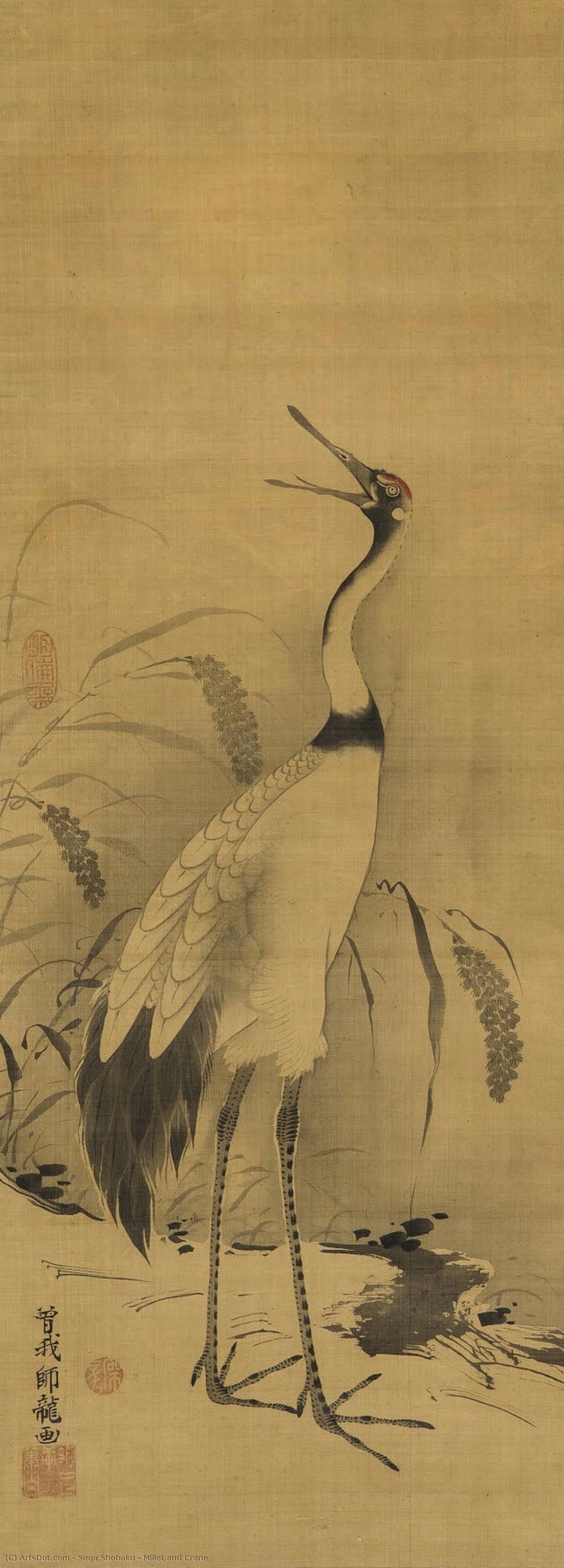
Millet and Crane

Soga Shohaku’s ‘Millet & Crane’ – a stunning Edo-period ink painting of a solitary crane amidst vibrant millet. Explore its unique style, symbolism & serene beauty.


Soga Shōhaku (1730 - 1781)

Explora el mundo poco convencional de Soga Shōhaku (1730-1781), pintor del periodo Edo conocido por su audaz pincelada estilo Muromachi y sus excéntricas representaciones de temas budistas Zen y folclore. ¡Descubre su grotesco único!

Museo de Arte Fukuda (Kioto, España)

Descubre la serenidad artística en el Museo Fukuda de Kioto! Admira obras maestras japonesas realistas inspiradas en artistas como Murai Sadakatsu y Uemura Tsune – encuentra inspiración para interiores tranquilos.

The crane turns, stretches its neck, opens its mouth wide, and shouts. Though Japanese-style paintings typically feature a pair of male and female cranes, only one crane is shown in this picture, seemingly attempting to call its counterpart. The millet leaves and ears behind the crane fully utilize shades of ink to adeptly create an impression of depth. Millet is frequently portrayed with quails, making Shohaku’s decision to use a crane quite daring. In addition, the millet ears are extraordinarily large in comparison to the crane. The combination of motifs and unbalanced scale lend a mysterious air to the painting, signaling intent on the part of the artist. Soga Shohaku (1730-1781) is a painter who hailed from Kyoto during the mid-Edo Period.