A Vision of Eighteenth-Century Elegance
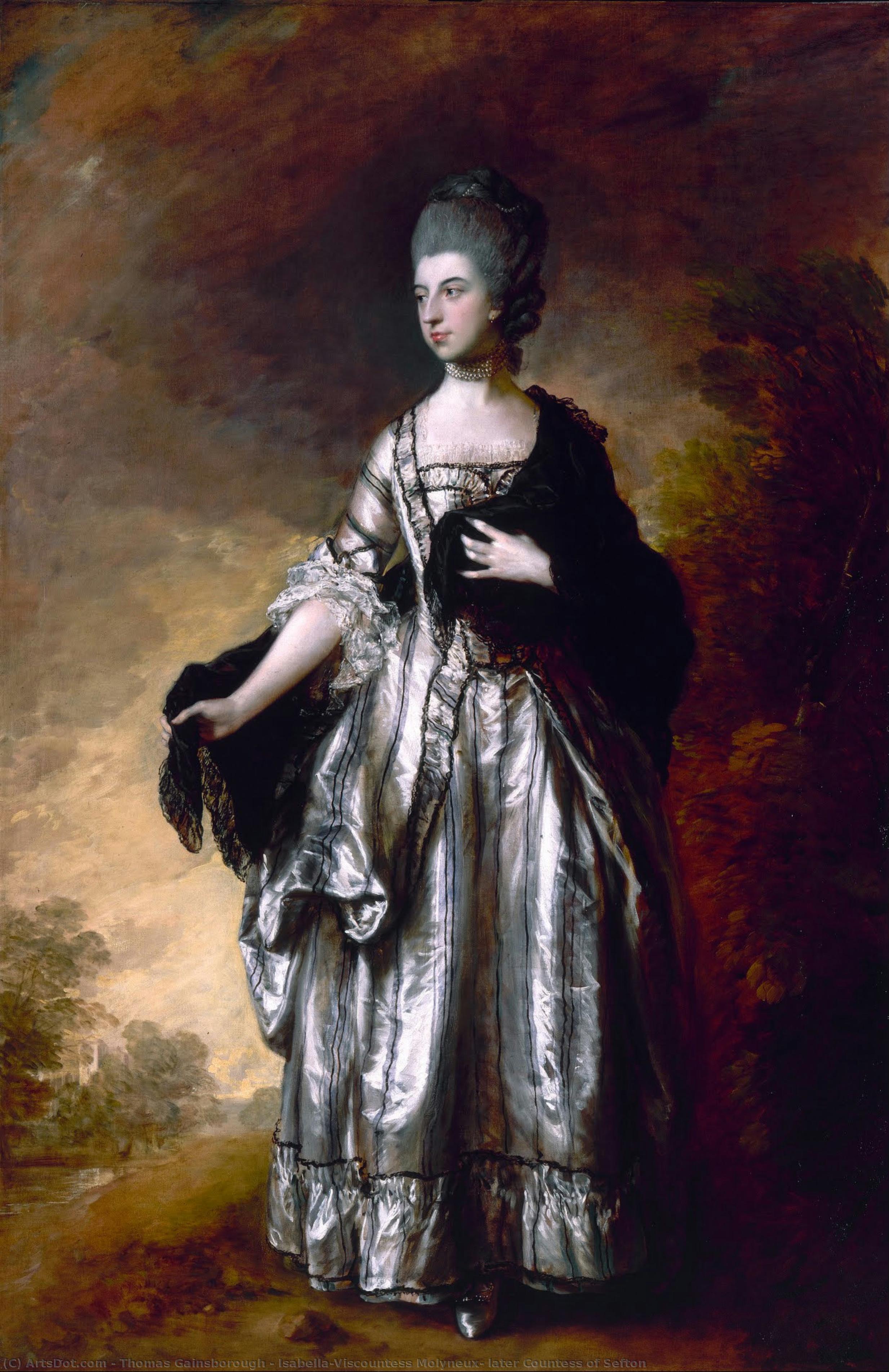
In the luminous portrait of Isabella, Viscountess Molyneux, we are transported to the height of British aristocratic splendor. Painted in 1769 by the incomparable Thomas Gainsborough, this masterpiece serves as a breathtaking window into the refined world of the Georgian era. The subject, Isabella Stanhope, daughter of the Earl of Harrington, radiates a poised grace that captures the very essence of her station. As she stands before us, draped in a shimmering silver dress that seems to catch the light of an unseen sun, she embodies the sophisticated allure of the fashionable society of Bath. The composition is masterfully balanced, with the delicate placement of her figure conveying an air of effortless elegance and a touch of preciousness that invites the viewer into her intimate, noble orbit.
The artistry of Gainsborough is on full display in the meticulous execution of textures and light. A true virtuoso of the brush, he lavishes extraordinary detail upon the heavy, lustrous fabric of the Viscountess's gown, creating a tactile sensation that almost allows one to feel the weight of the silk. The contrast provided by the dark shawl draped around her shoulders adds a layer of dramatic depth, framing her luminous skin and drawing the eye toward her finely modelled hands—a hallmark of Gainsborough’s technical brilliance. This is not merely a likeness; it is a study in light and materiality, where every stroke serves to elevate the subject from a mere mortal to an icon of timeless beauty.
Historical Grandeur and Artistic Ambition
To understand this portrait is to understand a pivotal moment in art history. At the time of its creation, Gainsborough had recently been elected to the newly founded Royal Academy in London. This painting was more than a private commission; it was a calculated statement of intent, designed to impress the most discerning eyes in the capital. Through this work, Gainsborough sought to demonstrate his ability to capture not just the physical features of the elite, but their very spirit and social prestige. The background, featuring subtle hints of nature and architectural depth, suggests a world of expansive estates and manicured landscapes, grounding the subject within the lush, pastoral romanticism that would become a signature of British portraiture.
For the discerning collector or interior designer, this piece offers an unparalleled opportunity to introduce a sense of historical weight and classical sophistication into a space. The painting’s palette—a sophisticated interplay of silvery whites, deep blacks, and soft, natural tones—allows it to integrate seamlessly into both traditional manor-style interiors and contemporary, minimalist settings. It acts as a focal point of conversation, evoking the grandeur of the 18th century while maintaining a fresh, luminous energy that brightens any room. Owning a high-quality reproduction of this work is an invitation to surround oneself with the enduring legacy of one of England's greatest masters, bringing a touch of Gainsborough’s legendary light into the modern home.