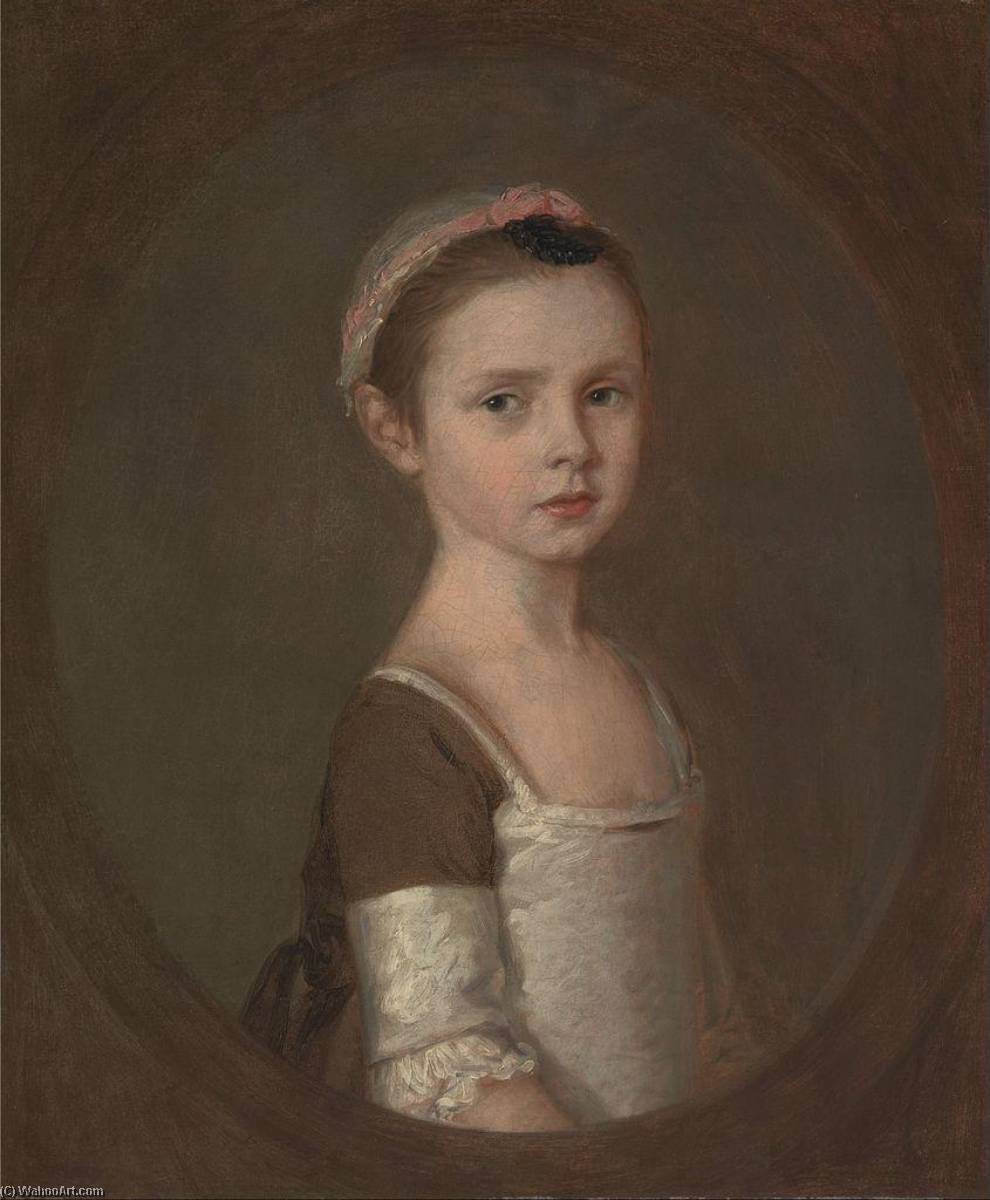
Thomas Gainsborough’s serene ‘Miss Susanna Gardiner,’ painted in 1759, captures Georgian elegance with its soft focus and masterful chiaroscuro—a timeless portrait embodying innocence and virtue. Explore this exquisite masterpiece and bring Georgian artistry into your home.
A Portrait of Innocence: Miss Susanna Gardiner by Thomas Gainsborough
Thomas Gainsborough’s “Miss Susanna Gardiner,” painted in 1759, stands as a quintessential example of Georgian portraiture—a genre defined by its elegance, restraint, and profound sensitivity to human emotion. More than just a likeness of a young girl, it embodies the ideals of beauty and virtue prevalent during the Enlightenment, reflecting Gainsborough’s masterful ability to capture not merely appearance but also inner character.
- Subject Matter: The painting depicts Susanna Gardiner, a young woman from Lincolnshire, England. Her pose is deliberately calm and dignified, conveying an aura of composure that speaks volumes about the social expectations placed upon women during this era.
- Style & Technique: Gainsborough’s style is characterized by its soft focus—particularly noticeable around Susanna's face—and subtle tonal gradations achieved through meticulous brushwork. This technique prioritizes atmospheric perspective, creating a sense of depth and realism that transcends mere representation. The artist skillfully employs chiaroscuro, manipulating light and shadow to sculpt Susanna’s form and imbue the portrait with emotional resonance.
- Historical Context: Created during the reign of George II, “Miss Susanna Gardiner” reflects the burgeoning interest in classical ideals of beauty and moral virtue within British society. Gainsborough's work aligns closely with the Royal Academy’s founding principles—a commitment to elevating art beyond mere decoration, aiming instead for truthful depiction and psychological insight.
- Symbolism: The delicate lace detailing on Susanna’s dress symbolizes purity and refinement – values highly esteemed in Georgian culture. Similarly, the pink ribbon adorning her hair serves as a visual emblem of femininity and grace. These subtle symbolic gestures contribute to the painting's overarching message of innocence and moral integrity.
- Emotional Impact: The gaze directed towards the viewer establishes an intimate connection between Susanna and the observer, fostering empathy and inviting contemplation. Gainsborough’s masterful rendering captures not just a visual image but also a psychological state—a quiet confidence tempered by thoughtfulness—leaving viewers with a lasting impression of grace and serenity.
Beyond its aesthetic beauty, “Miss Susanna Gardiner” offers valuable insight into the social landscape of Georgian England. Gainsborough’s meticulous attention to detail—from the folds of Susanna's dress to the subtle nuances of her expression—demonstrates his unwavering dedication to artistic excellence. Its enduring appeal lies in its ability to transcend time, reminding us of the timeless values of beauty, virtue, and human connection.
- Further Exploration: Interested in delving deeper into Gainsborough’s oeuvre? Visit Gainsborough's House in Sudbury, Canada – a unique opportunity to experience his landscapes alongside portraits by Constable and Morris!
- Related Artwork: Admire Gainsborough’s masterful depiction of rural life with “Landscape with Cattle,” showcased at the Yale Center for British Art. Explore this evocative piece and discover Gainsborough's profound understanding of nature’s influence on human emotion.