A Vision of Divine Suffering and Baroque Grandeur
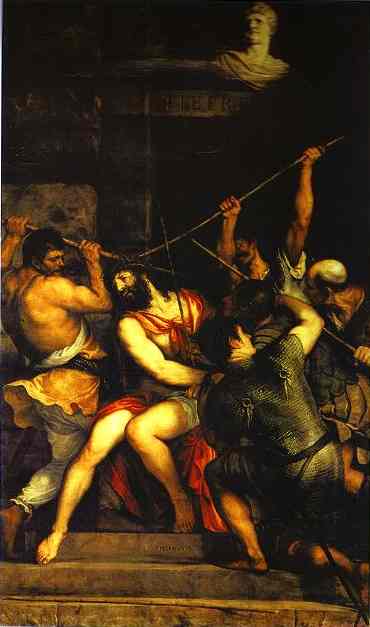
In the hallowed halls of the Musée du Louvre, there exists a window into one of the most visceral moments in Christian iconography. Titian’s Christ Crowned with Thorns is not merely a painting; it is a profound encounter with the raw, unshielded essence of human agony and divine sacrifice. As a master of the Venetian school, Titian transcends simple religious illustration to create a theatrical experience that grips the viewer from the first glance. The scene captures the pivotal moment of Christ's humiliation, where the weight of the crown of thorns serves as a physical manifestation of the world's cruelty. For the discerning collector or lover of classical art, this piece offers more than just aesthetic beauty; it provides a profound psychological depth that commands attention in any curated space.
The technical mastery displayed in this work is nothing short of breathtaking. Utilizing the rich, layered medium of oil on canvas, Titian employs a technique characterized by thick, expressive impasto brushstrokes that lend a palpable sense of physicality to the scene. The composition is masterfully structured through dynamic diagonal lines—the sharp angles of spears and the forceful gestures of the executioners—which guide the eye through a chaotic dance of violence and devotion. This use of chiaroscroll, or dramatic lighting, creates a stark contrast between deep, receding shadows and brilliant highlights that illuminate the suffering face of Christ. Such intense light and shadow, a hallmark of the Baroque sensibility, imbues the canvas with a sense of movement and immediate, breathing life.
Symbolism and the Emotional Resonance of the Renaissance
Beyond its technical brilliance, the artwork is a complex tapestry of symbolic meaning. The juxtaposition of Christ’s profound vulnerability against the rigid, angular aggression of his tormentors serves as a timeless meditation on the struggle between innocence and power. Every element, from the heavy textures of the stone architecture to the directional thrust of the weapons, contributes to an atmosphere of inescapable tension. This is a work that does not shy away from the brutality of its subject matter; instead, it uses that very intensity to evoke deep-seated emotions of horror, empathy, and spiritual reflection. It is this ability to stir the soul that makes a high-quality reproduction of such a masterpiece so transformative for an interior environment.
Historically, the painting carries a legacy of prestige and movement, having been commissioned by the confraternity of Santa Maria delle Grazie in Milan before finding its permanent home in France following the Napoleonic era. To possess a reproduction of this caliber is to invite a piece of European history into one's home. For interior designers seeking to create a focal point of dramatic elegance, or for collectors looking to anchor a room with a sense of historical gravity, Titian’s work offers an unparalleled opportunity. It brings the sophisticated drama of the Italian Renaissance and the emotional fervor of the Baroque directly into the modern sanctuary, turning any wall into a site of profound artistic contemplation.