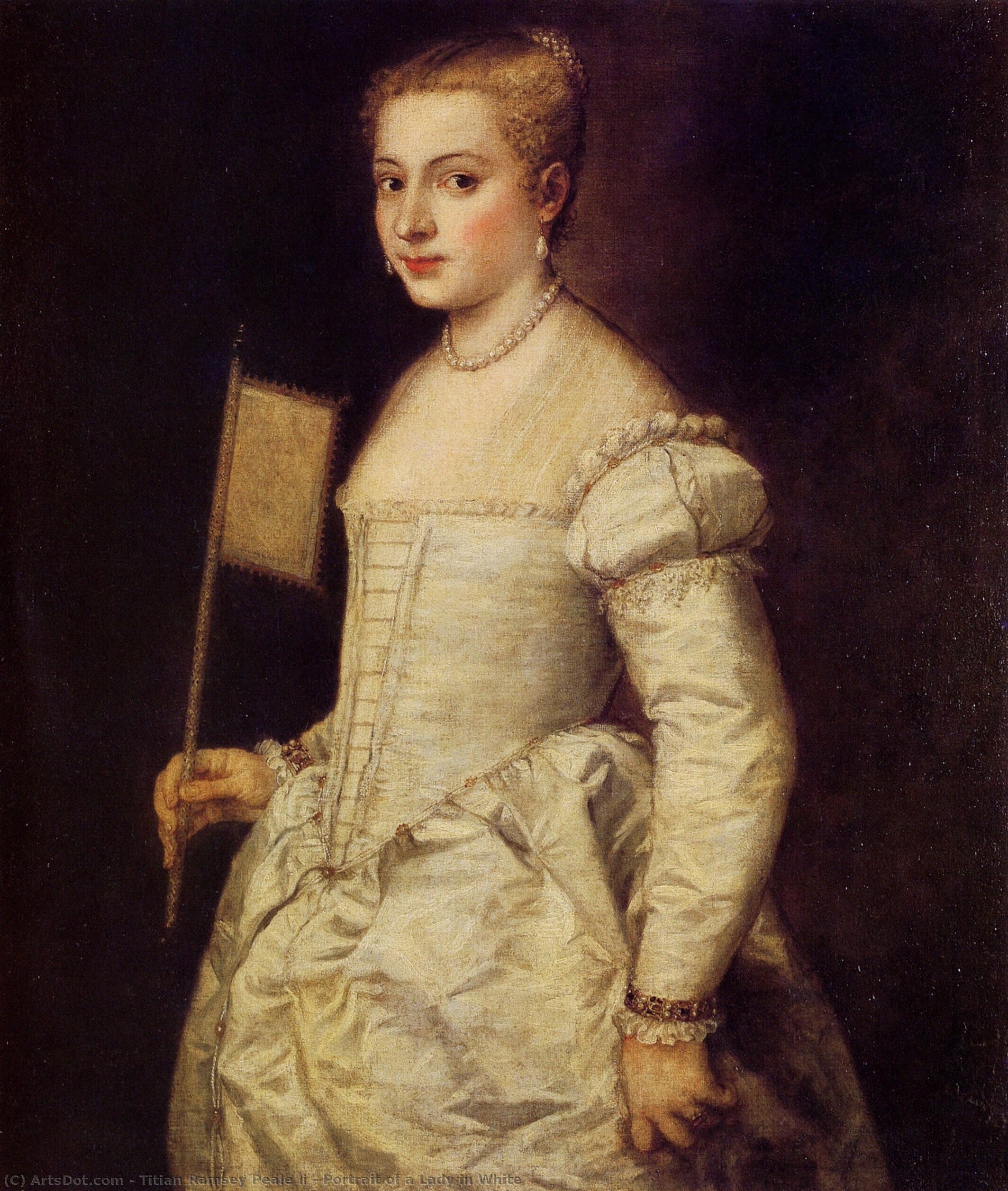
Portrait of a Lady in White: A Renaissance Reverie
“Portrait of a Lady in White” transcends mere visual representation; it’s an exquisite encapsulation of the Renaissance spirit—a testament to humanist ideals and masterful artistic execution. Painted circa 1561 by Titian Ramsey Peale II, this monumental oil on canvas resides within the Gemäldegalerie Alte Meister in Dresden, Germany, offering visitors a glimpse into a pivotal moment in European art history.
The painting’s subject—a woman adorned in flowing white attire—immediately commands attention. Her posture exudes grace and dignity, accentuated by the subtle tilt of her head and gaze. Peale II's meticulous attention to detail is evident in every brushstroke, capturing the delicate folds of her gown and the luminous sheen of her skin with remarkable realism.
- Artist: Titian Ramsey Peale II
- Date: Circa 1561
- Medium: Oil on Canvas
- Size: 86 x 102 cm
- Location: Gemäldegalerie Alte Meister, Dresden, Germany
A Symphony of Renaissance Style
The painting’s stylistic hallmarks firmly establish it within the Renaissance canon. Characterized by a profound respect for classical ideals—particularly those derived from ancient Greece and Rome—the artwork embodies the humanist preoccupation with human anatomy and emotion. Peale II skillfully employs chiaroscuro, manipulating light and shadow to sculpt form and imbue the scene with depth and atmosphere.
The composition is balanced and harmonious, reflecting the Renaissance desire for order and proportion. The lady’s attire—a ruffled collar and pearl necklace—symbolizes wealth and refinement, mirroring the aristocratic tastes of the era. Furthermore, Peale II's masterful use of color contributes to the painting’s emotional impact, conveying serenity and elegance.
Historical Context: Dresden’s Artistic Legacy
The Gemäldegalerie Alte Meister itself holds a significant place in art history—housing masterpieces from Northern Renaissance artists like Jan van Eyck and Rogier van der Weyden. “Portrait of a Lady in White” stands alongside these icons, demonstrating the enduring influence of humanist principles on artistic expression.
The painting’s provenance underscores Dresden's role as a center for artistic patronage during the Baroque period. Its presence within this celebrated gallery ensures that Peale II’s masterpiece continues to inspire admiration and scholarly discussion centuries later.
Beyond Technique: Symbolism and Emotion
More than just a depiction of beauty, “Portrait of a Lady in White” speaks to broader themes—ideal femininity, social status, and the pursuit of artistic excellence. The lady’s gaze directs the viewer's attention inward, inviting contemplation on inner virtues and aspirations.
Peale II’s ability to convey emotion through visual means elevates the artwork beyond mere aesthetic pleasure, transforming it into a powerful symbol of Renaissance humanism—a celebration of human dignity and intellectual curiosity. Its enduring appeal testifies to the timeless power of art to capture the essence of its time.
For those seeking a stunning reproduction of this iconic painting, ArtsDot.com offers handcrafted oil paintings that faithfully recreate Peale II’s original vision—bringing the splendor of Renaissance artistry into your home.