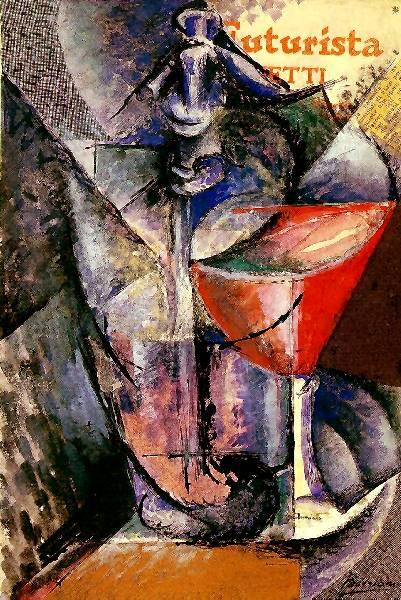
Glass And Syphon: A Symphony of Form and Reflection
“Glass And Syphon,” created in 1913 by Umberto Boccioni, stands as a cornerstone of Italian Futurism—a movement that dared to reject the conventions of artistic tradition and embraced the dynamism inherent in the burgeoning industrial age. More than just a depiction of everyday objects, this painting embodies the Futurist ethos: an obsession with speed, motion, and the transformative power of technology.
Cubist Innovation: Fragmented Perspectives
Painted in Cubism style—a revolutionary approach championed by Picasso and Georges Braque—Boccioni’s masterpiece abandons illusionistic representation. Instead, he dissects the glass, syphon, and surrounding elements into geometric planes that overlap and intersect, presenting multiple viewpoints simultaneously. This technique wasn't merely stylistic; it reflected a profound philosophical conviction: that reality itself is inherently fragmented and unstable.
Technique and Materiality: Oil Paint on Canvas
Executed in oil paint on canvas, “Glass And Syphon” showcases Boccioni’s masterful command of texture and color. Thick brushstrokes convey the palpable energy of movement—the subtle vibrations emanating from the glass as it holds its wine—creating a visual experience that transcends mere observation. The muted palette—dominated by blues, reds, and earthy tones—contributes to an atmosphere of contemplative stillness despite the underlying dynamism.
Historical Context: Embracing Modernity
The painting emerged during a period of intense social upheaval in Italy, marked by rapid industrialization and urbanization. Futurism arose as a reaction against the perceived decadence of Belle Époque culture, proclaiming the superiority of machines and the glorification of speed. Boccioni’s artwork serves as a visual manifesto for this intellectual fervor—a celebration of progress and an assertion of the Futurist belief in reshaping human experience.
Symbolism: Still Life as Meditation
Beyond its formal innovations, “Glass And Syphon” possesses subtle symbolic resonance. The glass itself represents clarity and contemplation, juxtaposed against the syphon – a tool for transferring liquids—symbolizing transformation and fluidity. Together, they invite viewers to consider not only what is seen but also how it feels—a quiet moment of enjoyment amidst the relentless march of time. This painting isn’t simply about objects; it's about capturing an essence of human existence.