A Renaissance Vision of Grace and Form
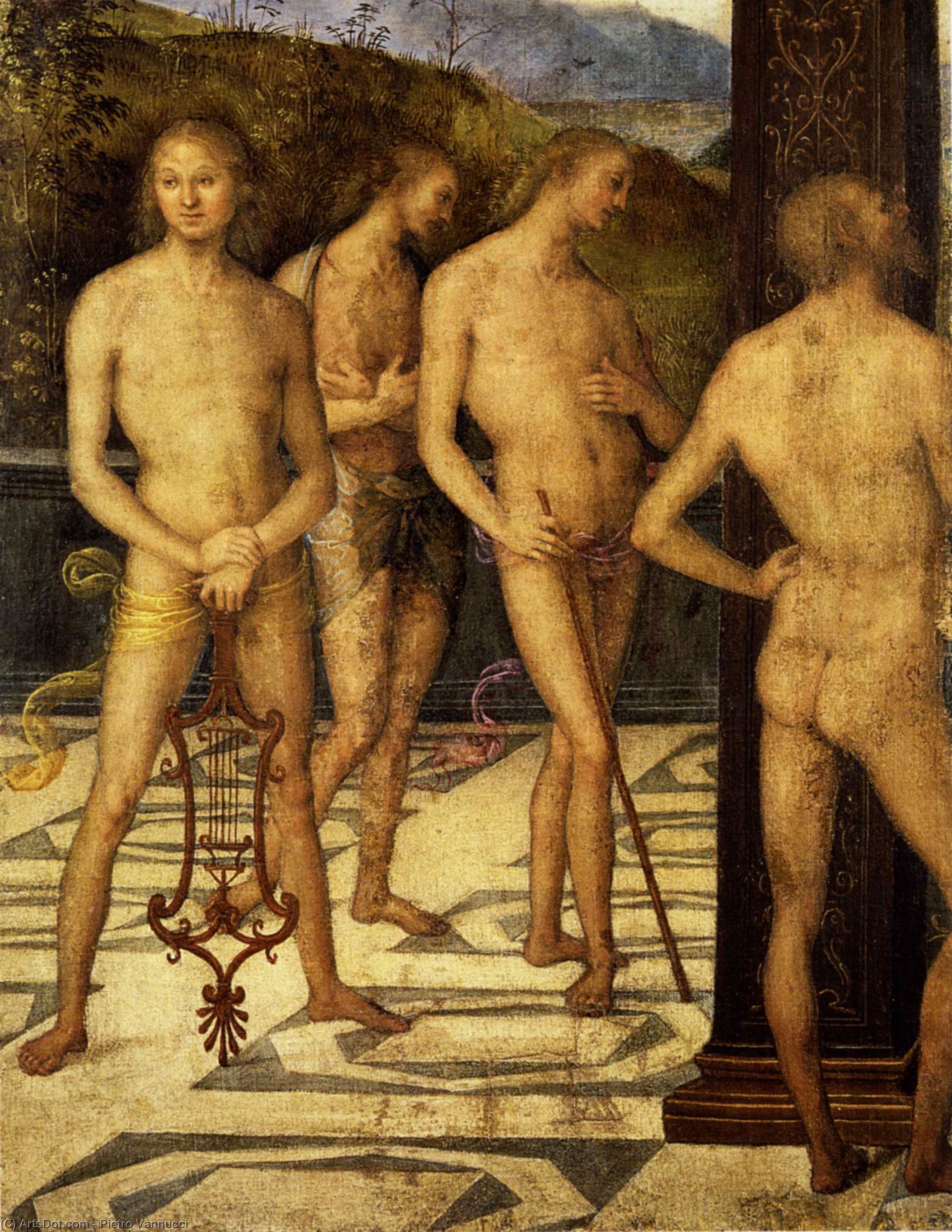
In the quiet, luminous atmosphere of the High Renaissance, few works capture the delicate balance between human vulnerability and classical elegance quite like "Four Naked" by the master Vannucci Pietro, known affectionately as Le Perugino. Painted around 1505, this evocative composition invites the viewer into a private, architectural sanctuary where the boundaries between the physical and the ethereal seem to blur. The painting presents a quartet of figures, each rendered with the soft, porcelain-like skin tones and graceful contours that became the hallmark of the Umbrian school. Through his masterful command of light and shadow, Le Perugino transforms a simple indoor setting into a stage for profound human presence, where every gaze and posture tells a silent story of beauty and introspection.
The composition is a masterclass in Renaissance spatial harmony. As we move through the scene, we encounter a diverse assembly of figures that guide the eye in a rhythmic dance across the canvas. On the far left, a young man with flowing hair holds a lute, his direct gaze establishing an immediate, soulful connection with the observer. This musical element introduces a sense of auditory harmony to the visual experience, suggesting a moment of cultured leisure. Beside him, the mystery deepens with a figure turned away, adding a layer of enigmatic depth that challenges the viewer to contemplate what remains unseen. The presence of a woman looking over her shoulder, clutching a delicate object—perhaps a symbol of fleeting youth or nature—adds a touch of soft femininity and movement, while the final male figure, gazing toward an unseen window, connects the intimate interior to the vast world outside.
Technically, the work exemplifies the pinnacle of 16th-century Italian technique. Le Perugino utilizes a subtle, blended approach to color, avoiding harsh lines in favor of sfumato-like transitions that lend the flesh a lifelike, breathing quality. The architectural backdrop, suggestive of a grand palazzo, provides a structured, geometric contrast to the organic curves of the human forms. This interplay between the rigid permanence of stone and the soft, transient nature of the human body serves as a poignant meditation on the classical ideals of the era. For the discerning collector or interior designer, this piece offers more than mere decoration; it provides a focal point of historical weight and aesthetic serenity.
Integrating a high-quality reproduction of "Four Naked" into a contemporary space allows for the infusion of timeless sophistication. Whether placed in a sunlit gallery, a formal study, or a modern living area, the painting’s muted palette and balanced composition act as an anchor of tranquility. It evokes an era of humanist discovery and artistic perfection, making it an ideal choice for those looking to surround themselves with art that inspires contemplation, elegance, and a deep appreciation for the enduring legacy of the Italian Renaissance.