¡Descubre la fuerza del realismo ruso con Vasily Vereshchagin! Este artista revolucionó el arte nacional capturando escenas épicas de guerra y explorando culturas orientales como Persia con una precisión impresionante. Un verdadero maestro del siglo XIX.
Galería Tretyakov Moscú, Arte ruso colección, Ícono Vladimir, Malevich Aviador, Kandinsky Arte abstracto, Chagall Pinturas oníricas, Viktor Vasnetsov Fachada, Arquitectura rusa revival, Rusia imperial Repin, Shishkin Paisajes, Levitan Belleza melancólica, Revolución vanguardista legado, Arte ruso contemporáneo museos Moscú
A Glimpse into Imperial Grandeur: The Doors of Timur
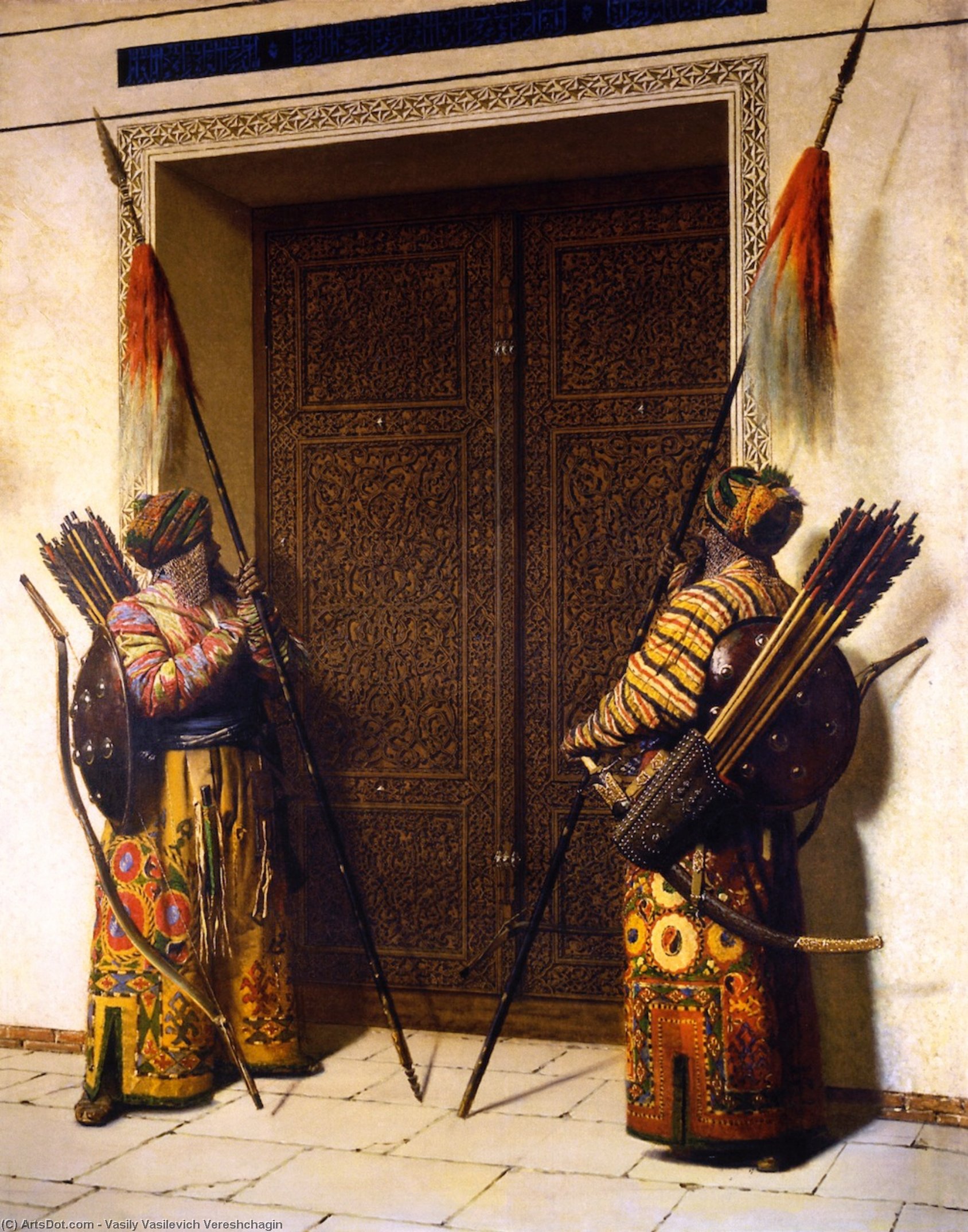
To stand before The Doors of Timur (Tamerlane) is to be transported across continents and centuries, plucked from the vibrant tapestry of 19th-century Russian artistic ambition. Vasily Vasilevich Vereshchagin’s masterful oil on panel, painted in 1872, does more than merely hang on a wall; it invites the viewer into a moment charged with historical weight and exotic mystery. The scene unfolds before an entryway so richly detailed that one can almost hear the echoes of footsteps upon ancient stone. It is a confluence of meticulous ethnographic study and romantic narrative painting, hallmarks of Vereshchagin’s profound engagement with both the battlefield and the splendor of distant cultures.
Mastery in Detail: Technique and Composition
Vereshchagin's technical prowess shines through every visible thread and carved flourish. The depiction centers on two formidable figures poised before an intricately carved doorway, a portal suggesting passage into realms of power or legend. Observe the craftsmanship lavished upon this architectural element; the carvings are not mere decoration but narrative elements in themselves, speaking of forgotten empires and martial traditions. The artist’s handling of oil paint allows for breathtaking depth, particularly in rendering the textures of the men's traditional clothing and their elaborate turbans. These garments are rendered with such care that they feel authentic, grounding the viewer in a specific cultural milieu while simultaneously elevating it to the realm of high art.
Symbolism of Readiness: The Warrior Spirit
The narrative tension is palpable, embodied by the men themselves and their accoutrements. One figure draws his bow taut, an action frozen mid-breath, while his companion holds his weapon in a state of coiled readiness. These bows and arrows are potent symbols—not just tools of war, but emblems of cultural identity, vigilance, and martial prowess. The painting captures that sublime instant before action erupts; it is the quiet breath held by history itself. For the collector or designer, this inherent drama provides an immediate focal point, injecting a sense of storied gravitas into any space.
Echoes for the Modern Collector
While Vereshchagin’s original work resides within the hallowed halls of the Tretyakov Gallery, its enduring appeal makes it a timeless subject for reproduction. Owning a high-quality hand-painted rendition allows one to bring this sense of historical grandeur and exotic romance into contemporary life. The painting speaks to an appreciation for detailed realism combined with narrative sweep—a perfect complement to interiors that favor global influences or deep cultural storytelling. It is more than decoration; it is a conversation piece, whispering tales of Tamerlane’s legacy and the enduring spirit of exploration.