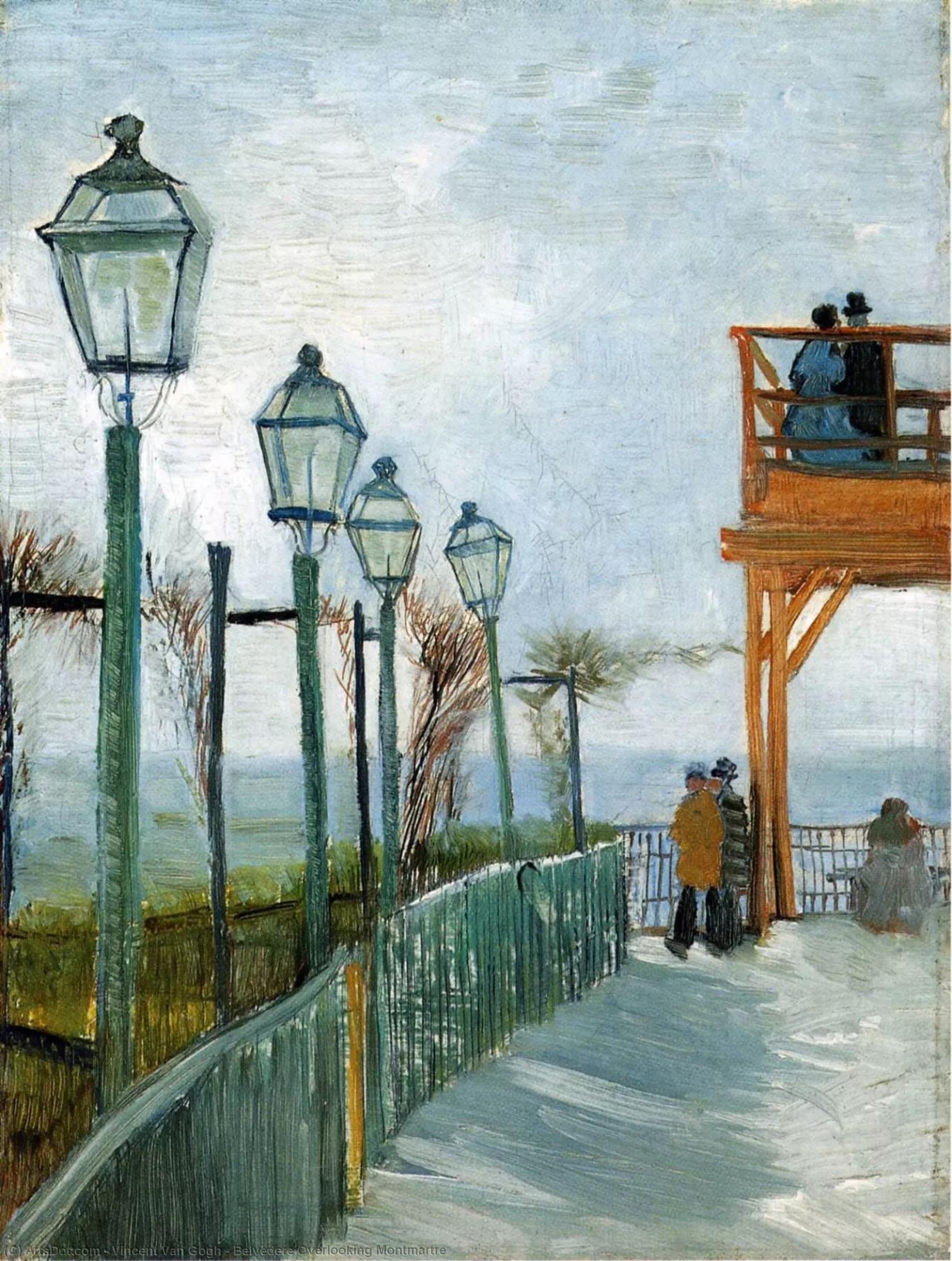
Introduction to "Belvedere Overlooking Montmartre"
“Belvedere Overlooking Montmartre,” painted in 1886 by the renowned Vincent van Gogh, is a captivating glimpse into the artist’s Parisian period and exemplifies his evolving Post-Impressionist style. This artwork transcends a simple depiction of a cityscape; it’s an emotional landscape imbued with Van Gogh's characteristic vibrancy and expressive brushwork. The painting showcases a bridge overlooking Montmartre, populated by figures engaged in everyday activities, all rendered through the lens of Van Gogh’s unique artistic vision.
The piece firmly belongs to the Post-Impressionist movement, which emerged as a reaction against Impressionism’s focus on capturing fleeting moments of light. While acknowledging Impressionistic influences, Van Gogh pushed beyond mere observation, injecting his personal emotions and interpretations into his work. “Belvedere Overlooking Montmartre” demonstrates this shift through its bold use of color and dynamic brushstrokes.
- Oil on Canvas: The medium allows for rich layering and vibrant hues, crucial to Van Gogh’s expressive style.
- Brushwork: Notice the thick, impasto application of paint – a hallmark of Van Gogh’s technique. This creates texture and movement, giving the scene an almost palpable energy. The brushstrokes are not blended smoothly; instead, they remain visible, contributing to the painting’s raw emotional intensity.
- Color Palette: While rooted in observation, Van Gogh manipulates color for expressive purposes. He uses contrasting colors—blues and oranges, greens and reds—to create visual interest and convey a sense of dynamism. The overall palette is brighter than his earlier Dutch works, reflecting the Parisian light and atmosphere.
Van Gogh arrived in Paris in 1886 to live with his brother Theo, an art dealer. This period was pivotal for Van Gogh’s artistic development as he encountered Impressionism and other avant-garde movements. Montmartre, a vibrant district known for its artistic community and bohemian atmosphere, became a frequent subject of his paintings.
- Montmartre: The painting depicts the view from a belvedere (an elevated viewing platform) overlooking Montmartre. This area was undergoing significant change at the time, transitioning from a rural landscape to an urban center.
- Influence of Parisian Art Scene: Van Gogh’s exposure to artists like Toulouse-Lautrec and Pissarro significantly influenced his artistic direction, encouraging him to experiment with color and composition.
Beyond its visual appeal, "Belvedere Overlooking Montmartre" carries symbolic weight. The bridge itself can be interpreted as a connection between different worlds—the past and the present, the rural and the urban. The figures on the bridge represent everyday life in Paris, observed through Van Gogh’s empathetic gaze.
- The Figures: The two individuals standing on the bridge are not merely incidental details; they embody a sense of contemplation and connection to the landscape.
- The Cityscape: The bustling cityscape below suggests both opportunity and alienation, reflecting Van Gogh’s own complex feelings about urban life.
- Emotional Resonance: The painting evokes a feeling of quiet observation, tinged with melancholy and longing. It invites viewers to share in Van Gogh’s personal experience of the Parisian landscape.
“Belvedere Overlooking Montmartre” stands as a testament to Van Gogh’s artistic genius and his ability to transform ordinary scenes into profound expressions of human emotion. Today, it is held by the Art Institute of Chicago, where it continues to captivate audiences with its beauty and emotional depth. Owning a high-quality reproduction allows art enthusiasts and collectors alike to experience the power and allure of this iconic work.
Photo Description: The painting is a post-impressionist piece by Vincent Van Gogh titled "Belvedere Overlooking Montmartre." The scene features a bridge with two people standing on it, looking out over the city. There are also several other individuals in the image, some of whom appear to be walking or standing near the bridge. In addition to the people and the bridge, there is an array of street lamps throughout the painting. These lamps can be seen both close to the foreground and further back in the scene, adding depth and detail to the artwork. The combination of the people, the bridge, and the street lamps creates a vibrant and dynamic urban landscape that captures the essence of city life during Van Gogh’s time.
Size: Unknown
Date: 1886
Vincent van Gogh: A Life Dedicated to Art
Vincent Willem van Gogh (1853-1890) remains one of history’s most influential figures in Western art. His work is characterized by its beauty, emotion and color, profoundly impacting 20th-century art.
- Early Life and Influences
- Artistic Development
Van Gogh’s early works, such as The Potato Eaters (1885), reflect a somber palette and focus on the hardships of peasant life.
His move to Paris in 1886 marked a turning point in his artistic trajectory, exposing him to Impressionism and fostering experimentation with color and composition.