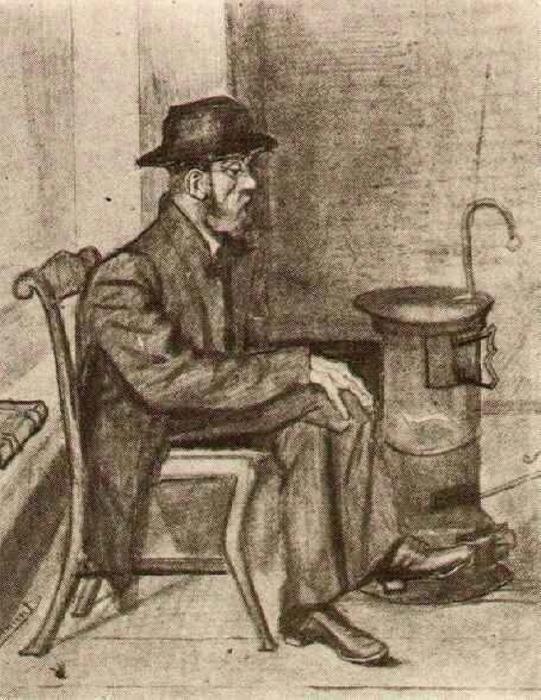
Old Man Warming Himself
Vincent van Gogh’s “Old Man Warming Himself,” painted in 1882 during his formative years as an artist, stands as a testament to his remarkable ability to distill profound emotion into seemingly simple visual elements. This artwork isn't merely a depiction of an elderly man seated before a hearth; it’s a carefully constructed meditation on warmth, resilience, and the quiet dignity found in everyday life—themes that would become central to Van Gogh’s artistic vision.
Background and Significance
Vincent van Gogh (1853-1890) emerged from obscurity as one of the most influential figures in Post-Impressionism. His distinctive style, characterized by bold brushstrokes, vibrant color palettes, and expressive textures, irrevocably altered the course of modern art history. Before embarking on his celebrated landscapes and starry nights, Van Gogh honed his craft exploring themes of human experience—often imbued with psychological depth—as evidenced by this early masterpiece.
The Importance of Light
Light is paramount to “Old Man Warming Himself.” The artist meticulously renders the flickering glow emanating from the fireplace, casting dramatic shadows across the room’s walls and illuminating the old man's face and hands with a warm luminescence. This interplay of light and dark isn’t merely aesthetic; it serves as a powerful tool for conveying emotion—the comforting warmth against the encroaching chill symbolizes inner fortitude and acceptance.
Technique and Style
Van Gogh employed thick impasto technique, applying paint directly onto the canvas in bold, textured strokes. This method lends physicality to the image, mirroring the palpable presence of heat and creating a tactile experience for the viewer. The subdued color palette—primarily browns, reds, and yellows—contributes to the painting’s melancholic yet serene atmosphere. These colors are not chosen arbitrarily but deliberately evoke feelings of warmth and nostalgia.
Symbolism
The old man himself embodies resilience and quiet contemplation. His posture exudes calmness and acceptance, suggesting a lifetime spent confronting hardship with grace. The hearth represents comfort, domesticity, and the enduring human desire for connection—elements that resonate deeply within the viewer’s subconscious. Furthermore, the painting's composition—the central figure framed by the fireplace—creates a sense of intimacy and invites reflection on themes of aging, vulnerability, and inner peace.
Emotional Impact
"Old Man Warming Himself" transcends mere representation; it communicates an emotional truth about human experience. The painting’s evocative imagery captures a moment of profound stillness—a reminder that beauty can be found in the simplest gestures and that warmth—both literal and metaphorical—can sustain us through life's challenges. It is precisely this ability to convey emotion with unwavering conviction that secures Van Gogh’s place as one of art history’s most enduring icons.