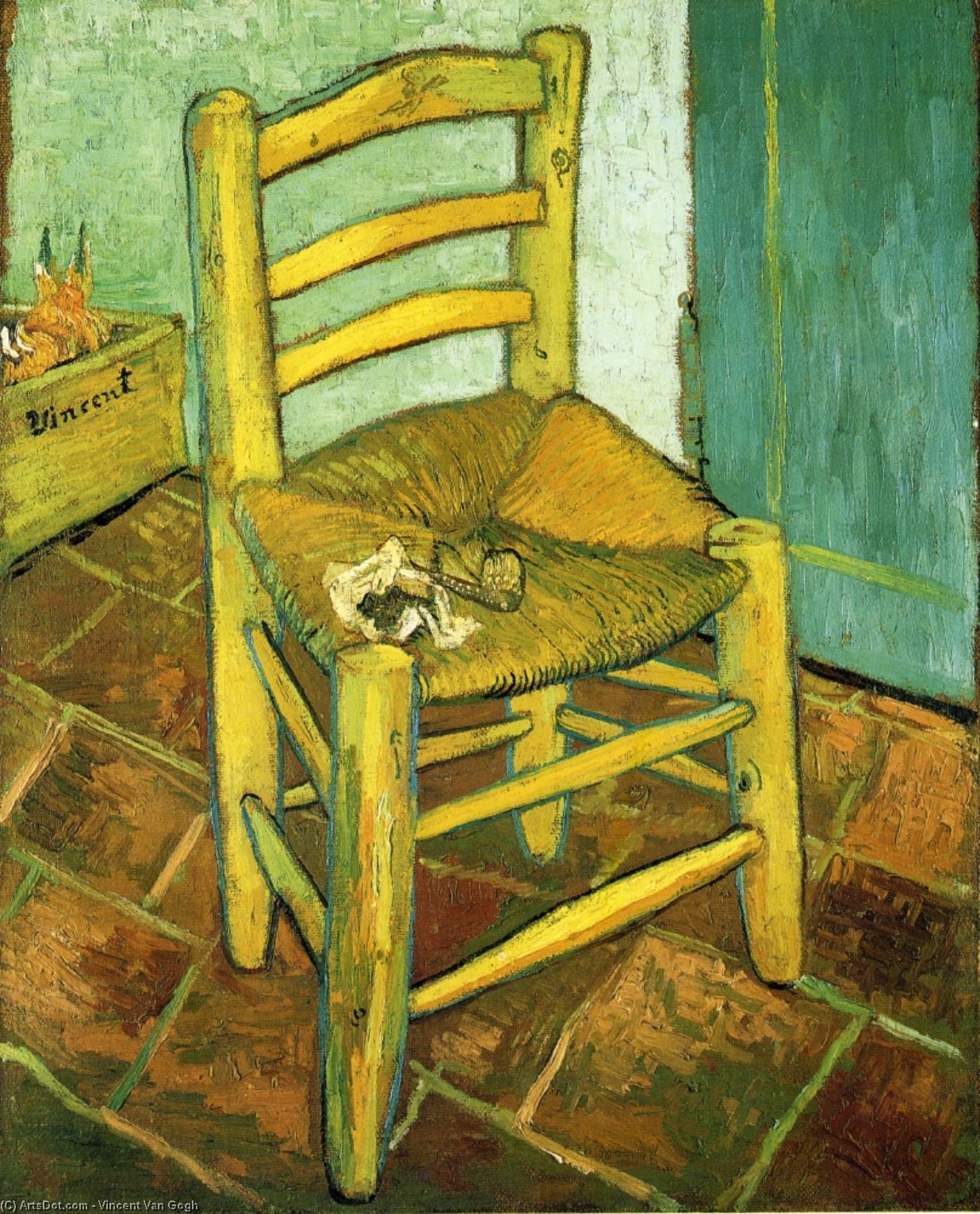
Van Gogh's Chair
Vincent van Gogh, one of the most renowned artists in history, created a plethora of iconic works that continue to captivate art enthusiasts worldwide. Among his notable pieces is
Van Gogh's Chair, a painting that exudes a sense of solitude and comfort.
The Painting
Painted in 1888,
Van Gogh's Chair measures 92 x 73 cm and is executed in oil on canvas. The artwork is characterized by its vibrant colors and bold brushstrokes, hallmarks of Van Gogh’s post-impressionist style. The chair itself is depicted against a blue wall, with a cushion placed upon it. A bird perched atop the chair adds an element of whimsy to the composition.
Symbolism and Interpretation
The chair in the painting can be seen as a symbol of comfort and solitude. Van Gogh often found solace in his work during periods of mental turmoil, and this piece may reflect his desire for peace and tranquility. The bird on the chair could represent freedom or the artist’s longing for escape from his struggles.
Artistic Context
Van Gogh was influenced by various artistic movements, including Impressionism and Japanese woodblock prints. His time in Arles, where he established an artistic retreat, saw a significant shift in his style towards brighter colors and more expressive brushwork.
Van Gogh's Chair is a testament to this evolution. It’s remarkable how he captured the essence of everyday life—a simple chair—transforming it into an emblem of introspection and artistic vision.
Legacy and Impact
After Van Gogh’s death, his work gained widespread recognition, and he became an icon of the tortured artist. His bold use of color and expressive technique inspired subsequent art movements, such as Fauvism and German Expressionism. Today, his paintings are among the most valuable in the world.
Current Location
handmade oil painting reproductions of
Van Gogh's Chair are available at ArtsDot. These high-quality reproductions capture the essence and beauty of Van Gogh’s original work. In conclusion,
Van Gogh's Chair is a poignant reflection of the artist’s inner world, symbolizing comfort and solitude amidst turmoil. Its significance extends beyond its creation, influencing generations of artists and art lovers alike.
This painting stands as a cornerstone of Van Gogh’s oeuvre, embodying his distinctive approach to depicting familiar objects with profound emotional resonance.