A Glimpse into Edwardian Life: Walter Sickert's Portraiture
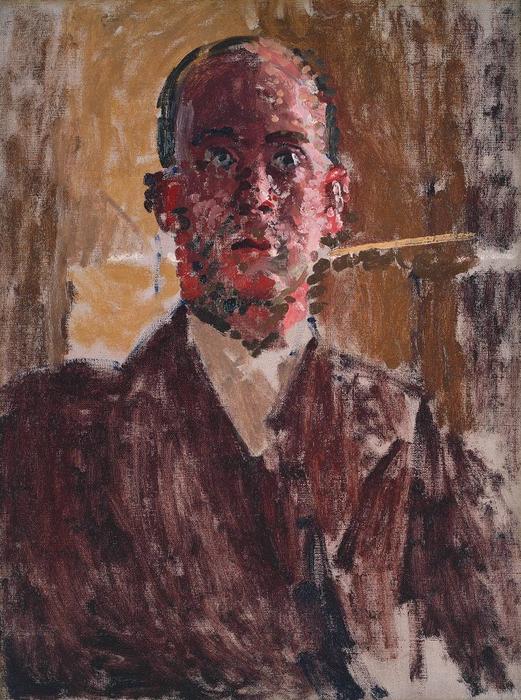
Walter Richard Sickert’s depiction of Harold Gilman is more than just a likeness; it is a carefully preserved moment plucked from the vibrant, sometimes fraught, atmosphere of early twentieth-century London. The painting immediately draws the viewer into its scene, presenting a man—Gilman himself—whose mustache and tailored suit speak volumes about the era's formality while his expression hints at an inner life far more complex than polite society allows. Sickert, forever fascinated by the edges of respectable life, captures this sense of poised observation. The composition is rich with implied narrative; beyond the central figure, other individuals populate the periphery, suggesting a gathering or a moment caught mid-conversation. These secondary figures and the carefully placed accessories, such as the visible tie in the upper right, act like subtle footnotes to the main subject, deepening the sense of place and time.
Technique and Theatrical Realism
Sickert’s mastery is evident in his handling of paint, a technique that eschews high academic polish for something far more immediate and psychologically resonant. His brushwork possesses a characteristic immediacy, lending the scene a palpable sense of air and light—a quality that makes reproductions so compelling for modern interiors. The realism here is not merely descriptive; it is atmospheric. He uses shadow and highlight not just to model form, but to suggest mood. One can almost feel the weight of the velvet or the crispness of the starched collar. This commitment to capturing fleeting reality gives the work a timeless quality, allowing it to anchor any room, whether in a grand drawing-room or a more intimate study.
Historical Echoes and Social Commentary
Painted in 1912, this work sits at a fascinating cultural crossroads. The Edwardian period was characterized by rigid social structures juxtaposed against the burgeoning energy of modern artistic thought. Sickert, himself an artist navigating between established tradition and modernist currents, imbues Gilman with a sense of both belonging and slight detachment. The painting invites us to consider the performance inherent in social life—the roles we adopt for public consumption versus the private self. It speaks to that universal tension: the mask worn for society versus the truth glimpsed in a momentary glance.
Emotional Resonance for the Modern Collector
For the collector or designer, this piece offers profound depth without demanding overt narrative explanation. Its emotional impact is subtle—a quiet sense of being observed, understood, and slightly exposed. Owning a reproduction of Harold Gilman is acquiring a conversation starter steeped in art history. It suggests an appreciation for portraiture that delves beyond mere vanity, favoring instead the nuanced study of character. Whether placed above a mantelpiece or within a gallery setting, this artwork brings with it the sophisticated patina of early twentieth-century European culture, inviting contemplation upon every passing glance.