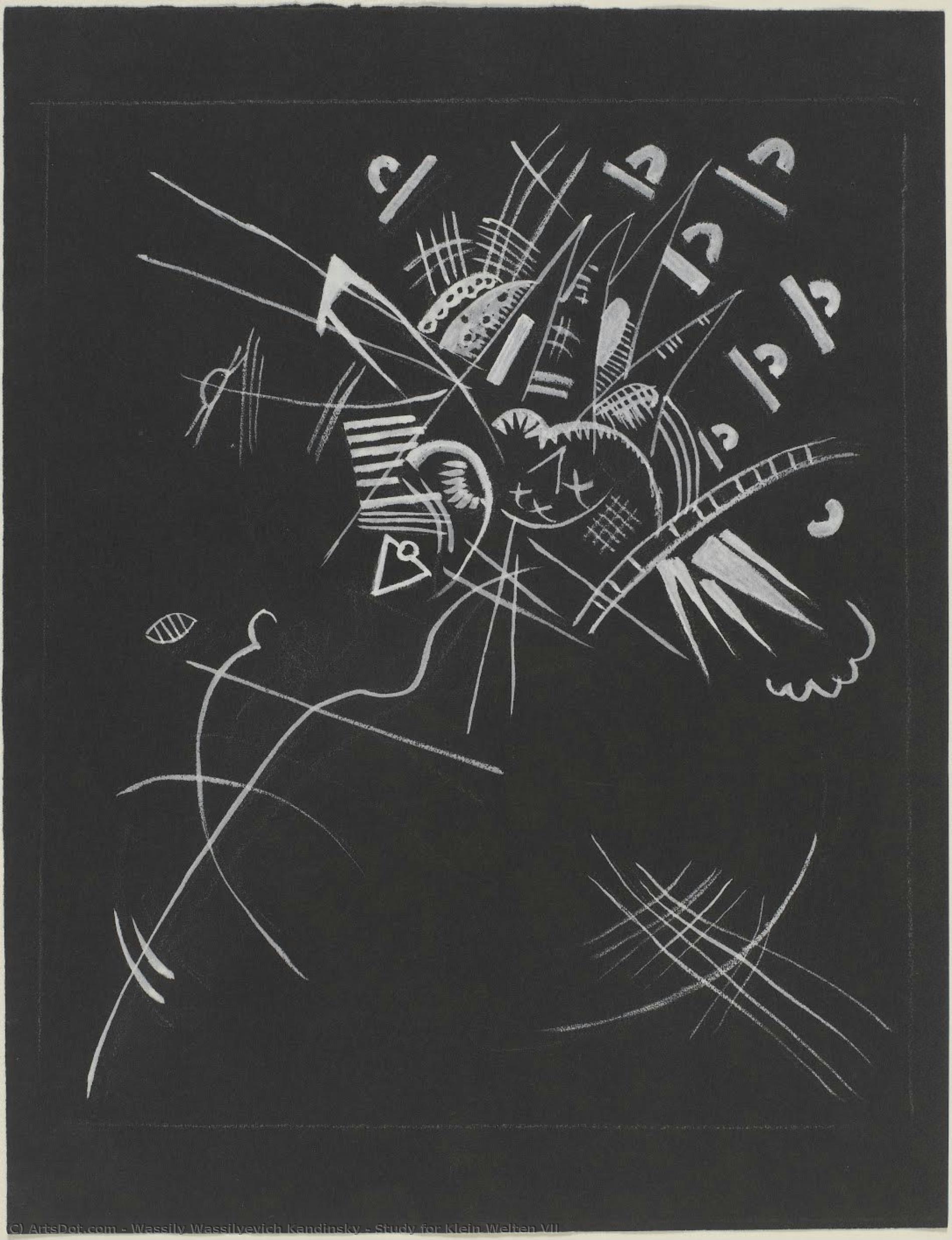
Este estudio monocromo ejemplifica el enfoque modernista de Kandinsky hacia la abstracción. Con líneas y formas geométricas, transmite energía espiritual a través de la gouache. Descubra su papel en el Expresionismo.
Descubre a Kandinsky (1866-1944), pionero del arte abstracto! Explora su expresionismo vibrante, temas espirituales y legado Bauhaus con reproducciones impresionantes.
Descubre el Centre Pompidou: arte moderno y contemporáneo en París, arquitectura innovadora y un ecosistema cultural vibrante. ¡Una experiencia única!
Study for Klein Welten VII: A Symphony of Line and Monochrome
“Study for Klein Welten VII,” a striking black and white photograph capturing Wassily Kandinsky’s seminal abstract painting, offers an unparalleled glimpse into the genesis of Expressionist art. More than just pigment on canvas; it represents a profound exploration of form, color (albeit absent in its photographic representation), and the very essence of artistic intuition—a cornerstone of Kandinsky's groundbreaking contribution to modernism. The image itself is deceptively simple – a carefully composed arrangement of intersecting lines, geometric shapes, and tonal variations – yet within this apparent austerity lies an astonishing depth of conceptual and emotional resonance.
Composition and Technique: Embracing Controlled Chaos
Kandinsky’s meticulous approach to creating “Study for Klein Welten VII” exemplifies his dedication to distilling artistic ideas into their purest form. Executed in gouache on paper, the original artwork demonstrates a masterful layering technique—lines are built up gradually, creating textures and suggesting movement that transcend mere visual representation. The asymmetrical balance of the composition directs the eye upwards, emphasizing expansive areas punctuated by dense clusters of lines radiating outwards from a central focal point. This deliberate imbalance isn’t accidental; it mirrors Kandinsky's belief in capturing spontaneous emotional impulses—a core principle of Expressionism. The artist skillfully utilizes tonal values to sculpt form and create depth, subtly hinting at the textured surface of the gouache medium itself.
Historical Context: Bauhaus Influence and Spiritual Exploration
Born in Moscow in 1866, Kandinsky’s artistic journey began with a fascination for Impressionist painting—particularly Monet's “Haystacks”—a formative experience that instilled within him an appreciation for capturing fleeting moments of light and color. However, it was his encounter with Wagner’s opera "Lohengrin" that truly catalyzed his transformative vision: witnessing the dramatic unfolding of musical emotion ignited his desire to express similar feelings through visual art. Moving to Munich in 1908, he enrolled at the Academy of Fine Arts and studied under Franz von Stuck, yet Kandinsky remained steadfastly committed to pursuing artistic innovation beyond academic conventions. His involvement with the Bauhaus movement further solidified his belief in uniting art and craftsmanship—a testament to his enduring influence on subsequent generations of artists.
Symbolism and Emotional Impact: Beyond Representation
“Study for Klein Welten VII” stands apart from representational art because it abandons literal depiction, prioritizing instead the conveyance of emotion and spiritual experience. Kandinsky’s conviction that abstract forms could communicate profound feelings—energy, movement, cosmic order—is vividly realized in this artwork. The intersecting lines aren't merely decorative; they symbolize pathways to inner consciousness and represent the dynamic interplay between opposing forces. The monochrome palette – shades of black, white, and gray – serves not as a limitation but as a conduit for focusing on pure form and color (as expressed in the original gouache), allowing viewers to engage directly with the artwork’s emotional core. It invites contemplation and encourages an intuitive response—a reflection of Kandinsky's unwavering belief in art’s capacity to transcend rational thought.
A Legacy of Innovation
Ultimately, “Study for Klein Welten VII” embodies Kandinsky’s pioneering spirit and his indelible mark on the history of modern art. Its enduring appeal lies not only in its aesthetic beauty but also in its intellectual depth—a testament to the artist's profound understanding of the relationship between art and emotion. Reproductions of this iconic piece offer a captivating opportunity to experience firsthand the transformative power of abstract expressionism and to appreciate Kandinsky’s unwavering pursuit of artistic truth.