Wassily Wassilyevich Kandinsky (1866-1944) revolutionized art with his pioneering exploration of abstract expressionism, fueled by encounters with Impressionism and Wagnerian opera. Discover his legacy through exceptional reproductions.
Descubre a Kandinsky (1866-1944), pionero del arte abstracto! Explora su expresionismo vibrante, temas espirituales y legado Bauhaus con reproducciones impresionantes.
Descubre el arte de Detroit en el DIA: murales impresionistas, obras maestras europeas y una colección estadounidense excepcional. Historia, cultura y belleza para todos.
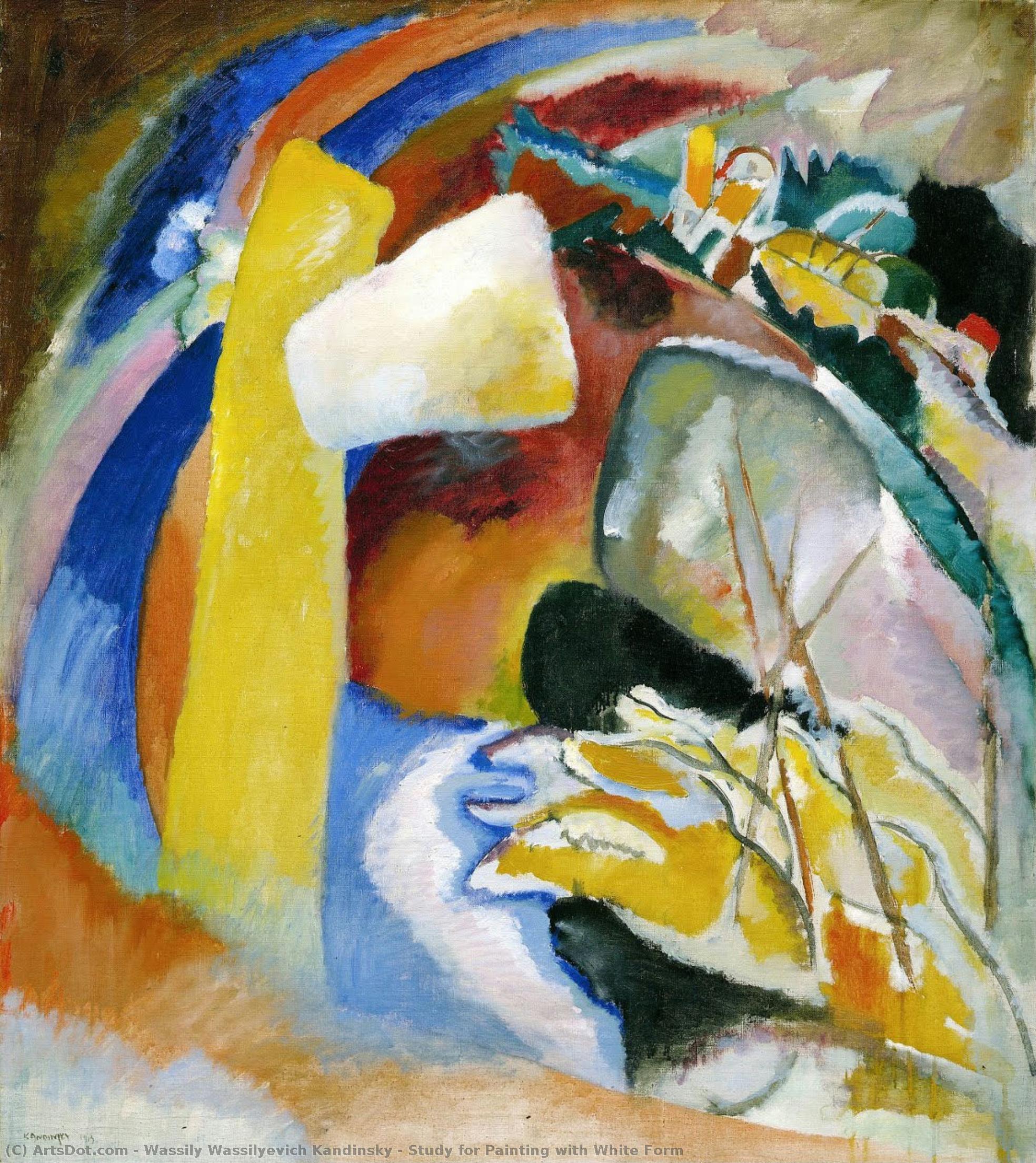
A Symphony of Color and Spirit: Exploring Vasily Kandinsky’s “Study for Painting with White Form”
The year is 1913. Munich pulses with artistic fervor, yet amidst the bustling studios and ambitious visions of Franz von Stuck lies a singular voice – Vasily Kandinsky – wrestling with questions that would reshape the very definition of art itself. His canvas before him isn’t merely pigment on paper; it's an earnest attempt to distill the essence of experience into pure visual form—a concept he termed “pictorial space,” rejecting the illusionistic conventions of Western painting and embracing instead a radical departure toward abstraction. This "Study for Painting with White Form," rendered in watercolor, opaque watercolor, and ink, offers a glimpse into this formative period, revealing not just artistic technique but also Kandinsky’s profound engagement with the spiritual realm.
The Genesis of Abstraction: Influences Beyond Impressionism
Kandinsky's fascination began long before Monet’s “Haystacks.” Witnessing Wagner’s “Lohengrin” ignited within him a transformative epiphany—a realization that music could transcend representation, conveying emotion and spirit directly to the soul. This experience profoundly impacted his artistic sensibilities, pushing him beyond the descriptive aims of Impressionism toward an exploration of inner sensation. Simultaneously, he drew inspiration from Russian folk art, recognizing its expressive power in capturing primal rhythms and archetypal symbols. These influences coalesced into a conviction that art should strive for something more than mere imitation; it must communicate universal truths—a belief that would underpin his entire artistic career.
Technique and Composition: A Delicate Balance of Color and Texture
The execution of “Study for Painting with White Form” exemplifies Kandinsky’s meticulous approach to abstraction. Watercolor, known for its luminous qualities and ability to blend seamlessly, was skillfully layered upon paper—a technique favored by artists seeking to capture fleeting moments of perception. Careful attention was paid to texture, achieved through subtle variations in ink application, creating a surface that invites contemplation. The composition itself is dominated by a central yellow object – a deliberate choice reflecting Kandinsky’s preoccupation with color as a vehicle for conveying emotion and spiritual significance. Surrounding it are bands of red and blue, interwoven in complex patterns—a visual representation of opposing forces striving for harmonious equilibrium.
Symbolism Embedded Within Form: Exploring Inner Landscapes
Beyond its technical merits, “Study for Painting with White Form” is laden with symbolic meaning. Kandinsky believed that colors possessed inherent spiritual qualities—yellow representing joy and enlightenment, red embodying passion and vitality, blue symbolizing tranquility and contemplation. These hues aren’t merely decorative; they are deliberately positioned to evoke specific emotional responses in the viewer, guiding them toward an inner landscape of feeling and intuition. The geometric shapes employed – circles and lines – further contribute to this symbolic dimension, representing wholeness and dynamism respectively—elements crucial to Kandinsky's vision of pictorial space as a realm beyond visual representation.
Emotional Resonance: Capturing the Essence of Experience
Ultimately, “Study for Painting with White Form” succeeds in conveying the profound emotional impact of Kandinsky’s artistic quest. It’s not an artwork designed to depict a specific scene or object; rather, it seeks to capture the very essence of experience—the feeling of encountering beauty and wonder. The delicate interplay of color and texture invites viewers into a meditative state, prompting them to consider questions about perception, emotion, and spirituality. Like all great art, this piece transcends its materiality, resonating with audiences across time and culture—a testament to Kandinsky’s enduring legacy as one of the pioneers of abstract expressionism.