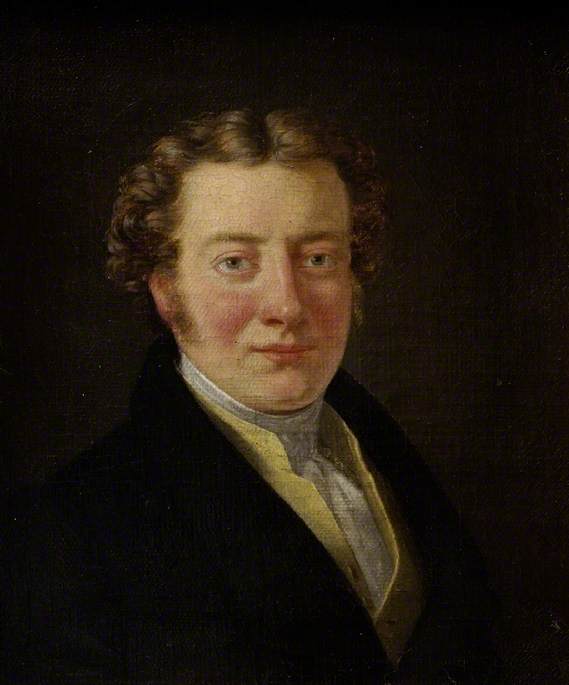
Discover Wilhelm Ferdinand Bendz’s "Portrait of a Man," an early 19th-century oil painting showcasing realism & romanticism. Explore its rich browns, subtle shading & historical significance.
Wilhelm Bendz (1804-1832), pintor danés de la Edad de Oro, retrató artistas y escenas cotidianas con maestría en luz y sombra. Descubre su estilo refinado.
Descubre arte excepcional en el Fitzwilliam Museo de Cambridge: obras maestras desde siglos pasados, impresionantes paisajes de Monet y retratos inolvidables de Rembrandt. ¡Una experiencia cultural única!
A Portrait Steeped in Romantic Sentiment: Wilhelm Ferdinand Bendz’s Masterpiece
Wilhelm Ferdinand Bendz (1804–1832), a Danish artist hailing from Odense, represents a poignant emblem of the Danish Golden Age—a period characterized by artistic flourishing and intellectual curiosity. Though his life tragically ended prematurely in Vicenza, Italian Empire, Bendz left behind an enduring legacy encapsulated in “Portrait of a Man,” a captivating oil painting housed at The Fitzwilliam Museum in Cambridge, England. This artwork transcends mere likeness; it embodies the spirit of Romanticism, skillfully blending realism with emotive expression to convey profound psychological depth.
The Artist’s Training and Influences
Bendz began his artistic journey under the tutelage of Christoffer Wilhelm Eckersberg at the Royal Danish Academy of Fine Arts between 1820 and 1825. Eckersberg, a towering figure in Danish painting, instilled in Bendz a commitment to meticulous observation and tonal modulation—techniques that would become hallmarks of his oeuvre. Notably, Bendz absorbed considerable influence from the Munich School, whose artists championed dramatic lighting and expressive brushwork, mirroring stylistic trends prevalent at the time. This exposure undoubtedly shaped Bendz’s artistic sensibilities and contributed to the distinctive character of “Portrait of a Man.”
Technical Mastery: Layered Oil Paint and Careful Modeling
The painting's execution demonstrates remarkable technical prowess. Bendz employed a layering technique—applying thin glazes over underpaintings—to build up form and achieve subtle gradations of color. This meticulous approach allowed him to sculpt the face with painstaking detail, capturing the contours of bone structure and muscle tissue. The artist’s masterful use of shading creates an illusion of three-dimensionality, drawing the viewer's eye into the subject’s gaze. Furthermore, visible brushstrokes—particularly in the rendering of hair and facial features—inject texture into the canvas, conveying a sense of immediacy and capturing the ephemeral quality of light.
Symbolism and Emotional Resonance
Beyond its technical brilliance, “Portrait of a Man” resonates with symbolic significance. The subject’s attire—a dark jacket adorned with ornate buttons—suggests wealth and social status, reflecting the aspirations of the Danish aristocracy during Bendz's era. However, more powerfully, the portrait captures an expression of quiet contemplation—a gaze directed inward that hints at inner thoughts and emotions. This psychological nuance aligns perfectly with Romantic ideals, prioritizing subjective experience over objective representation. The painting’s subdued palette—dominated by browns, yellows, and creams—contributes to its melancholic atmosphere, inviting viewers to contemplate themes of introspection and human vulnerability.
A Legacy Preserved Through Reproduction
Today, “Portrait of a Man” stands as a testament to Bendz's artistic vision and the enduring power of Romantic art. Its meticulous detail, emotive lighting, and symbolic depth continue to inspire admiration among connoisseurs and collectors alike. High-quality reproductions offer an opportunity to appreciate this masterpiece’s beauty and intellectual richness—bringing its evocative spirit into contemporary interiors and enriching our understanding of Danish artistic heritage.