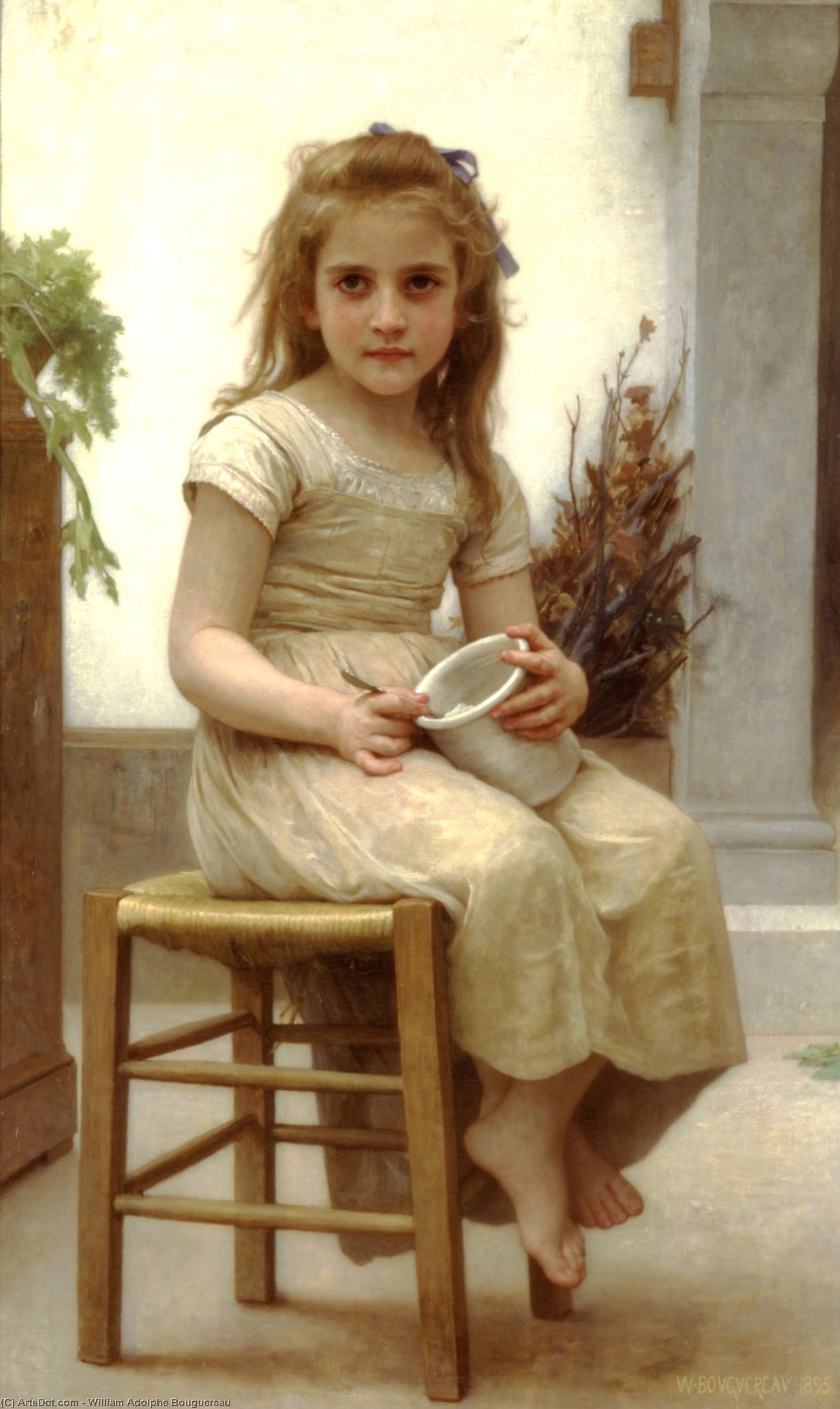
William-Adolphe Bouguereau’s ‘The Snack,’ a captivating 1895 portrait in the Academic style, depicts a young girl with exquisite realism and luminous detail, inviting you to discover this timeless beauty.
William-Adolphe Bouguereau’s *The Snack*: A Study in Innocence and Ideal Beauty
William-Adolphe Bouguereau's The Snack (also known as *Le Gouter*), painted in 1895, is a quintessential example of the artist’s unwavering commitment to classical ideals and his masterful ability to evoke an almost unsettling sense of serene beauty. This captivating portrait of a young girl, rendered with meticulous detail and luminous color, offers a glimpse into Bouguereau's artistic philosophy – a pursuit of idealized perfection rooted in the traditions of Raphael and Titian. The scene is deceptively simple: a child seated on a stool, seemingly lost in contemplation as she holds a cup or bowl before her. Yet, within this quiet tableau lies a profound exploration of innocence, vulnerability, and the very nature of beauty itself.
Academic Style and Technical Mastery
Painted during his most productive period, *The Snack* exemplifies Bouguereau’s signature Academic style. This approach prioritized precise observation, anatomical accuracy, and a polished surface finish – hallmarks of the École des Beaux-Arts training he received. Notice the almost hyperrealism with which Bouguereau depicts the girl's skin, hair, and clothing; each fold and shadow is rendered with painstaking care. The artist’s use of color is equally remarkable, employing a palette of soft, muted tones that create a sense of atmospheric depth and luminosity. His brushwork is delicate yet confident, contributing to the overall impression of polished perfection. Bouguereau's technique involved numerous layers of thin glazes applied over time, building up the rich colors and textures that define his work.
Symbolism and Context
The painting’s title, *Le Gouter*, refers to a light afternoon snack – a detail that subtly elevates the scene beyond mere portraiture. The girl's posture and expression suggest a moment of quiet contemplation, perhaps a simple pleasure enjoyed in solitude. The presence of the potted plants adds another layer of symbolism, representing nature’s beauty and fragility. Bouguereau frequently incorporated natural elements into his work, reflecting his deep appreciation for the classical world and its emphasis on harmony between humanity and the environment. Created during a period of significant artistic change – Impressionism was challenging traditional academic styles – *The Snack* represents a steadfast adherence to established conventions, demonstrating Bouguereau’s belief in the enduring power of classical ideals.
Emotional Impact and Artistic Legacy
*The Snack* possesses an undeniable emotional resonance. The girl's innocent gaze and delicate features evoke feelings of nostalgia, tenderness, and perhaps even a touch of melancholy. Bouguereau’s ability to capture such subtle nuances is a testament to his artistic genius. This work remains a powerful example of Bouguereau’s influence on subsequent generations of artists, solidifying his place as one of the most celebrated painters of the 19th century. A hand-painted reproduction offers an unparalleled opportunity to experience the beauty and serenity of this iconic masterpiece firsthand.