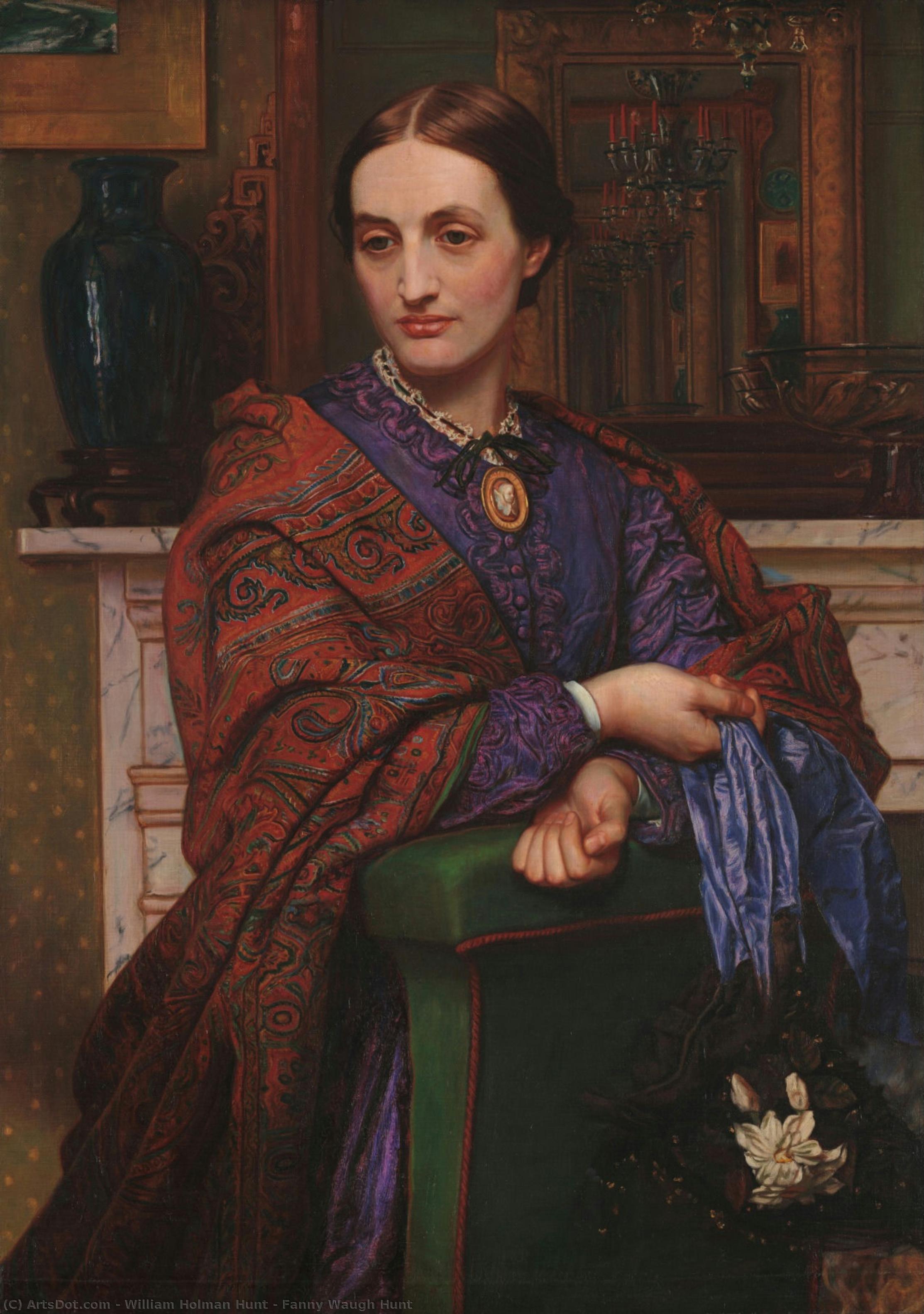
William Holman Hunt’s “The Lady of Shalott” exemplifies Pre-Raphaelite artistry with meticulous detail and luminous glazing, reflecting Ruskin's belief in perceiving the world as God sees—a profound meditation on faith and duty symbolized by serene beauty and medieval iconography.
The Lady of Shalott: A Vision of Faith and Fate
William Holman Hunt’s “The Lady of Shalott,” completed in 1905, stands as arguably the Pre-Raphaelite Brotherhood's most ambitious undertaking—a monumental canvas that transcends mere depiction to embody a profound meditation on faith, duty, and the inescapable pull of time. More than just a visual representation of Tennyson’s iconic poem, it is an immersive experience designed to transport the viewer into the contemplative heart of Victorian England’s spiritual awakening.
- Subject Matter: The painting captures the pivotal moment from Tennyson's narrative—the Lady of Shalott’s fateful decision to abandon her loom and venture forth from the tower, spurred by a glimpse of Sir Launcelot riding past. This scene encapsulates the poem’s central theme: the conflict between artistic aspiration and moral obligation.
- Style & Technique: Hunt meticulously adhered to Ruskin's dictum that “the artist must see as God sees,” prioritizing accuracy of detail and striving for a luminous, almost ethereal quality achieved through painstaking glazing techniques—a hallmark of Pre-Raphaelite painting. The artist painstakingly recreated the scene from Tennyson’s poem using sketches and drawings made in 1857.
A Symphony of Symbolism
The Lady herself embodies purity and contemplation, symbolized by her alabaster skin and serene gaze. Her attire—a pale lilac dress adorned with delicate embroidery—reflects the ethereal beauty championed by Ruskin and Carlyle.
Crucially, Hunt’s composition is laden with symbolic references drawn from medieval art and Christian iconography. The tower represents isolation and confinement, mirroring the Lady's self-imposed exile. Above her loom hangs a depiction of the adoration of the Christ Child by Lucca della Robbia—a deliberate allusion to humility and divine grace.
The mirror reflects not merely Sir Launcelot’s passing but also the encroaching influence of worldly distractions, highlighting the perilous temptation to abandon spiritual pursuits for fleeting pleasures. The serpents coiled beneath Hercules' feet symbolize vigilance against evil, mirroring the Lady’s struggle to maintain her moral compass.
The Artful Reconstruction
Hunt’s dedication to recreating the scene with meticulous precision extended beyond mere visual accuracy. He painstakingly sourced objects from Florence—a Chinese porcelain vase and gold mirror frame, Venetian glass bowl and chandelier, Persian pottery dish—creating an interior space that embodies Victorian artistic taste.
Furthermore, Hunt employed multiple mirror reflections to heighten the sense of eternity and subtly convey the passage of time. The artist’s assistant, Edward Robert Hughes, meticulously recreated backgrounds and props using photographs and plaster casts, ensuring that every element contributed to the painting's overall impact.
Emotional Resonance
"The Lady of Shalott" transcends its narrative source material to evoke a powerful emotional response in viewers. The luminous palette—dominated by pale blues and greens—creates an atmosphere of tranquility and melancholy, mirroring the Lady’s impending doom.
Hunt's masterful rendering captures not only the visual splendor of Victorian England but also the profound spiritual anxieties of his era. It serves as a timeless reminder that true beauty lies in embracing moral integrity and resisting the allure of worldly distractions—a message that continues to resonate with audiences today.