A Portrait of Friendship Amidst Artistic Rivalry
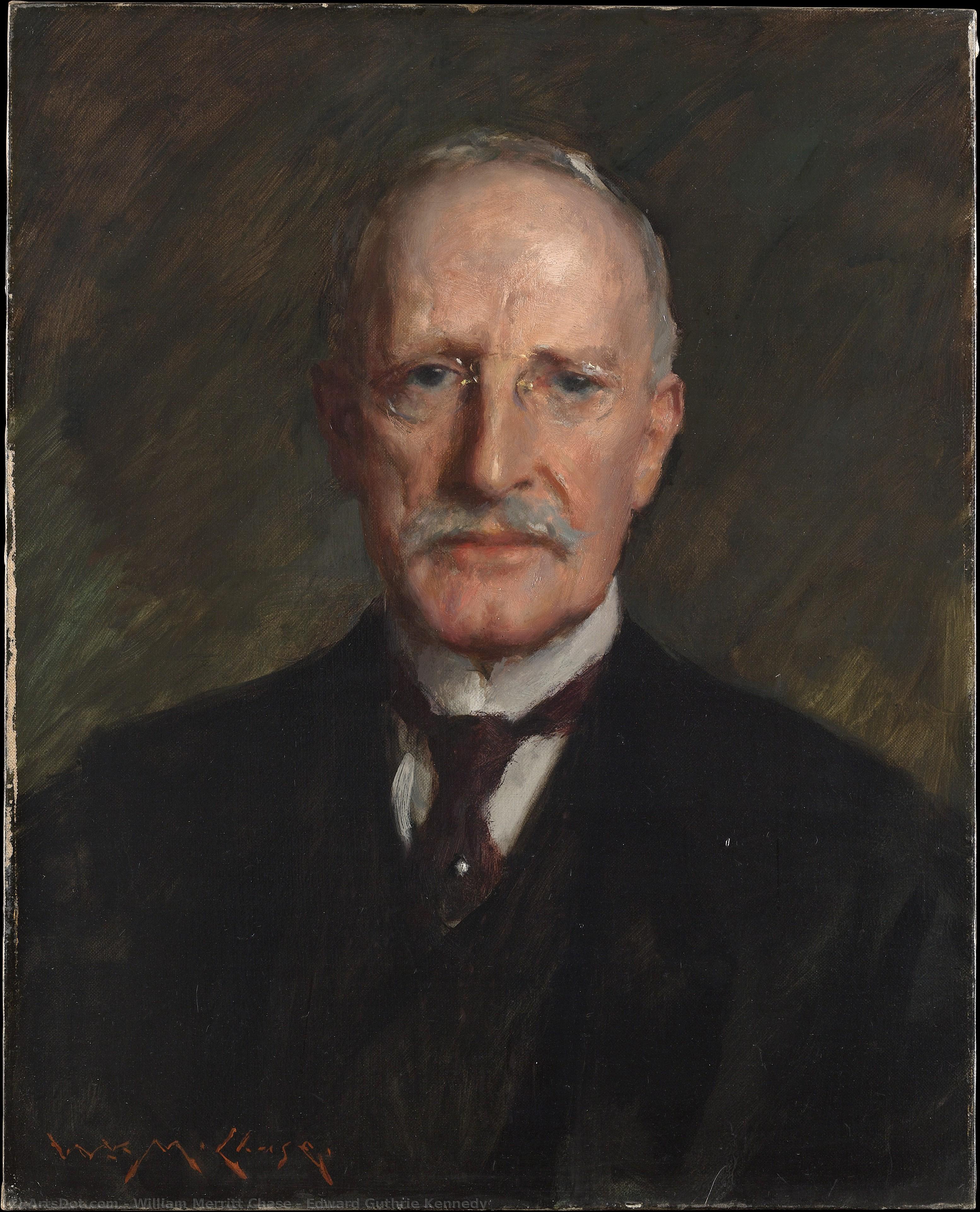
William Merritt Chase’s “Edward Guthrie Kennedy” stands as a poignant snapshot of American Impressionism's formative years, capturing not merely a likeness but also the complex dynamics of artistic collaboration and personal connection. Painted in 1895, this portrait commissioned by Chase for the National Academy of Design offers a glimpse into the burgeoning art world of New York City and reflects the tensions simmering beneath the surface of celebrated artists like Whistler and Chase themselves.
- Subject Matter: The painting depicts Edward Guthrie Kennedy, an Irish immigrant who had established himself as a successful businessman in Boston before joining Kennedy Galleries alongside Chase.
- Style & Technique: Chase’s Impressionistic approach prioritizes capturing fleeting moments of light and color—a hallmark of the movement—evident in the subtle gradations of tone across Kennedy's jacket and shirt. The brushstrokes are loose and expressive, eschewing meticulous detail for an overall sense of atmosphere.
- Historical Context: This portrait emerged during a period of significant artistic experimentation in America, fueled by influences from European Impressionists like Monet and Renoir. Whistler’s controversial depiction of Chase—a rift that occurred after 1885—provides crucial context for understanding the anxieties surrounding artistic reputation and creative differences.
Whistler's Shadow: The Significance of Collaboration
The portrait’s creation was inextricably linked to Whistler’s own artistic endeavors. Chase served as an intermediary between Whistler and Kennedy, highlighting the interconnectedness of the art world at the time. Whistler’s infamous painting of Chase—a deliberate provocation intended to challenge conventional notions of beauty—underscored the competitive spirit prevalent within the Parisian avant-garde and fueled debates about artistic merit.
- Symbolism: While subtle, Kennedy's gaze directs towards the viewer, suggesting a quiet confidence and conveying an unspoken acknowledgment of Chase’s presence. The formal setting—a wall—reinforces the idea of professionalism and reinforces the portrait’s role as documentation of a significant relationship.
- Emotional Impact: “Edward Guthrie Kennedy” transcends mere representation; it embodies the warmth of friendship amidst artistic ambition. The painting's serene palette and masterful brushwork evoke a sense of contemplative stillness, inviting viewers to appreciate both the beauty of the artwork itself and the story it tells about two artists navigating the complexities of their creative partnership.
A Legacy Preserved: Kennedy Galleries’ Contribution
Ultimately, Chase's generosity in donating Kennedy’s cloisonnÉ enamels and Japanese robes to the Metropolitan Museum cemented his legacy as a champion of both artistic innovation and cultural preservation. This act reflects the broader ethos of American Impressionism—a commitment to capturing the spirit of the age while honoring traditions from around the globe.
- Reproduction Considerations: ArtsDot offers exceptional reproductions of “Edward Guthrie Kennedy,” meticulously crafted to faithfully reproduce Chase’s original technique and color palette. These prints are ideal for enhancing any interior space and bringing a touch of Impressionistic elegance into your home.