Man of Science: A Portrait of Intellectual Curiosity
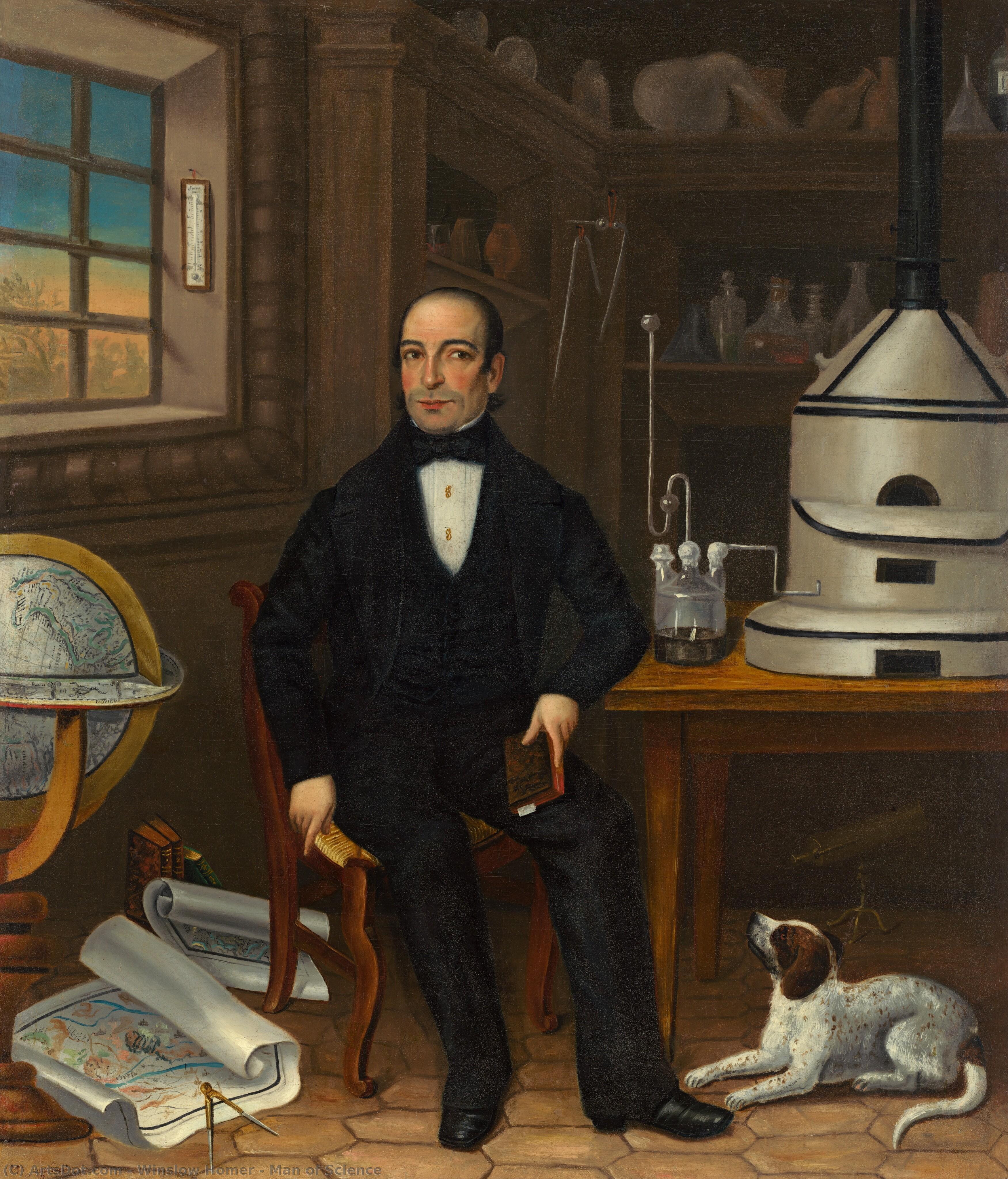
Winslow Homer’s “Man of Science,” completed in 1839, transcends mere depiction; it embodies the spirit of American intellectual ambition during a pivotal moment in history. This oil on canvas masterpiece—measuring 109 x 94 cm and currently residing at the Williams College Museum of Art—captures not just an individual figure but also the broader ethos of scientific inquiry prevalent in mid-nineteenth century America.
- Composition: Homer skillfully arranges his subject within a laboratory setting. A man seated at a table dominates the scene, surrounded by instruments like flasks and books—symbols of methodical observation and experimentation. Two dogs offer companionship, grounding the figure in domestic tranquility amidst intellectual pursuits.
- Setting: The room’s details – a chair positioned to the left and a clock above the man's head – reinforce the importance of time and precision within scientific endeavors. These elements speak to Homer’s meticulous attention to detail and his desire to convey an authentic representation of the era.
- Artistic Significance: Homer’s work exemplifies Realism, blending observation with emotional resonance. Unlike Romantic idealism, he presents a grounded portrayal of human experience—a man wrestling with ideas, striving for understanding. This approach distinguishes him from many of his contemporaries and establishes him as one of America's foremost painters.
- Historical Context: The mid-1830s witnessed an explosion of scientific discovery in the United States – advancements in geology, biology, and chemistry reshaping perceptions of the natural world. Homer’s painting reflects this burgeoning fascination with knowledge and its transformative potential.
Winslow Homer was influenced by movements like Realism and Romanticism, skillfully merging their stylistic elements to create a uniquely compelling visual experience. His ability to capture not only physical appearance but also psychological nuance—evident in the man’s gaze and posture—solidifies his legacy as an artist who profoundly engaged with the intellectual currents of his time.
Consider this: Homer's "Man of Science" isn’t simply a portrait; it’s a testament to the human desire for understanding, rendered with remarkable sensitivity and precision. It invites contemplation on the role of intellect in shaping our perception of the world around us—a theme that continues to resonate powerfully today.
Notable Works by Winslow Homer
- Winslow Homer: Man of Science (109 x 94 cm, Oil On Canvas)
- Winslow Homer: The Morning Bell
- Pat Steir: After Winslow Homer I (76 x 76 cm, Oil On Canvas)
Further Exploration
To delve deeper into Homer’s artistic vision and its enduring impact, explore resources like WikiArt (WikiArt) and the Metropolitan Museum of Art (Metropolitan Museum of Art). These platforms offer detailed information about his life, oeuvre, and critical reception—illuminating the significance of “Man of Science” within the broader context of American art history.