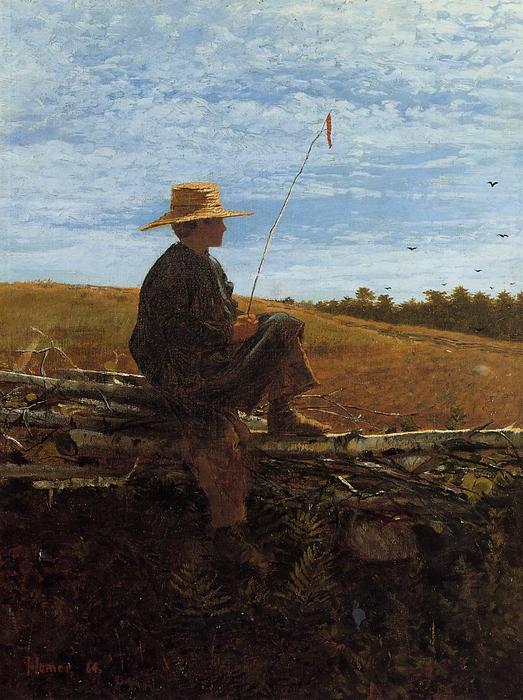
Winslow Homer’s serene ‘On Guard,’ painted in 1864, captures the quiet beauty of rural America with masterful watercolor technique and a contemplative fisherman gazing upwards at birds—a timeless depiction reflecting Homer's distinctive American realism.
A Moment Frozen in Time: Winslow Homer’s “On Guard”
- Winslow Homer's "On Guard," painted in 1864, transcends mere depiction; it embodies the spirit of American resilience and contemplative observation during Reconstruction. Captured in stark black and white photography, this serene landscape offers a profound glimpse into the psychological state of its subject – a solitary fisherman patiently awaiting his catch.
- Homer’s distinctive style is characterized by masterful watercolor technique combined with meticulous detail. He eschewed academic conventions, prioritizing direct observation and capturing the essence of rural New England life. The artist's approach mirrored the pragmatism prevalent in American art at the time, rejecting idealized representations for honest portrayals.
Subject Matter and Composition: Observing Nature’s Rhythm
The painting centers around a man seated on a log, holding a fishing pole, gazing upwards towards the expansive sky. This seemingly simple composition is imbued with symbolic significance. Homer deliberately places his figure against the backdrop of birds circling overhead – a deliberate choice reflecting the cyclical nature of life and labor. The presence of two additional figures in the distant background underscores the importance of community and human connection within the broader landscape.
Technique and Artistic Innovation: Watercolor’s Quiet Power
Homer's mastery lies in his watercolor technique, which he honed during his early illustration career. Unlike oil painting, watercolor allows for subtle gradations of tone and color—a crucial element in conveying the atmospheric mood of the scene. The artist skillfully utilizes layering and blending to achieve a luminous effect, capturing the diffused light filtering through the branches of trees and illuminating the fisherman’s face.
Historical Context: Reconstruction America
Painted during Reconstruction (1865-1877), “On Guard” speaks to the anxieties and hopes of a nation grappling with rebuilding after the Civil War. Homer's depiction of rural life—a return to traditional values amidst societal upheaval—represents a counterpoint to the grand narratives dominating European art circles. The painting’s quiet dignity reflects the yearning for stability and continuity in the face of profound change.
Emotional Resonance: Tranquility Amidst Uncertainty
Ultimately, “On Guard” resonates with viewers on an emotional level. It evokes a feeling of peaceful contemplation—a moment of stillness amidst the challenges of Reconstruction. Homer’s masterful use of light and color contributes to this sense of serenity, inviting us to consider themes of perseverance, patience, and connection to the natural world. The image continues to inspire artists and collectors alike, serving as a testament to Homer's enduring legacy.