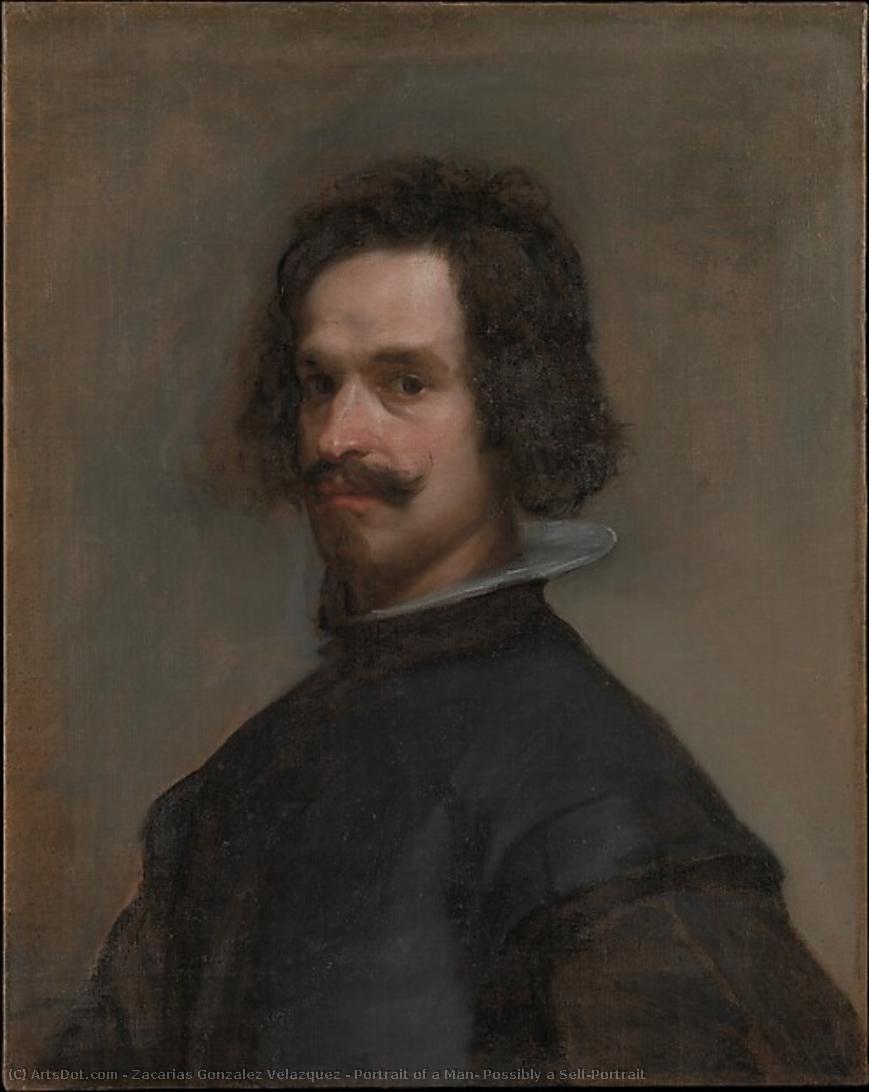
Portrait of a Man, Possibly a Self-Portrait: A Masterpiece of Velázquez’s Baroque Vision
The enigmatic gaze of this portrait—a study for *Surrender of Breda*, arguably the most iconic image of Diego Rodríguez de Silva y Velázquez—captures not merely likeness but an essence of human contemplation. Executed around 1635, it exemplifies Velázquez's unparalleled mastery of chiaroscuro and his meticulous attention to detail within a remarkably restrained chromatic palette. This artwork stands as a testament to the artist’s profound understanding of psychological portraiture and his ability to convey inner states through subtle visual cues—a skill that cemented his reputation as one of the foremost painters of his era.
- Artist: Diego Rodríguez de Silva y Velázquez (Spanish, Seville 1599–1660 Madrid)
- Date: Circa 1635
- Medium: Oil on Canvas
- Dimensions: 69 x 55 cm
The painting’s genesis lies in Velázquez's ambitious commission for Philip IV’s Buen Retiro Palace, where he sought to replicate the expressive power of his earlier portrait of Cristóbal Colón—a deliberate nod to artistic tradition and a demonstration of his unwavering commitment to capturing idealized beauty. Scholars debate whether this piece represents a self-portrait, fueled by speculation surrounding Velázquez's personal life and influenced by the conventions of humanist portraiture prevalent during the Baroque period.
Velázquez’s technique is characterized by an astonishing level of realism achieved through painstaking observation and masterful brushwork. He employed a layered approach—building up tonal gradations with thin glazes—to create surfaces that shimmer with subtle luminescence. This meticulous attention to texture and color contributes significantly to the painting's emotional impact, conveying a sense of quiet dignity and introspective contemplation.
Beyond its artistic merits, *Portrait of a Man* holds symbolic significance within the broader context of Baroque art. The pose—slightly turned towards the viewer—suggests an openness and vulnerability that invites engagement on an intellectual level. Furthermore, the artist’s carefully crafted hairstyle and clothing reflect prevailing fashions of the time, providing valuable insights into social customs and artistic sensibilities.
Considered a cornerstone of Spanish Baroque painting, Velázquez's influence extends far beyond his immediate contemporaries. His groundbreaking approach to portraiture—characterized by psychological depth and stylistic innovation—served as inspiration for generations of artists who followed him, shaping the trajectory of European art history. Reproductions of this masterpiece offer collectors and interior designers alike an opportunity to experience firsthand the enduring beauty and intellectual richness of Velázquez’s artistic vision.