 Ver en contexto
 Enviar
 Compartir
 Detalles

 Descargar
 Similares
 Radiografía
 Presentación de diapositivas
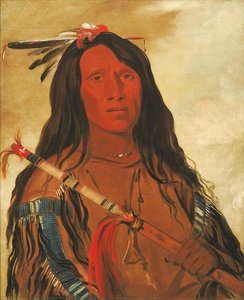
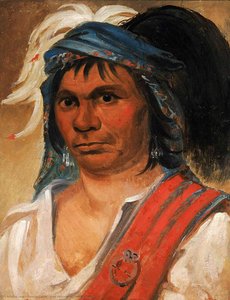
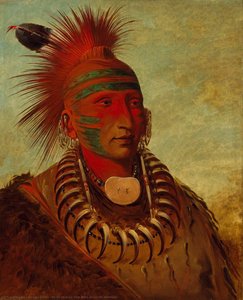
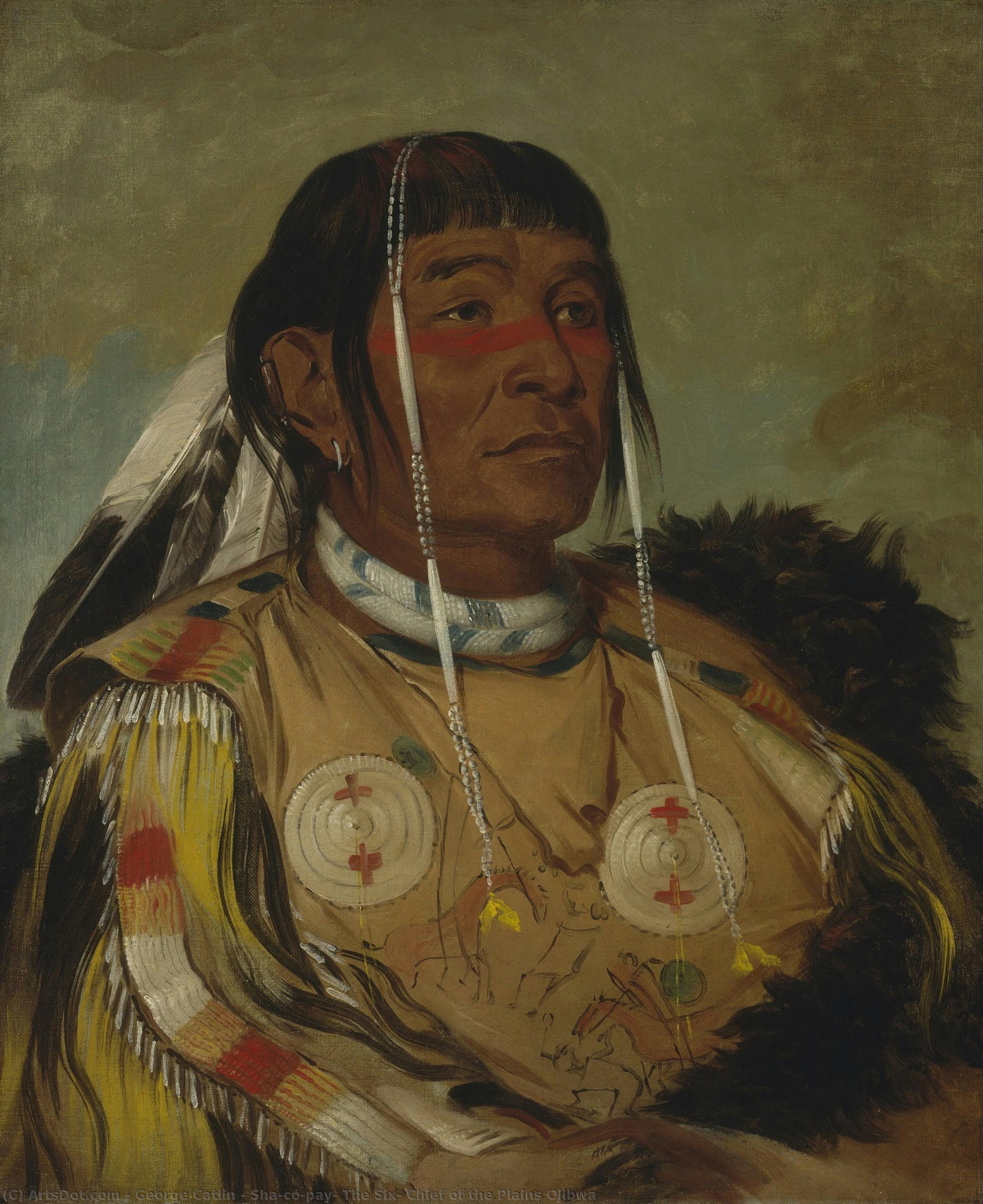
Sha-có-pay, The Six, Chief of the Plains Ojibwa
 Acrílico sobre lienzo
- Arte de pared
- American Frontier Painting
 1832
1832 73.0 x 60.0 cm
 Museo Smithsonian de Arte Americano
 Ver más
Reproducción al óleo hecha a mano
Óleo sobre lienzo pintado a mano en el tamaño y marco de su elección, realizado por encargo por nuestros artistas. ( Comprar impresión Comprar imagen)




P118B $10

P118H $10

P118W $10

P438Z $10

P508JH $12

P508YH $12

P805H $10

P805Z $10

P919BZ $10

P919G $10

P919XJ $10

P959ZH $10

P968JZ $12

W106C $8

W218G $10

W218JH $8

W218Y $10

W307PJ $10

W316G $10

W316PJ $8

W316Y $10

W398PJ $8

W4111J $10

W500HY $15

W500JH $15

W692G $12

W849H $8

W940BG $15

W953PJ $8




Elija entre nuestros tamaños predefinidos que respetan las proporciones originales de la obra.

Puede ingresar sus propias dimensiones para adaptarse a un marco o espacio específico. Si el tamaño seleccionado no coincide con las proporciones de la imagen original, recortaremos la obra o extenderemos la pintura con elementos adicionales pintados a mano. Se le enviará una maqueta digital para su aprobación antes de comenzar la producción.
Tenga en cuenta que la vista previa en pantalla no refleja el recorte o la extensión reales. Solo la maqueta mostrará con precisión la composición final.
Si bien existen tamaños personalizados, recomendamos seleccionar una dimensión de la lista predefinida para preservar las proporciones originales.
Tras realizar el pedido, el equipo de ArtsDot.com enviará un correo electrónico al cliente para solicitar instrucciones y proporcionarle una vista previa del boceto.
Envío a todo el mundo () en 3-4 semanas en lugar de las 5 semanas estándar. (27 agosto). Sin comprometer la calidad.

Envío exprés gratuito a todo el mundo

Lienzo de lino de alta calidad

Seguro de envío total

Garantía de reembolso de impuestos aduaneros

Garantía de fidelidad cromática exacta

Política de devolución de 60 días (solo por defectos)

Garantía de devolución del 100% del dinero

Descuento por cantidad
 La opción de vidrio solo está disponible en tamaños inferiores a 110 cm.

Sha-có-pay, The Six, Chief of the Plains Ojibwa
Técnica de reproducción
Dimensiones de la reproducción
-


Precio total final
$ 263
Descripción de la obra
A Window into a Vanishing World: Sha-Có-Pay, The Six by George Catlin
George Catlin’s “Sha-Có-Pay, The Six, Chief of the Plains Ojibwa,” painted in 1832, is more than just a portrait; it's a poignant and remarkably intimate glimpse into a rapidly disappearing world. This oil on canvas captures Sha-Có-Pay, a prominent leader of the Plains Ojibwe tribe residing in what is now North Dakota and Montana, during a period of profound cultural upheaval for Native American communities in America. Catlin’s decision to document these individuals with such meticulous detail wasn't simply driven by artistic curiosity; it stemmed from a deep conviction that preserving the traditions and appearances of these tribes was an urgent matter of historical record – a mission fueled by his own childhood experiences hearing tales of frontier life.
The painting immediately commands attention through its scale and the commanding presence of Sha-Có-Pay. He is depicted in full ceremonial attire, a testament to his status as chief. The rich detail of his clothing—a meticulously beaded buckskin shirt adorned with intricate geometric patterns, a buffalo-hide robe, and the unmistakable ornamentation of eagle feathers – speaks volumes about Ojibwe culture and their deep connection to the natural world. Notably, Catlin deliberately chose to portray him wearing trophies taken from enemy heads, a symbolic display of his prowess and leadership within his tribe’s social structure. This practice, while potentially unsettling to a modern viewer, was deeply rooted in the warrior ethos of the Plains Ojibwe.
The Artist's Mission: Catlin and the Documentation of Native American Life
George Catlin’s work during this period is inextricably linked to his personal journey and his evolving understanding of Native American culture. Initially trained as a lawyer, he abandoned legal practice after witnessing the plight of indigenous communities facing relentless westward expansion. He embarked on a series of expeditions into the American West, driven by a desire to document the lives and customs of these tribes before they were irrevocably altered or lost entirely. Catlin’s approach was revolutionary for his time; he sought not to portray Native Americans as savage primitives but rather as dignified individuals with complex social structures, traditions, and beliefs. He famously insisted on painting his subjects in their finest ceremonial dress, a deliberate choice that challenged prevailing stereotypes of the era.
It’s important to acknowledge the complexities inherent in Catlin's work. While he championed Native American culture, his depictions were often filtered through a Western lens and sometimes romanticized. However, his meticulous documentation remains invaluable for understanding the Plains Ojibwe people during a critical juncture in their history – a time of immense change and displacement. His paintings offer a powerful visual record of a way of life that was rapidly fading from existence.
Technique and Style: A Romantic Vision
Catlin’s style is distinctly Romantic, characterized by dramatic lighting, bold brushstrokes, and an emphasis on capturing the essence of his subjects. He employed a technique known as “direct painting,” working directly onto the canvas without preliminary sketches, allowing for spontaneity and immediacy. The use of vibrant colors—particularly in the details of the clothing and ornamentation—creates a sense of dynamism and energy. The composition is carefully balanced, with Sha-Có-Pay occupying a central position that draws the viewer’s eye immediately to his face – a face etched with both authority and a hint of melancholy.
Notice the way Catlin uses light to sculpt the figure, creating a sense of three-dimensionality. The strong directional lighting emphasizes the chief's features, highlighting his dignified bearing and commanding presence. The background, though somewhat indistinct, provides context—a suggestion of the vast prairie landscape that was integral to the Ojibwe’s way of life.
Symbolism and Legacy
"Sha-Có-Pay, The Six" is a powerful symbol of a vanishing culture. Beyond its aesthetic qualities, it represents a critical moment in American history—a time when Native American communities were facing unprecedented challenges due to westward expansion and the encroachment of European settlers. Catlin’s work serves as both a testament to the beauty and resilience of these cultures and a poignant reminder of the loss that occurred as a result of historical injustices. Reproductions of this iconic painting offer a valuable opportunity to connect with this rich cultural heritage and to contemplate the enduring legacy of the Plains Ojibwe people.
Obras relacionadas
Biografía del artista
Primeros Años y Carrera
- Nacimiento: 26 de julio de 1796, Wilkes-Barre, Condado de Luzerne, Pensilvania
- Fallecimiento: 23 de diciembre de 1872
- La fascinación de Catlin por los nativos americanos fue despertada por las historias de su madre sobre la frontera occidental y su captura por una tribu.
- Sus primeros trabajos incluyeron grabados de sitios a lo largo de la ruta del Canal de Erie en el estado de Nueva York, publicados en el memorándum de Cadwallader D. Colden.
Contribuciones Artísticas & Estilo
- El enfoque principal de Catlin se convirtió en documentar la vida y la cultura nativa americana a través de la pintura.
- Realizó cinco expediciones al oeste americano durante la década de 1830, observando meticulosamente y registrando sus experiencias.
- Obras Notables:
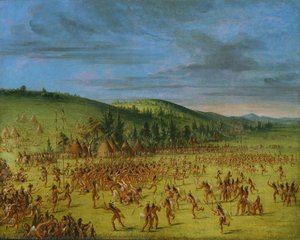
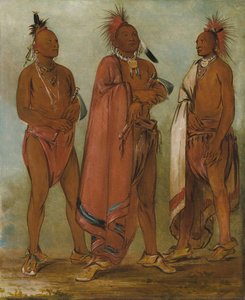
- Juego de Pelota de los Choctaw – Muestra atención al detalle y captura de la cultura nativa americana.
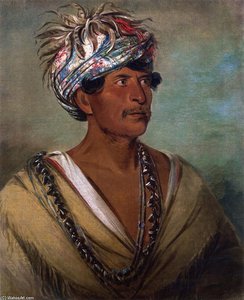
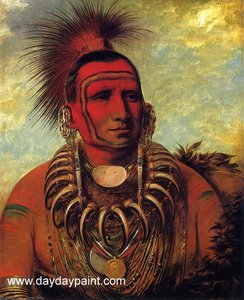
- Mó-sho-la-túb-bee, Él que Apaga y Mata, Jefe de la Tribu – Demuestra habilidad en el retrato y dedicación a preservar el patrimonio.
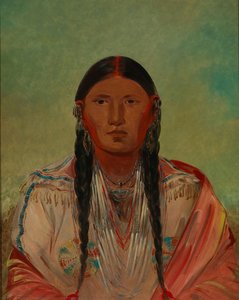
- Una Mujer Seminola – Destaca su capacidad para capturar belleza y dignidad.
- Estilo: El estilo de Catlin se caracteriza por el realismo, los colores vibrantes y un deseo de representar con precisión las costumbres y tradiciones nativas americanas. A menudo incluía fondos detallados y paisajes para proporcionar contexto a sus sujetos.
Logros Mayores & La Galería India
- Catlin creó una extensa colección de más de 500 pinturas que representan varias tribus y aspectos de sus vidas.
- Compiló estas obras en lo que se conoció como la "Galería India", un registro visual completo de la cultura nativa americana.
- La Galería India fue exhibida en Londres, París y Berlín, obteniendo reconocimiento internacional para el trabajo de Catlin.
- Sus publicaciones, incluyendo Manners, Customs, and Condition of the North American Indians (1841) y Last Rambles Amongst the Indians of the Rocky Mountains and the Andes (1868), solidificaron aún más su reputación como una autoridad sobre la cultura nativa americana.
Vida Posterior & Significado Histórico
- Catlin pasó sus últimos años intentando vender su Galería India al gobierno de los Estados Unidos, enfrentándose a rechazos iniciales.
- Recreó más de 400 pinturas en una "colección de cartones".
- A pesar de los desafíos, el trabajo de Catlin ha tenido un impacto duradero en la forma en que se representan a los nativos americanos en el arte y la cultura popular.
- Significado Histórico: La documentación meticulosa de Catlin proporciona valiosas perspectivas sobre las vidas de las tribus nativas americanas antes de cambios culturales significativos debido a la expansión hacia el oeste. Su trabajo se considera un importante registro histórico, así como un logro artístico.
Influencias & Información Adicional
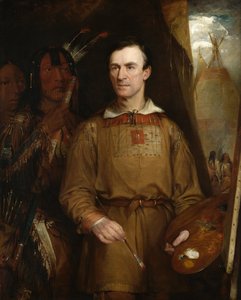
George Catlin
1796 - 1872 , Estados Unidos de América
Datos clave
- Fecha De Fallecimiento: 23 de diciembre de 1872
- Fecha De Nacimiento: 26 de julio de 1796
- Lugar De Nacimiento: Wilkes-Barre, EE. UU.
- Movimiento Artístico: Pintura de frontera
- Nacionalidad: Estadounidense
- Nombre Completo: George Catlin
- Obras Notables:
- Juego de pelota de los Choctaw
- Mó-sho-la-túb-bee, Jefe
- Una mujer seminola
- Praderas ardientes
- Little Wolf, Guerrero famoso
Artículos relacionados

Georges Braque: Las 25 Obras Maestras del Cubismo y su Legado en el Arte Moderno
Descubre las 25 obras maestras de Georges Braque, pionero del cubismo. Explora su innovadora técnica, colores y el legado del arte moderno francés. Reproducciones de alta calidad en ArtsDot.com. ¡Encuentra tu inspiración!

Georges Seurat: Las 25 Obras Maestras del Pionero Puntillista | ArtsDot
Descubre las 25 obras maestras de Georges Seurat, el innovador del puntillismo. Explora su técnica única, colores vibrantes y legado artístico en ArtsDot.com. Reproducciones de arte de museo para tu hogar.
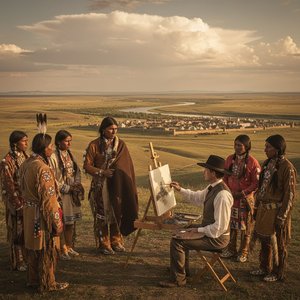
George Catlin: Witnessing & Representing Indigenous Life on the American Frontier
Explore the captivating art of George Catlin, renowned for his vivid portraits & landscapes documenting Native American life on the frontier. Discover a vanishing world through stunning paintings and historical context.
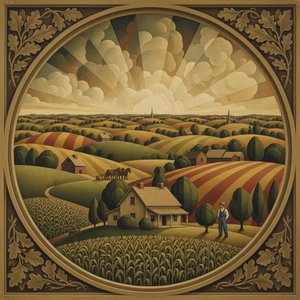
Grant Wood & American Regionalism: Identity, Myth & the Rural Landscape
Explore the world of Grant Wood & American Regionalism with ArtsDot. Discover the symbolism behind 'American Gothic', recurring themes, and the movement's lasting impact on art history. High-quality reproductions available.
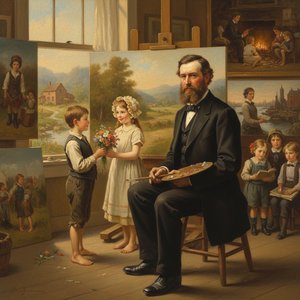
John George Brown: Capturing American Life & Sentiment in 19th-Century Genre Painting
Explore the captivating genre paintings of John George Brown, celebrated for his realistic depictions of 19th-century American life. Discover his legacy & find museum-quality reproductions at ArtsDot.