

 Ver en contexto
 Enviar
 Compartir
 Detalles

 Descargar
 Similares
 Radiografía
 Presentación de diapositivas
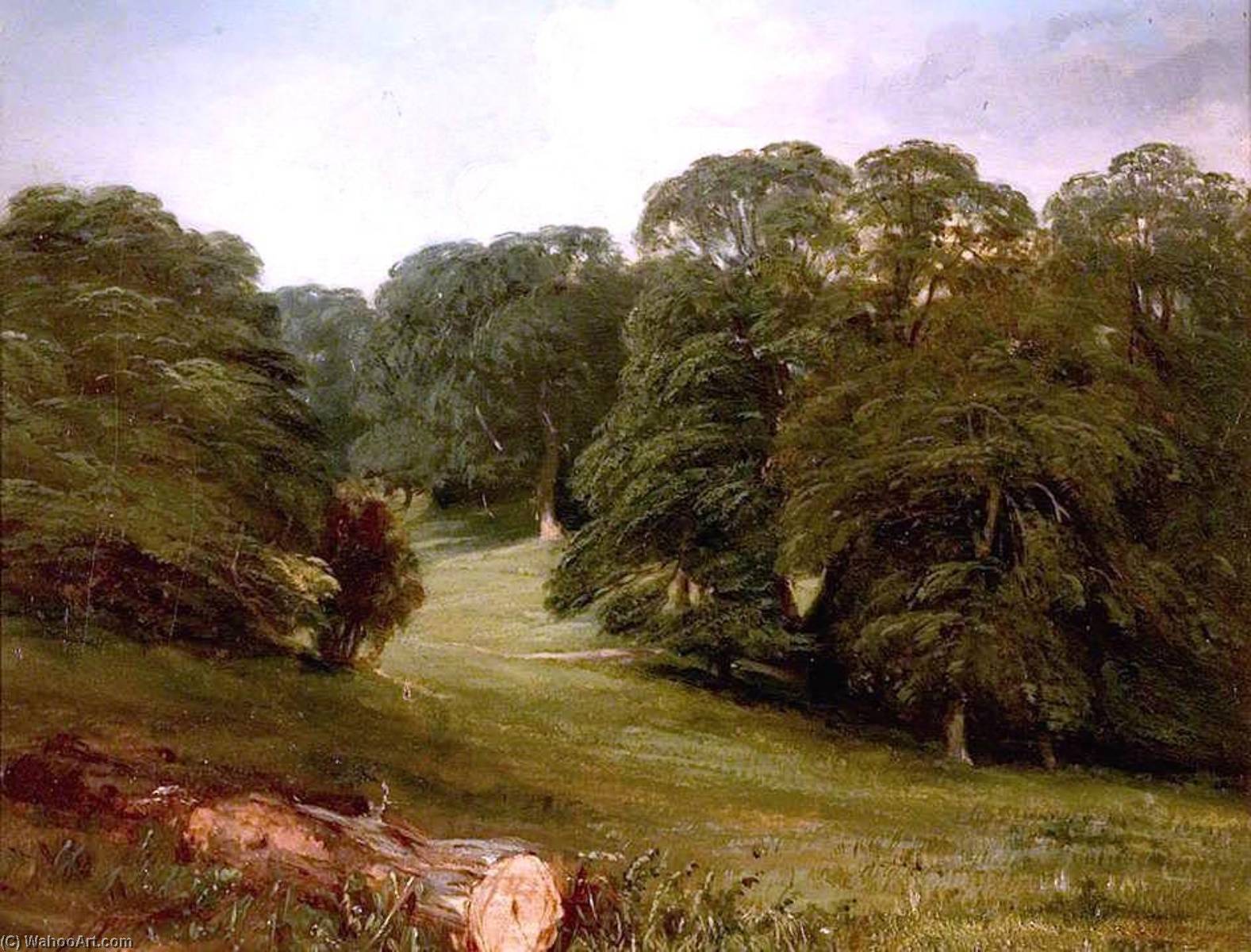
In Welbeck Park, Nottinghamshire

 Ver más
Reproducción al óleo hecha a mano
Óleo sobre lienzo pintado a mano en el tamaño y marco de su elección, realizado por encargo por nuestros artistas. ( Comprar impresión Comprar imagen)




































Elija entre nuestros tamaños predefinidos que respetan las proporciones originales de la obra.

Puede ingresar sus propias dimensiones para adaptarse a un marco o espacio específico. Si el tamaño seleccionado no coincide con las proporciones de la imagen original, recortaremos la obra o extenderemos la pintura con elementos adicionales pintados a mano. Se le enviará una maqueta digital para su aprobación antes de comenzar la producción.
Tenga en cuenta que la vista previa en pantalla no refleja el recorte o la extensión reales. Solo la maqueta mostrará con precisión la composición final.
Si bien existen tamaños personalizados, recomendamos seleccionar una dimensión de la lista predefinida para preservar las proporciones originales.
Tras realizar el pedido, el equipo de ArtsDot.com enviará un correo electrónico al cliente para solicitar instrucciones y proporcionarle una vista previa del boceto.
Envío a todo el mundo () en 3-4 semanas en lugar de las 5 semanas estándar. (24 agosto). Sin comprometer la calidad.

Envío exprés gratuito a todo el mundo

Lienzo de lino de alta calidad

Seguro de envío total

Garantía de reembolso de impuestos aduaneros

Garantía de fidelidad cromática exacta

Política de devolución de 60 días (solo por defectos)

Garantía de devolución del 100% del dinero

Descuento por cantidad
 La opción de vidrio solo está disponible en tamaños inferiores a 110 cm.

In Welbeck Park, Nottinghamshire
Técnica de reproducción
Dimensiones de la reproducción
-


Precio total final
$ 263
Descripción de la obra
A Peaceful Scene
The scene depicted in the painting is one of serenity, with a pathway leading through the woods, surrounded by lush greenery. The trees in the foreground and background create a sense of depth and dimension, drawing the viewer into the peaceful atmosphere. The addition of birds in the painting adds life and movement to the scene, making it feel more dynamic. Key Features of the painting include:- The use of oil on panel, which gives the piece a unique texture and depth
- The beautiful representation of the English countryside, showcasing the artist's ability to capture the essence of nature
- The peaceful atmosphere, created by the serene landscape and the addition of birds in the painting
Discovering the Artworks of Bassetlaw Museum
The Bassetlaw Museum is a hidden gem for art enthusiasts, housing numerous masterpieces from renowned artists. Visitors can discover the artworks of James Walsham Baldock and other notable artists by visiting the museum or exploring the collection online at /art/list/?Filter=A@D3C2G5-Discovering-the-Artworks-of-Bassetlaw-Museum-United-Kingdom. Handmade Oil Paintings Reproductions of In Welbeck Park, Nottinghamshire are available at /art/list/?Filter=AQZSBA-James-Walsham-Baldock-In-Welbeck-Park-Nottinghamshire, allowing art lovers to own a piece of history.The painting In Welbeck Park, Nottinghamshire by James Walsham Baldock is a beautiful representation of the English countryside, and its serene landscape continues to captivate audiences today.
Obras relacionadas










Biografía del artista
The Pastoral Vision of James Walsham Baldock
In the golden age of Victorian landscape painting, few artists captured the quiet, breathing essence of the English countryside with as much tenderness as James Walsham Baldock. Born in 1822 in Nottinghamshire, Baldock’s life was marked by an early resilience; orphaned as a young child, he was adopted by his maternal grandfather, a farmer whose surname he eventually embraced. This deep-rooted connection to the land and the rhythms of agricultural life would later become the heartbeat of his artistic output. His journey from the rugged landscapes of Tadcaster to the prestigious art circles of Europe reflects a life dedicated to observing the subtle interplay between light, animal, and earth.
Baldock’s formal education began at the Newcastle Art School, but it was his transformative period in Germany that truly forged his aesthetic identity. Studying at the Düsseldorf Akademie der Bildenden Künste under the guidance of the renowned Wilhelm Leibl, Baldock absorbed the meticulous observational techniques and the profound respect for naturalism characteristic of the Düsseldorf school. This training instilled in him a mastery of tonal gradation and an ability to render atmospheric detail that allowed his canvases to transcend mere documentation. He learned to treat light not just as a way to illuminate subjects, but as a medium to evoke emotion, creating scenes that felt imbued with a palpable, living atmosphere.
From Sporting Scenes to Pastoral Serenity
The evolution of Baldock’s oeuvre is a fascinating study in shifting artistic focus. During the mid-19th century, particularly between 1850 and 1860, he established himself as a formidable painter of sporting subjects. His works from this era often featured horses—most frequently hunters—alongside scenes of hunting, shooting, and sporting dogs. These commissions were prestigious and demanding, requiring an anatomical precision and a dynamic sense of movement that earned him the respect of the English and Irish aristocracy. His ability to capture the powerful musculature of a bay hunter or the focused intensity of a hound in pursuit demonstrated a technical prowess comparable to the leading sporting artists of his generation.
However, as the decades progressed, a profound shift occurred in Baldock’s artistic temperament. From approximately 1870 onwards, the kinetic energy of the hunt gave way to the contemplative stillness of pastoral life. His later works moved away from the drama of the chase toward the tranquil beauty of cattle, sheep, and the rolling landscapes of the Scottish moors and Nottinghamshire parks. In masterpieces such as 'Landscape with a Boy and Cattle' or his evocative studies of horses in grassy fields, one finds a painter deeply enamored with the concept of plein air realism. He sought to capture the "sublime" not through grand, terrifying storms, but through the quiet majesty of a sun-drenched meadow or the soft mist clinging to a distant hill.
Legacy and Artistic Significance
Beyond his individual canvases, Baldock played a vital role in the institutional fabric of the British art world. As a founding member and later the President of the Sheffield Society of Artists, he contributed significantly to the cultivation of artistic community and excellence in the North of England. His work remains a testament to the Victorian era's dual fascination with the rugged reality of nature and the romanticized ideal of rural peace.
Today, the significance of James Walsham Baldock lies in his ability to bridge the gap between the technical rigor of the Düsseldorf tradition and the soulful, atmospheric requirements of British Romanticism. His paintings serve as windows into a vanished world—a time when the relationship between man, beast, and landscape was defined by a shared, quiet harmony. Whether through the meticulous rendering of a chestnut horse in 'Mountain Dew'* or the lush greenery of 'In Welbeck Park, Nottinghamshire', Baldock’s legacy is one of enduring tranquility and an unwavering devotion to the beauty found in the simplest corners of the natural world.
james walsham baldock
1822 - 1898
Datos clave
- Artistic Movement Or Style: Romantic Realism
- Artists Or Movements Influenced By This Artist: ['Hudson Lowe']
- Artists Who Influenced This Artist:
- George Stubbs
- John Constable
- Date Of Birth: 1822
- Date Of Death: 1898
- Full Name: James Walsham Baldock
- Nationality: British
- Notable Artworks:
- Study of Three Horses in a Landscape
- In Welbeck Park, Nottinghamshire
- Mountain Dew
- Place Of Birth: England

