

 Ver en contexto
 Enviar
 Compartir
 Detalles

 Descargar
 Similares
 Radiografía
 Presentación de diapositivas
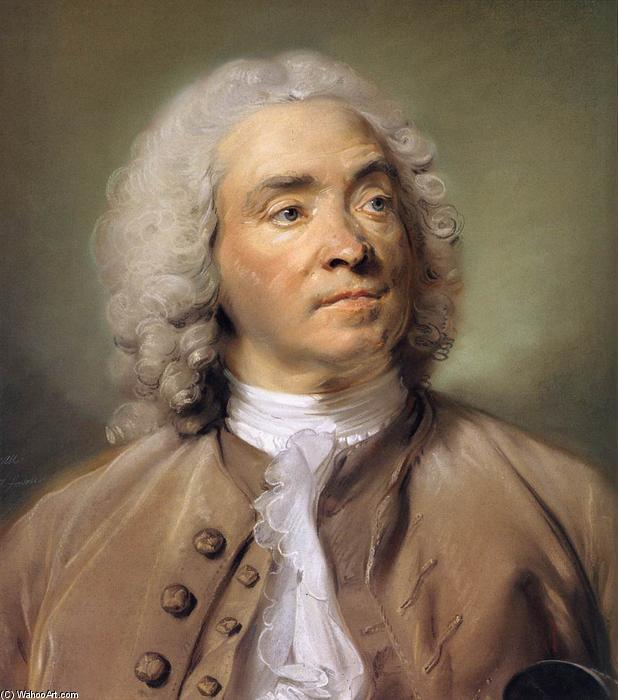
Portrait of Gabriel Huquier (detail)


 Ver más
Reproducción al óleo hecha a mano
Óleo sobre lienzo pintado a mano en el tamaño y marco de su elección, realizado por encargo por nuestros artistas. ( Comprar impresión Comprar imagen)




P118B $10

P118H $10

P118W $10

P438Z $10

P508JH $12

P508YH $12

P805H $10

P805Z $10

P919BZ $10

P919G $10

P919XJ $10

P959ZH $10

P968JZ $12

W106C $8

W218G $10

W218JH $8

W218Y $10

W307PJ $10

W316G $10

W316PJ $8

W316Y $10

W398PJ $8

W4111J $10

W500HY $15

W500JH $15

W692G $12

W849H $8

W940BG $15

W953PJ $8




Elija entre nuestros tamaños predefinidos que respetan las proporciones originales de la obra.

Puede ingresar sus propias dimensiones para adaptarse a un marco o espacio específico. Si el tamaño seleccionado no coincide con las proporciones de la imagen original, recortaremos la obra o extenderemos la pintura con elementos adicionales pintados a mano. Se le enviará una maqueta digital para su aprobación antes de comenzar la producción.
Tenga en cuenta que la vista previa en pantalla no refleja el recorte o la extensión reales. Solo la maqueta mostrará con precisión la composición final.
Si bien existen tamaños personalizados, recomendamos seleccionar una dimensión de la lista predefinida para preservar las proporciones originales.
Tras realizar el pedido, el equipo de ArtsDot.com enviará un correo electrónico al cliente para solicitar instrucciones y proporcionarle una vista previa del boceto.
Envío a todo el mundo () en 3-4 semanas en lugar de las 5 semanas estándar. (26 agosto). Sin comprometer la calidad.

Envío exprés gratuito a todo el mundo

Lienzo de lino de alta calidad

Seguro de envío total

Garantía de reembolso de impuestos aduaneros

Garantía de fidelidad cromática exacta

Política de devolución de 60 días (solo por defectos)

Garantía de devolución del 100% del dinero

Descuento por cantidad
 La opción de vidrio solo está disponible en tamaños inferiores a 110 cm.

Portrait of Gabriel Huquier (detail)
Técnica de reproducción
Dimensiones de la reproducción
-


Precio total final
$ 263
Descripción de la obra
A Delicate Portrait of Refinement: Gabriel Huquier by Jean-Baptiste Perronneau
The world of 18th-century French portraiture was one defined by elegance, social standing, and an exquisite attention to detail – qualities perfectly embodied in Jean-Baptiste Perronneau’s “Portrait of Gabriel Huquier,” a captivating pastel created in 1747. Currently residing within the hallowed halls of the Louvre Museum in Paris, this work offers a rare glimpse into the life of a prominent figure, revealing not just his likeness but also the subtle nuances of his character and position within society. Perronneau’s skill lies not merely in replicating appearance, but in imbuing his subjects with an aura of quiet dignity and thoughtful contemplation.
Perronneau's artistic journey began with a grounding in engraving, a discipline that instilled within him a meticulous eye for detail and precision. This training is immediately apparent in the portrait’s remarkably realistic rendering of Huquier’s features – from the carefully sculpted lines of his face to the subtle texture of his white hair, styled impeccably into the fashionable wig of the period. The artist masterfully employs pastel techniques, layering delicate strokes to achieve a luminous quality and capturing the play of light on fabric and skin with remarkable subtlety. Unlike the bolder brushstrokes often associated with oil painting, pastel allows for an intimacy and softness that perfectly suits the subject’s reserved demeanor.
The Language of Dress: Symbolism in Cloth and Ornament
Beyond the individual's face, Perronneau meticulously constructs a visual narrative through Huquier’s attire. The rich brown coat, adorned with gleaming gold buttons – a symbol of wealth and status – speaks volumes about his social standing. The crisp white cravat, neatly arranged around his neck, further emphasizes this aristocratic bearing. These details aren't merely decorative; they are carefully chosen to communicate Huquier’s position within the intricate hierarchy of 18th-century French society. The color palette itself is restrained and sophisticated, dominated by muted browns, creams, and whites – a hallmark of Rococo aesthetics that prioritized elegance over ostentation.
The choice of fabric—likely velvet or silk—would have been costly and indicative of considerable means. The buttons, crafted from gold, were not simply functional; they represented an investment in prestige and reflected the wealth commanded by Huquier. The overall effect is one of understated luxury, conveying a sense of refined taste and cultivated sophistication.
A Moment of Contemplation
Notably, Huquier’s gaze is directed slightly off to the side, suggesting a thoughtful or contemplative mood. This subtle gesture invites the viewer into his inner world, prompting us to imagine what he might be pondering. Perronneau skillfully avoids a static, posed expression, instead capturing a fleeting moment of introspection – a characteristic that elevates the portrait beyond a simple likeness and transforms it into a psychological study. The soft, muted background further emphasizes the subject’s presence, creating a sense of intimacy and drawing our attention solely to his face and demeanor.
The composition itself is carefully balanced, with Huquier occupying the central space and radiating an aura of quiet authority. The artist's use of light and shadow adds depth and dimension to the portrait, enhancing the sense of realism and capturing the subtle nuances of Huquier’s expression. It’s a testament to Perronneau’s ability to convey not just what he saw, but also what he felt about his subject – a quiet dignity and an air of intellectual curiosity.
A Window into the Rococo Era
“Portrait of Gabriel Huquier” is more than simply a beautiful painting; it's a valuable historical document. It offers a window into the social customs, artistic conventions, and prevailing aesthetic sensibilities of 18th-century France. Perronneau’s work exemplifies the Rococo style – characterized by its elegance, grace, and emphasis on beauty and pleasure. The portrait reflects the era's fascination with refined taste, aristocratic lifestyles, and the pursuit of intellectual and artistic excellence. Reproductions of this piece allow us to appreciate not only Perronneau’s technical skill but also the broader cultural context in which it was created.
Obras relacionadas
Biografía del artista
A Delicate Hand: The Life and Art of Jean-Baptiste Perronneau
Jean-Baptiste Perronneau, a name perhaps less immediately recognized than some of his Rococo contemporaries, nevertheless occupies a significant place in the history of French portraiture. Born around 1716 – though precise dates remain elusive – and passing away there in 1783, Perronneau’s artistic journey unfolded primarily within the vibrant cultural landscape of 18th-century France. He wasn't a painter of grand historical narratives or mythological scenes; his focus lay intimately on the human face, capturing not merely likeness but also the subtle nuances of character and social standing through the delicate medium of pastel.Perronneau’s initial training began in engraving, a discipline that instilled within him a keen eye for detail and precision. He studied with Laurent Cars and found early employment with the Parisian printseller Gabriel Huquier, establishing crucial connections within the burgeoning art world. This foundation proved invaluable as he transitioned towards portraiture, initially working in oils before wholeheartedly embracing pastels – a medium experiencing a surge in popularity during this period. The allure of pastel lay in its ability to achieve soft textures and luminous effects, qualities that perfectly suited Perronneau’s sensitive approach.
The Shadow and the Substance: Influences and Artistic Development
To understand Perronneau's artistic trajectory is to acknowledge the towering figure of Maurice Quentin de la Tour. De La Tour was widely considered the master of French pastel portraiture, and his influence on Perronneau was profound. A pivotal moment illustrating this relationship occurred at the Salon of 1750. Perronneau daringly exhibited a pastel portrait *of* de la Tour himself, only to find that the master had simultaneously submitted a self-portrait – an act interpreted by many as a deliberate demonstration of his own superior skill. While undeniably influenced by de la Tour’s technical brilliance, Perronneau didn't simply imitate; he forged his own distinct style.
Perronneau possessed a remarkable ability to infuse his portraits with psychological depth and sensitivity. He moved beyond mere physical representation, seeking to capture the inner life of his sitters. This is evident in the subtle expressions, the carefully rendered details of clothing and accessories – all contributing to a nuanced portrayal of personality and social status. His work aligns beautifully with the Rococo aesthetic, emphasizing elegance, refinement, and an appreciation for aristocratic society, yet it also hints at the emerging Enlightenment ideals of individualism and introspection.
A Prolific Career: From Parisian Salons to Provincial Travels
Perronneau first exhibited a pastel portrait at the Salon in 1746, marking his formal entry into the artistic arena. His talent was quickly recognized, culminating in full membership of the prestigious Académie royale de peinture et de sculpture in 1753. For his admission pieces, he presented portraits of Jean-Baptiste Oudry and Lambert-Sigisbert Adam – works that now reside within the hallowed halls of the Louvre Museum, testaments to his established skill.
However, Perronneau’s career took an interesting turn after 1779. He ceased exhibiting at the Paris Salons but continued to work diligently, expanding his clientele beyond the capital. This led him on extensive travels throughout France, particularly to Orléans, Toulouse, Bordeaux, and Lyon. Evidence suggests that his wanderlust extended even further afield, with potential visits to Turin, Rome, Spain, Hamburg, Poland, Russia, and even England. This itinerant lifestyle allowed him to capture a diverse range of subjects, reflecting the varied social fabric of 18th-century Europe.
A Lasting Legacy: Historical Significance and Enduring Appeal
Despite dying in Amsterdam largely unknown, Jean-Baptiste Perronneau’s contributions to French portraiture are now rightfully celebrated. His portraits offer invaluable glimpses into the lives and appearances of individuals from various social strata during a pivotal period in history. He wasn't merely recording faces; he was documenting a world – its fashions, its values, and its evolving sensibilities.
Perronneau’s mastery of pastel serves as a testament to the medium’s enduring appeal, bridging the gap between drawing and painting. His delicate touch, his sensitivity to light and shadow, and his ability to capture the essence of his sitters continue to captivate viewers today. He stands as a compelling example of an artist who, while operating within the conventions of his time, managed to imbue his work with a unique sense of intimacy and psychological insight – qualities that ensure his place among the great portraitists of the 18th century.
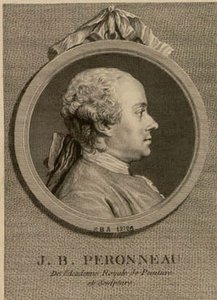
jean baptiste perronneau
1715 - 1783 , Países Bajos
Datos clave
- Artistic Movement Or Style: Rococo
- Artists Who Influenced This Artist: ['Maurice Quentin de la Tour']
- Date Of Birth: c. 1716
- Date Of Death: 1783
- Full Name: Jean-Baptiste Perronneau
- Nationality: Francés
- Notable Artworks:
- Retrato de Oudry
- Daniel Jousse
- Tassin de La Renardière
- Place Of Birth: Amsterdam, Netherlands
Artículos relacionados

La Estética Rococó: Opulencia, Rebelión y Placer en el Arte del Siglo XVIII
Descubre la fascinante estética rococó: su historia, características clave y los artistas más influyentes del siglo XVIII. Un análisis profundo para amantes del arte y coleccionistas.

Rococó: 10 Obras Maestras que Definieron una Época | Arte y Decoración en
Descubre las 10 obras maestras del Rococó que marcaron una época. Explora la elegancia de Fragonard, Boucher y Watteau en . Reproducciones de arte de calidad museo para decorar tu hogar con estilo.
Maurice Quentin de La Tour: Light, Shadow & the Rococo Portrait
Explore the captivating world of Maurice Quentin de La Tour, a master of Rococo portraiture. Discover his innovative pastel techniques, intimate depictions of French aristocracy, and lasting artistic legacy. Learn more at ArtsDot.
The Subdued Radiance of Pastel: Exploring Nuance & Emotion in Art
Explore the nuanced world of pastel art! Discover its history, techniques & emotional power with expert insights from ArtsDot.com. Find museum-quality reproductions and learn about collecting this delicate medium.
Illuminating the Enlightenment: A Comprehensive Exploration of 18th-Century Painting
Explore the captivating world of 18th-century painting! Discover Rococo's playful elegance & Neoclassicism’s Enlightenment ideals with expert insights into Fragonard, David, and more. A comprehensive guide for art enthusiasts.

