 Ver en contexto
 Enviar
 Compartir
 Detalles

 Descargar
 Similares
 Radiografía
 Presentación de diapositivas
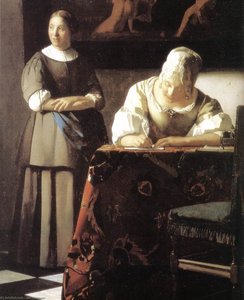
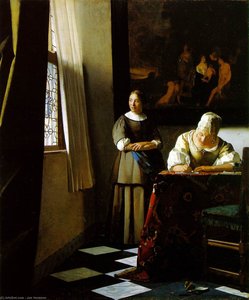
Mujer escribiendo una carta con su criada


 Ver más
Reproducción al óleo hecha a mano
Óleo sobre lienzo pintado a mano en el tamaño y marco de su elección, realizado por encargo por nuestros artistas. ( Comprar impresión Comprar imagen)




P118B $10

P118H $10

P118W $10

P438Z $10

P508JH $12

P508YH $12

P805H $10

P805Z $10

P919BZ $10

P919G $10

P919XJ $10

P959ZH $10

P968JZ $12

W106C $8

W218G $10

W218JH $8

W218Y $10

W307PJ $10

W316G $10

W316PJ $8

W316Y $10

W398PJ $8

W4111J $10

W500HY $15

W500JH $15

W692G $12

W849H $8

W940BG $15

W953PJ $8




Elija entre nuestros tamaños predefinidos que respetan las proporciones originales de la obra.

Puede ingresar sus propias dimensiones para adaptarse a un marco o espacio específico. Si el tamaño seleccionado no coincide con las proporciones de la imagen original, recortaremos la obra o extenderemos la pintura con elementos adicionales pintados a mano. Se le enviará una maqueta digital para su aprobación antes de comenzar la producción.
Tenga en cuenta que la vista previa en pantalla no refleja el recorte o la extensión reales. Solo la maqueta mostrará con precisión la composición final.
Si bien existen tamaños personalizados, recomendamos seleccionar una dimensión de la lista predefinida para preservar las proporciones originales.
Tras realizar el pedido, el equipo de ArtsDot.com enviará un correo electrónico al cliente para solicitar instrucciones y proporcionarle una vista previa del boceto.
Envío a todo el mundo () en 3-4 semanas en lugar de las 5 semanas estándar. (28 agosto). Sin comprometer la calidad.

Envío exprés gratuito a todo el mundo

Lienzo de lino de alta calidad

Seguro de envío total

Garantía de reembolso de impuestos aduaneros

Garantía de fidelidad cromática exacta

Política de devolución de 60 días (solo por defectos)

Garantía de devolución del 100% del dinero

Descuento por cantidad
 La opción de vidrio solo está disponible en tamaños inferiores a 110 cm.

Mujer escribiendo una carta con su criada
Técnica de reproducción
Dimensiones de la reproducción
-


Precio total final
$ 263
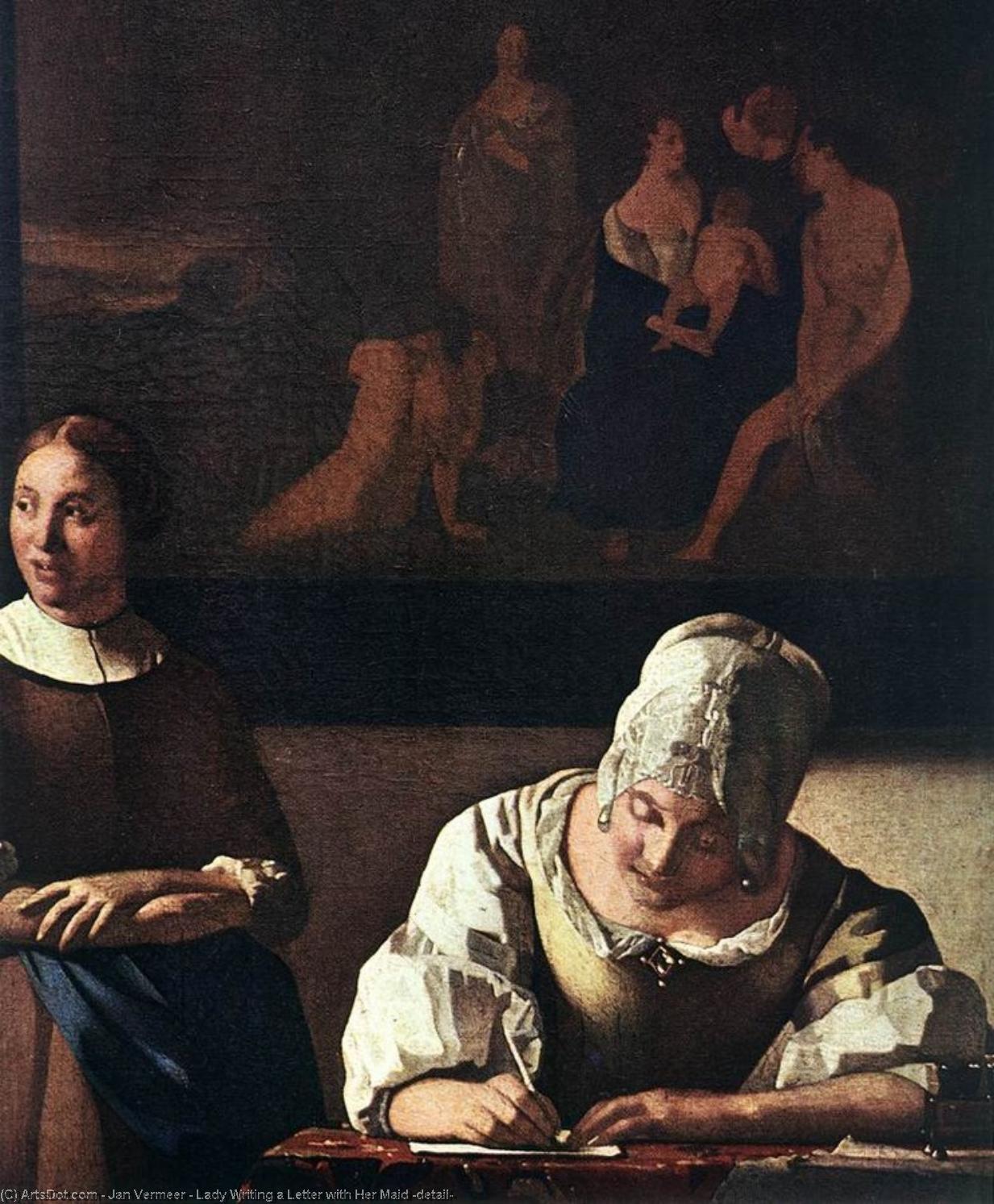
Lady Writing a Letter with Her Maid (detail)
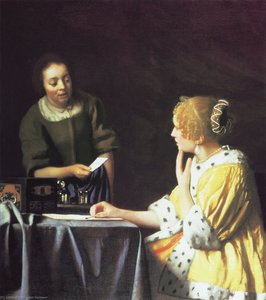
Johannes Vermeer, a name synonymous with the quiet intimacy of 17th-century Dutch life, remains an enigma despite centuries of scholarship. Born in Delft in October 1632, his existence unfolded against the backdrop of the Dutch Golden Age—a period of unprecedented prosperity, artistic innovation, and burgeoning civic pride. His father, Reijnier Janszoon, was a silk weaver and art dealer, a combination that subtly shaped young Johannes’s path. Exposure to both the tactile world of craftsmanship and the discerning eye of the art market instilled in him an understanding of materials, composition, and the delicate dance between creation and commerce. This early immersion wasn't merely observational; it provided a foundation upon which Vermeer would build his own unique artistic vision. He wasn’t born into privilege, but rather into a world where artistry was interwoven with everyday practicality, a testament to the enduring influence of humanist ideals that permeated European culture during this era. The painting Lady Writing a Letter with Her Maid is one of Vermeer’s most celebrated works and exemplifies his masterful ability to capture the essence of domestic tranquility. Created in 1670, this oil on canvas masterpiece resides at the National Gallery of Ireland (Dublin, Ireland), attracting visitors from across the globe who seek to experience firsthand the profound beauty and psychological depth of Vermeer’s oeuvre.Composition and Style
Vermeer's artistic genius lies in his innovative compositional technique—centrifugal symmetry—where the focal point resides at the center of the canvas, surrounded by elements that radiate outwards. This deliberate arrangement creates a sense of balance and harmony, mirroring the principles of Renaissance perspective and furthering enhancing the viewer’s immersion into the scene. The use of light is equally remarkable; Vermeer employs *chiaroscuro*, skillfully manipulating tonal variations to sculpt form and generate an illusion of depth—a technique perfected by Caravaggio and embraced by many Baroque painters. This masterful manipulation of illumination not only reveals intricate details but also imbues the painting with a palpable emotional resonance, conveying a feeling of contemplative stillness. The style is undeniably characteristic of the Dutch Baroque period, prioritizing realism and meticulous attention to detail—a hallmark of Vermeer’s artistic legacy. Key elements contribute to this captivating portrayal of domestic life: the lady's focused gaze directs our eye towards her task—writing—symbolizing intellectual curiosity and emotional engagement; the maid’s posture exudes attentiveness and subservience, reflecting the social hierarchy prevalent during the seventeenth century; and the room’s furnishings—a chair, table, and wall hanging depicting Moses—add to the sense of realism and evoke biblical narratives. These elements coalesce into a scene brimming with quiet contemplation and understated elegance.- The lady's letter writing is a symbol of her intellectual and emotional life, reflecting the humanist ideals that championed reason and observation during Vermeer’s time.
- The maid’s presence represents the social hierarchy of the time, highlighting the roles assigned to women within the domestic sphere.
- The room’s furnishings, such as the chair and table, add to the sense of realism and evoke biblical narratives, demonstrating Vermeer's command of visual storytelling.
Artistic Significance
Lady Writing a Letter with Her Maid is considered one of Vermeer’s most important works and has been widely admired for its beauty and emotional impact. Its pioneering use of centrifugal composition influenced subsequent artists, establishing Vermeer as a pivotal figure in the Baroque tradition. Furthermore, the painting's luminous palette and masterful rendering of texture—particularly the subtle sheen of the chair upholstery—continue to inspire awe and fascination among art connoisseurs today. For more information on Vermeer and his works, visit Johannes Vermeer on ArtsDot. You can also learn more about the artist’s life and style on Wikipedia.To see more of Vermeer's paintings, including Lady Writing a Letter with Her Maid, visit the National Gallery of Ireland or explore the collection on ArtsDot. The website offers handmade oil painting reproductions of Vermeer’s works, allowing you to bring a piece of art history into your own home.
Obras relacionadas
![Dama Escribiendo Una Carta Con Su Ama [c. 1670] — Johannes Vermeer, Edad De Oro Neerlandesa](/media/artworks/images-thumb/87/c4/87c403dd3765a49358a8a608ecf1b2ee.jpg)
Biografía del artista
vida y carrera
johannes vermeer, una figura destacada en la edad de oro holandesa, nació en octubre de 1632 en Delft, Países Bajos. Es conocido por sus cautivadoras escenas domésticas que ofrecen una mirada íntima a la vida de la clase media durante este período. La carrera artística de Vermeer estuvo marcada por un manejo profundo de la luz y un meticuloso enfoque en la pintura. La familia de Vermeer estuvo involucrada en el comercio artístico, con su padre, Reijnier Jansz, siendo un comerciante de arte. Esta exposición probablemente influyó en la decisión de Vermeer de seguir una carrera en la pintura. Se casó con Catharina Bolnes, una mujer católica, en abril de 1653 y tuvieron dos hijos juntos.Estilo artístico y obras notables
Las pinturas de Vermeer se caracterizan por el uso de pigmentos costosos y un énfasis en la vida cotidiana. Algunas de sus obras más notables incluyen:- La carta de amor (c. 1665), una obra maestra que muestra la habilidad de Vermeer para capturar los matices de la vida doméstica.
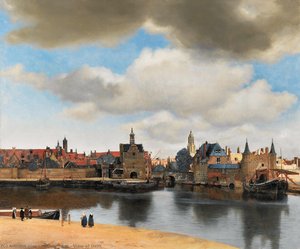
- Vista de Delft (c. 1660-1670), un cuadro que ejemplifica la capacidad de Vermeer para equilibrar la luz y la composición.
- La hilandera (c. 1659-1660), una obra que destaca la atención al detalle y la fascinación de Vermeer por las actividades cotidianas de las mujeres.
Legado y redescubrimiento
El modesto éxito de Vermeer durante su vida dio paso a la oscuridad después de su muerte. Sin embargo, su redescubrimiento en el siglo XIX por Gustav Friedrich Waagen y Théophile Thoré-Bürger condujo a un aumento significativo en su popularidad. Hoy en día, Vermeer es reconocido como uno de los pintores más grandes del edad de oro holandesa, con sus obras muy apreciadas por coleccionistas y museos de todo el mundo.- Descubra más sobre la vida y obra de Vermeer en ArtsDot.com.
- Explore la colección del Museo Mauritshuis, que presenta muchas de las obras maestras de Vermeer, en ArtsDot.com.
- Aprenda más sobre la edad de oro holandesa y su influencia en la pintura occidental en wikipedia.
Johannes Vermeer
1632 - 1675 , Países Bajos
Datos clave
- Artistas Que Influyeron:
- Pieter de Hooch
- Gerard ter Borch
- Estilo Artístico: Barroco, Realismo
- Fecha De Muerte: Diciembre 1675
- Fecha De Nacimiento: Octubre 1632
- Lugar De Nacimiento: Delft, Países Bajos
- Nacionalidad: Holandés
- Nombre Completo: Johannes Vermeer
- Obras Notables:
- La carta de amor
- Vista de Delft
- La hilandera
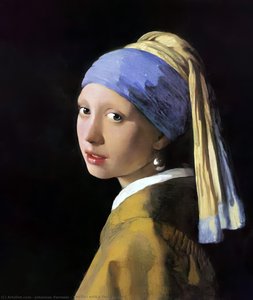
- La joven con la perla
- El concierto
Artículos relacionados

Los 10 Maestros del Siglo de Oro Holandés: Arte, Historia y Decoración Exclusiva
Descubre los 10 imprescindibles del Siglo de Oro Holandés: Rembrandt, Vermeer y más. Explora la historia, técnica y belleza de estos lienzos clásicos. Encuentra reproducciones de arte exclusivas para decorar tu hogar en .
Johannes Vermeer: Light, Intimacy & the Dutch Golden Age – A Comprehensive Exploration
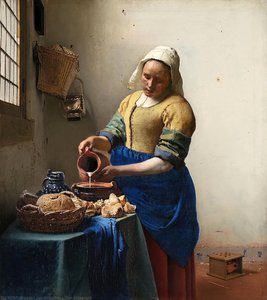
Explore the life, techniques & enduring legacy of Johannes Vermeer, a master of Dutch Golden Age painting. Discover symbolism in his iconic works like 'The Milkmaid' and learn about his revolutionary use of light.

Reflejos de una Época Dorada: La Pintura Barroca Holandesa y la Innovación Cultural
Descubra la riqueza y el detalle de la pintura barroca holandesa del Siglo de Oro. Explore las obras maestras de Rembrandt, Vermeer y otros artistas clave. Análisis experto e historia cultural.

La Luz y la República: Innovación Artística en el Siglo de Oro Neerlandés
Descubra la innovación artística del Siglo de Oro Neerlandés. Explore las obras maestras de Rembrandt y Vermeer, técnicas revolucionarias y el legado perdurable de este florecimiento cultural. ¡Sumérjase en la luz y la belleza!

Los 10 Maestros del Barroco Holandés: Obras que Definen una Época | ArtsDot
Descubre los 10 imprescindibles del Barroco holandés: Rembrandt, Vermeer y más. Explora la historia, técnica y belleza de estas obras maestras. Reproducciones de arte en ArtsDot.com para decorar tu hogar con elegancia.