 Ver en contexto
 Enviar
 Compartir
 Detalles

 Descargar
 Similares
 Radiografía
 Presentación de diapositivas
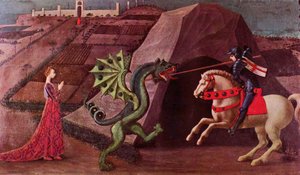
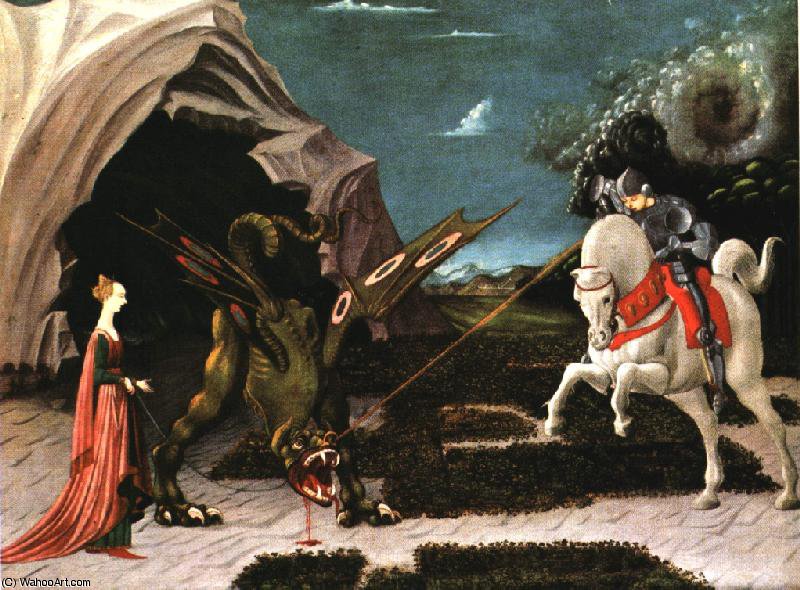
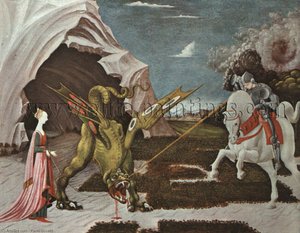
St george and the dragon,1456, nglondon


 Ver más
Reproducción al óleo hecha a mano
Óleo sobre lienzo pintado a mano en el tamaño y marco de su elección, realizado por encargo por nuestros artistas. ( Comprar impresión Comprar imagen)




P118B $10

P118H $10

P118W $10

P438Z $10

P508JH $12

P508YH $12

P805H $10

P805Z $10

P919BZ $10

P919G $10

P919XJ $10

P959ZH $10

P968JZ $12

W106C $8

W218G $10

W218JH $8

W218Y $10

W307PJ $10

W316G $10

W316PJ $8

W316Y $10

W398PJ $8

W4111J $10

W500HY $15

W500JH $15

W692G $12

W849H $8

W940BG $15

W953PJ $8




Elija entre nuestros tamaños predefinidos que respetan las proporciones originales de la obra.

Puede ingresar sus propias dimensiones para adaptarse a un marco o espacio específico. Si el tamaño seleccionado no coincide con las proporciones de la imagen original, recortaremos la obra o extenderemos la pintura con elementos adicionales pintados a mano. Se le enviará una maqueta digital para su aprobación antes de comenzar la producción.
Tenga en cuenta que la vista previa en pantalla no refleja el recorte o la extensión reales. Solo la maqueta mostrará con precisión la composición final.
Si bien existen tamaños personalizados, recomendamos seleccionar una dimensión de la lista predefinida para preservar las proporciones originales.
Tras realizar el pedido, el equipo de ArtsDot.com enviará un correo electrónico al cliente para solicitar instrucciones y proporcionarle una vista previa del boceto.
Envío a todo el mundo () en 3-4 semanas en lugar de las 5 semanas estándar. (1 septiembre). Sin comprometer la calidad.

Envío exprés gratuito a todo el mundo

Lienzo de lino de alta calidad

Seguro de envío total

Garantía de reembolso de impuestos aduaneros

Garantía de fidelidad cromática exacta

Política de devolución de 60 días (solo por defectos)

Garantía de devolución del 100% del dinero

Descuento por cantidad
 La opción de vidrio solo está disponible en tamaños inferiores a 110 cm.

St george and the dragon,1456, nglondon
Técnica de reproducción
Dimensiones de la reproducción
-


Precio total final
$ 263
A Florentine Dance of Space and Myth
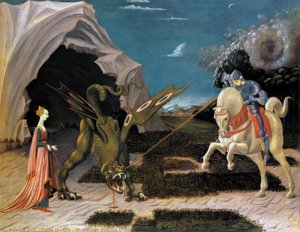
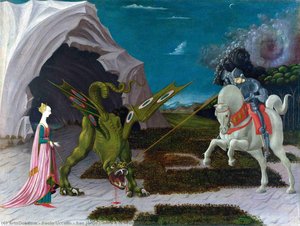
Paolo Uccello’s *Saint George and the Dragon* stands as an extraordinary testament to the artistic ambition of the Early Renaissance, embodying not merely visual beauty but a radical reimagining of perspective—a feat that cemented Uccello's reputation as one of Florence’s most daring innovators. Painted between 1435 and 1440, this tempera masterpiece resides in the National Gallery of London, offering visitors an unparalleled glimpse into the mind of a painter who wrestled with fundamental questions about how we perceive reality. Born Paolo di Dono in Pratovecchio around 1397, Uccello’s upbringing was marked by both practical skills – his father practiced medicine – and familial connections to Florentine nobility. He honed his artistic talents under Lorenzo Ghiberti's mentorship at the Baptistery workshop, absorbing the influence of Brunelleschi’s groundbreaking dome project and immersing himself in the burgeoning humanist scholarship that championed reason and observation. This intellectual fervor fueled Uccello’s relentless pursuit of scientific accuracy within the realm of art, a characteristic that distinguishes him from many of his contemporaries. The painting itself depicts Saint George triumphantly slaying a fearsome dragon before a fortified castle—a narrative drawn directly from Christian legend, symbolizing the victory of good over evil and divine grace over pagan darkness. However, Uccello didn’t simply recount the tale; he transformed it into a meticulously constructed illusion of depth—a technique known as *prospettiva artificiale*, or “artificial perspective.” Unlike traditional depictions where figures appear flattened on a single plane, Uccello employed mathematical calculations and geometric projections to create an astonishingly convincing sense of three-dimensionality. This ambitious endeavor was partly inspired by Leon Battista Alberti’s treatise on perspective, demonstrating Uccello's engagement with the latest developments in Renaissance thought.- Technique: Tempera on wood panel – a durable medium favored for altarpieces and monumental paintings.
- Style: Early Renaissance – characterized by idealized figures, balanced compositions, and an emphasis on classical ideals of beauty.
- Composition: The scene unfolds across multiple receding planes—the castle walls dominate the background, followed by a lower terrace and finally, Saint George and his horse in the foreground. This layering creates a dramatic visual hierarchy.
- Historical Context: Produced during Lorenzo Medici’s reign—a period marked by political stability and cultural flourishing.
- Symbolism: Represents the struggle between good and evil, divine grace and pagan darkness; embodies Florentine pride and ambition.
Obras relacionadas
Biografía del artista
vida temprana y formación
Paolo Uccello, nacido Paolo di Dono, fue un distinguido pintor y matemático italiano de Florencia. Era notable por su trabajo pionero en la perspectiva visual en el arte. Nacido en 1397, la vida temprana de Uccello no está bien documentada, pero se sabe que estuvo aprendiz del famoso escultor Lorenzo Ghiberti de 1412 a 1416.carrera y obras notables
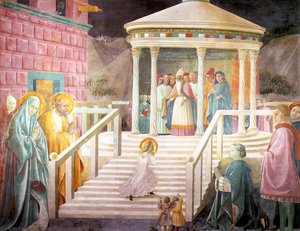
La carrera de Uccello abarcó más de cuatro décadas, durante las cuales produjo numerosas obras de arte, incluyendo pinturas, frescos y retablos. Algunas de sus obras más notables incluyen:- Nacimiento de la Virgen (renacimiento temprano, óleo), una pintura que muestra su uso de la perspectiva para crear una sensación de profundidad.
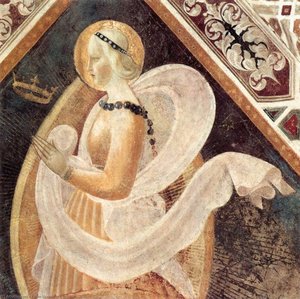
- Frescos San Miniato al Monte 03 (renacimiento temprano, óleo), un fresco que demuestra su innovador uso del color y la luz.
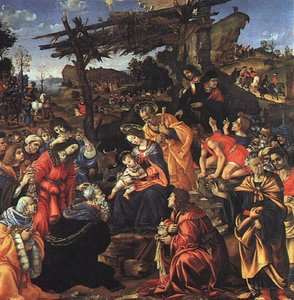
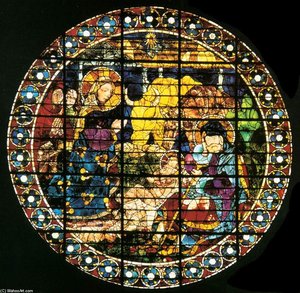
- Adoración del Niño (renacimiento temprano, óleo), una pintura que presenta una representación detallada y naturalista de la forma humana.
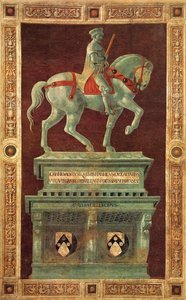
- Estudio de caballero (renacimiento temprano, óleo), un autorretrato que muestra su uso seguro y autónomo de los temas en el arte.
influencia y legado
La obra de Uccello tuvo un impacto significativo en el desarrollo del arte renacentista. Su uso de la perspectiva y su énfasis en crear una sensación de profundidad en sus pinturas influyeron en numerosos artistas, incluyendo a Albrecht Dürer, quien también era conocido por su trabajo pionero en el campo de la perspectiva. Movimientos artísticos clave:- El Renacimiento Temprano
- Renacimiento Italiano
- Gótico Tardío
- Paolo Uccello (1397-1475)
- Albrecht Dürer (1471-1528)
- Lorenzo Ghiberti (1379-1455)
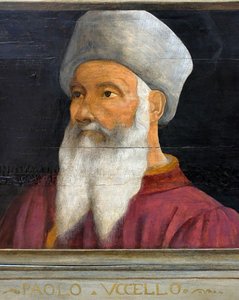
Paolo Uccello
1397 - 1475 , Italia
Datos clave
- Artistas Influenciados: ['Albrecht Dürer']
- Artistas Que Influyeron:
- Lorenzo Ghiberti
- Donatello
- Fecha De Muerte: 1475
- Fecha De Nacimiento: 1397
- Lugar De Nacimiento: Pratovecchio, Italia
- Movimiento Artístico: Renacimiento Temprano
- Nacionalidad: Italiana
- Nombre Completo: Paolo Uccello
- Obras Notables:
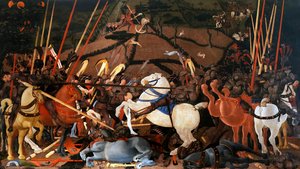
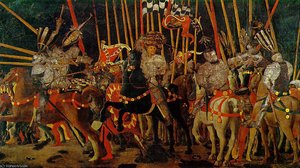
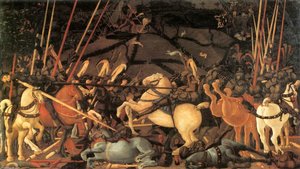
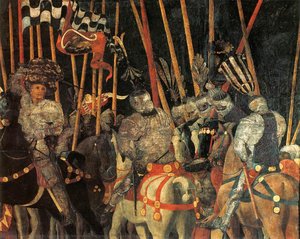
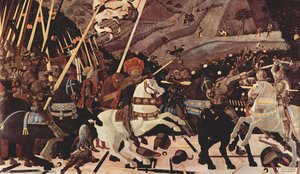
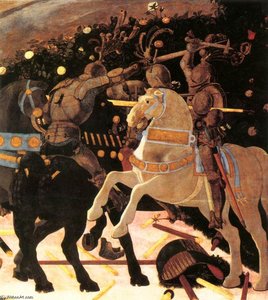
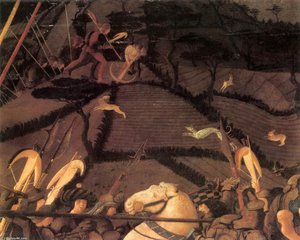
- Batalla de San Romano
- Nacimiento de la Virgen
- San Jorge y el Dragón
- La Inundación
Artículos relacionados
Georges Braque: Las 25 Obras Maestras del Cubismo y su Legado en el Arte Moderno
Descubre las 25 obras maestras de Georges Braque, pionero del cubismo. Explora su innovadora técnica, colores y el legado del arte moderno francés. Reproducciones de alta calidad en ArtsDot.com. ¡Encuentra tu inspiración!
Georges Seurat: Las 25 Obras Maestras del Pionero Puntillista | ArtsDot
Descubre las 25 obras maestras de Georges Seurat, el innovador del puntillismo. Explora su técnica única, colores vibrantes y legado artístico en ArtsDot.com. Reproducciones de arte de museo para tu hogar.
Paolo Uccello: Pioneering Perspective & the Renaissance Pursuit of Visual Truth
Explore the revolutionary art of Paolo Uccello, a Florentine Renaissance master who pioneered perspective. Discover his iconic paintings like 'St. George & The Dragon' and learn about his lasting influence on art history.
Discover the Divine: Inspiring Saint Anthony Artworks to Elevate Your Home Decor
Transform your home with the profound beauty of Saint Anthony artworks. Explore exquisite Baroque reproductions by Murillo and Zurbarán, hand-painted on 100% cotton canvas to bring divine serenity and timeless elegance to your interior design.
Daniel Ridgway Knight: A Study in Victorian Genre Painting & Rural Idealism
Explore the captivating world of Daniel Ridgway Knight, a master of Victorian genre painting. Discover his serene rural scenes, realistic technique & lasting influence on American Impressionism. Learn about his life, art, and collectibility.