

 Ver en contexto
 Enviar
 Compartir
 Detalles

 Descargar
 Similares
 Radiografía
 Presentación de diapositivas
Fishing Boats
 Acrylic On Canvas
- WallArt
- Skagen School
 1884
1884 160.0 x 245.0 cm
 Museo de Orsay
 Ver más
Reproducción al óleo hecha a mano
Óleo sobre lienzo pintado a mano en el tamaño y marco de su elección, realizado por encargo por nuestros artistas. ( Comprar impresión Comprar imagen)




P118B $10

P118H $10

P118W $10

P438Z $10

P508JH $12

P508YH $12

P805H $10

P805Z $10

P919BZ $10

P919G $10

P919XJ $10

P959ZH $10

P968JZ $12

W106C $8

W218G $10

W218JH $8

W218Y $10

W307PJ $10

W316G $10

W316PJ $8

W316Y $10

W398PJ $8

W4111J $10

W500HY $15

W500JH $15

W692G $12

W849H $8

W940BG $15

W953PJ $8




Elija entre nuestros tamaños predefinidos que respetan las proporciones originales de la obra.

Puede ingresar sus propias dimensiones para adaptarse a un marco o espacio específico. Si el tamaño seleccionado no coincide con las proporciones de la imagen original, recortaremos la obra o extenderemos la pintura con elementos adicionales pintados a mano. Se le enviará una maqueta digital para su aprobación antes de comenzar la producción.
Tenga en cuenta que la vista previa en pantalla no refleja el recorte o la extensión reales. Solo la maqueta mostrará con precisión la composición final.
Si bien existen tamaños personalizados, recomendamos seleccionar una dimensión de la lista predefinida para preservar las proporciones originales.
Tras realizar el pedido, el equipo de ArtsDot.com enviará un correo electrónico al cliente para solicitar instrucciones y proporcionarle una vista previa del boceto.
Envío a todo el mundo () en 3-4 semanas en lugar de las 5 semanas estándar. (25 agosto). Sin comprometer la calidad.

Envío exprés gratuito a todo el mundo

Lienzo de lino de alta calidad

Seguro de envío total

Garantía de reembolso de impuestos aduaneros

Garantía de fidelidad cromática exacta

Política de devolución de 60 días (solo por defectos)

Garantía de devolución del 100% del dinero

Descuento por cantidad
 La opción de vidrio solo está disponible en tamaños inferiores a 110 cm.

Fishing Boats
Técnica de reproducción
Dimensiones de la reproducción
-


Precio total final
$ 263
Descripción de la obra
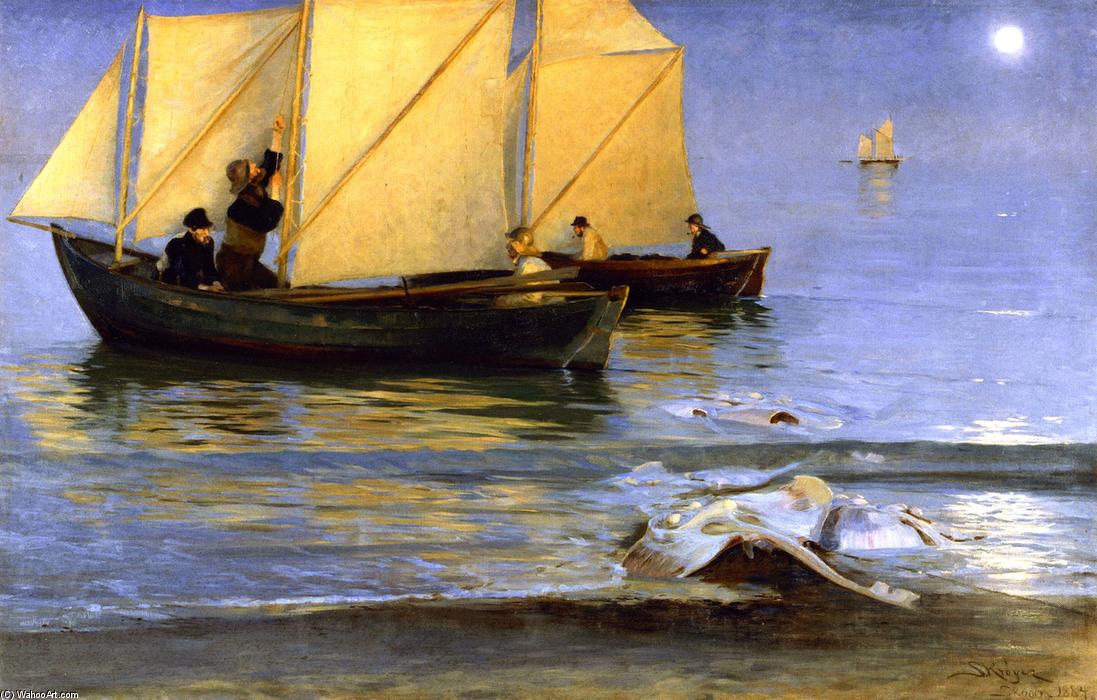
A Nocturne of Resilience: Exploring “Fishing Boats” by Peder Severin Krøyer
The painting "Fishing Boats" by Norwegian artist Peder Severin Krøyer isn’t merely a depiction of a coastal scene; it's an embodiment of the Scandinavian spirit—a quiet defiance against the immensity of nature, underpinned by a profound appreciation for human connection and perseverance. Created in 1884 during his formative years as a member of the Skagen School, Krøyer’s masterpiece transcends its visual elements to resonate with deeper themes of struggle, camaraderie, and ultimately, triumph over adversity.The Canvas Speaks Volumes: Style and Technique
Krøyer's artistic style firmly anchors itself within Impressionism, albeit tempered by his meticulous observation skills honed through his zoological studies. Unlike the fleeting impressions favored by artists like Monet or Renoir, Krøyer meticulously captures a specific moment—a nighttime fishing expedition hauling in a colossal whale onto a sandy beach—with an unwavering commitment to realism. The technique employed is characterized by impasto – thick layers of oil paint applied with visible brushstrokes—creating textural surfaces that convey the roughness of the sand and the muscular exertion of the fishermen. These bold strokes aren’t simply decorative; they are integral to conveying the palpable energy of the scene, mirroring the physical effort required to wrestle the whale ashore. Light plays a crucial role, emanating from lanterns mounted on the boats and illuminating the moonlit expanse of the sea—a masterful manipulation of chiaroscuro that emphasizes contrasts between light and shadow, deepening the emotional impact of the artwork.Echoes of Skagen: Historical Context and Artistic Influences
Krøyer’s involvement with the Skagen School represents a significant moment in Scandinavian art history. This collective of artists sought to capture the raw beauty of Denmark's northern coast—specifically the idyllic fishing village of Skagen—with an uncompromising dedication to portraying everyday life. Krøyer’s work was profoundly influenced by Edgar Degas, whose paintings like “Les Repasseuses” similarly explored themes of realism and observation within a broader Impressionist framework. Degas’s ability to distill complex emotions into simple compositions served as inspiration for Krøyer's own approach—a focus on capturing the essence of human experience rather than striving for idealized representations. The painting reflects the anxieties of its time, grappling with questions of humanity’s relationship to the natural world and confronting the daunting task of overcoming formidable challenges.Symbolism Beneath the Surface: Whale and Boats as Representations
Beyond its aesthetic qualities, “Fishing Boats” is laden with symbolic significance. The whale itself embodies both abundance—the promise of sustenance—and danger—a reminder of nature’s unpredictable power. Its sheer size underscores humanity's vulnerability in confronting forces beyond our control. Conversely, the boats represent resilience and collective effort—the fishermen united in their determination to succeed despite facing an overwhelming obstacle. Their lanterns symbolize hope and guidance, illuminating the path forward amidst darkness. The careful positioning of the boats and whale creates a dynamic composition that reinforces these symbolic interpretations.A Legacy of Quiet Strength: Emotional Impact
Ultimately, “Fishing Boats” transcends its historical context to evoke a powerful emotional response in viewers. Its subdued palette—dominated by blues and greens—creates an atmosphere of tranquility punctuated by bursts of yellow from the lanterns—a visual testament to the enduring human spirit. The painting’s textured surface invites contemplation, prompting us to consider themes of perseverance, camaraderie, and the sublime beauty found within the natural world. It stands as a poignant reminder that even in confronting daunting challenges, there exists an inherent dignity and grace—qualities beautifully captured by Krøyer's masterful brushstrokes.Obras relacionadas

Biografía del artista
A Life Painted in Light: The World of Peder Severin Krøyer
Peder Severin Krøyer, a name perhaps less instantly recognizable than some of his Impressionist contemporaries, nevertheless occupies a pivotal position within Scandinavian art. Born in 1851 in Stavanger, Norway, Krøyer’s early life was marked by an unusual upbringing; raised not by his biological mother but by her sister and brother-in-law, the Danish zoologist Henrik Nikolai Krøyer, he found himself transplanted to Copenhagen and immersed in a world of scientific inquiry alongside artistic cultivation. This unique foundation – a blend of observation, precision, and aesthetic sensibility – would profoundly shape his approach to painting. While details of his earliest years remain somewhat elusive, it’s clear that an aptitude for art was nurtured from a young age, leading to enrollment at the Royal Danish Academy of Art at just fourteen. He quickly distinguished himself, demonstrating a natural talent that promised a successful career.From Realism to the Shifting Sands of Impressionism
Krøyer’s artistic journey began firmly rooted in realism, particularly portraiture – a genre highly esteemed and financially viable during his formative years. He excelled at capturing likenesses, securing commissions that established him as a sought-after artist within Danish society. However, the winds of change were blowing across Europe, carrying with them the revolutionary ideas of Impressionism. Krøyer was not immune to their allure. Several trips to Paris exposed him to the groundbreaking work of Monet, Renoir, Degas, and others, artists who dared to abandon traditional techniques in favor of capturing fleeting moments of light and atmosphere. He absorbed these influences, gradually incorporating them into his own style. This wasn’t a wholesale adoption, however; Krøyer didn’t simply replicate Impressionism. Instead, he synthesized it with his existing realist training, creating a distinctive aesthetic that balanced meticulous observation with an evocative sense of mood and transience.Skagen: A Colony of Light and Inspiration
The turning point in Krøyer’s career – and arguably the period for which he is most celebrated – came with his discovery of Skagen, a remote fishing village on the northern tip of Denmark. He first arrived there in 1882, drawn by the dramatic coastal landscapes and the unique quality of light that bathed the region. Skagen quickly became more than just a location; it was an artistic haven, attracting a vibrant colony of painters, writers, and intellectuals. Krøyer became central to this community, forging close friendships with artists like Michael and Anna Ancher, and writer Holger Drachmann. He married Marie Triepcke in 1889, who herself was a talented painter and frequent subject in his work. It was at Skagen that Krøyer truly found his voice, producing some of his most iconic paintings – scenes of beach life, fishermen at work, and intimate portraits of his fellow artists. Summer Evening on Skagen Sønderstrand, perhaps his most famous work, exemplifies this period; it's a masterful depiction of light, atmosphere, and the camaraderie of the artistic circle. The painting is not merely a representation of a scene but an evocation of a feeling – a sense of peace, belonging, and the ephemeral beauty of summer.Later Years and Enduring Legacy
The final years of Krøyer’s life were marked by personal tragedy and declining health. His marriage to Marie deteriorated, culminating in divorce in 1905. Simultaneously, he began to suffer from failing eyesight, a devastating blow for any artist but particularly poignant for one so dedicated to capturing the nuances of light. Despite these challenges, Krøyer continued to paint, demonstrating remarkable resilience and determination. He adapted his technique to accommodate his diminishing vision, even joking that losing an eye had somehow improved the sight in his remaining one. He died in 1909 at Skagen, leaving behind a rich artistic legacy. While he may not have achieved the same international renown as some of his Impressionist peers, Peder Severin Krøyer remains a towering figure in Scandinavian art. His paintings offer a unique window into a specific time and place – the vibrant artistic community of Skagen and the serene beauty of the Danish coastline. He masterfully blended realism with impressionistic techniques, creating works that are both visually stunning and emotionally resonant. His contribution lies not only in his technical skill but also in his ability to capture the essence of a particular way of life, preserving it for generations to come. ## Museums and Collections- The Hirschsprung Collection (Copenhagen): Holds a significant number of Krøyer’s works, reflecting the long-standing patronage of Heinrich Hirschsprung.
- Skagens Museum: Boasts the world's largest collection of paintings by Peder Severin Krøyer, offering an unparalleled insight into his artistic development and connection to Skagen.
- National Gallery of Denmark (Copenhagen): Features selected works representing Krøyer’s contribution to Danish art history.
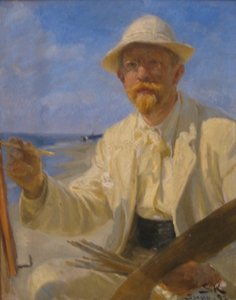
peder severin kroyer
1851 - 1909 , Noruega
Datos clave
- Artistic Movement Or Style: Realism, Impressionism
- Artists Or Movements Influenced By This Artist: ['Skagens Museum']
- Artists Who Influenced This Artist: ['Claude Monet']
- Date Of Birth: 1851
- Date Of Death: 1909
- Full Name: Peder Severin Krøyer
- Nationality: Danish
- Notable Artworks:
- Hip, Hip, Hurrah!
- Summer Day at Skagen
- Tarde de verano en Skagen
- Place Of Birth: Stavanger, Norway
Artículos relacionados
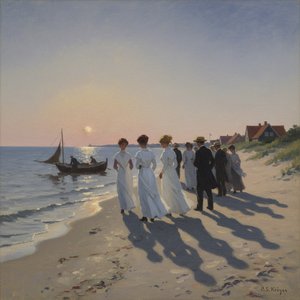
Peder Severin Krøyer: Capturing the Ephemeral Light of Danish Modern Life
Explore the luminous world of Peder Severin Krøyer, a master of Danish Impressionism. Discover his iconic Skagen paintings, artistic evolution, and lasting legacy. Learn about collecting Krøyer's works & find museum-quality reproductions.
Barcos en el Arte: 10 Obras Maestras para Inspirar tu Decoración
Descubre 10 obras maestras que capturan la belleza y el simbolismo de los barcos. Desde Monet hasta Van Gogh, explora la historia del arte marítimo e inspira tu decoración con reproducciones de museo en ArtsDot.com.
Navigating Symbolism & Sentiment: A Comprehensive Exploration of Boats in Art History
Explore the rich history of boats in art! Discover symbolism & style from ancient myths to Impressionist masterpieces. Expert insights for collectors at ArtsDot.
La Escuela de La Haya: Realismo, Atmósfera y el Amanecer del Impresionismo Holandés
Descubre la Escuela de La Haya: el movimiento realista que revolucionó la pintura holandesa del siglo XIX. Analizamos a sus artistas clave, su técnica atmosférica y su influencia en el impresionismo. ¡Un viaje por el arte y la historia!
Anna Ancher: Capturing Light & Domesticity in the Skagen Tradition
Discover Anna Ancher (1859-1935), a leading figure of the Skagen Painters. Explore her captivating depictions of domestic life, masterful use of light, and lasting legacy in Danish Impressionism. Learn more at ArtsDot.

