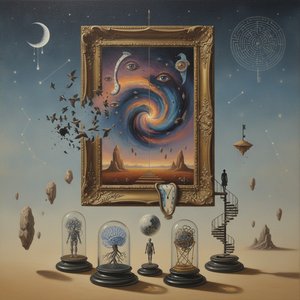
The Canvas of the Unconscious: Understanding Surrealism as Psychological Exploration
SurrealismSurrealism is an art and cultural movement that developed in Europe in the aftermath of World War I in which artists aimed to allow the unconscious mind to express itself, often resulting in the depiction of illogical or dreamlike scenes and ideas. I...
To gaze upon a Surrealist masterpiece is to step through a threshold where the rational world dissolves, leaving only the raw, unfiltered essence of the human psyche. Emerging from the profound shadows of post-World War I Europe, Surrealism was never merely an aesthetic movement; it was a revolutionary attempt to bridge the gap between our waking reality and the enigmatic landscapes of our dreams. Guided by the visionary principles of André Breton, these artists sought to resolve the seemingly contradictory conditions of dream and reality into a new, absolute state of
surreality. For the discerning collector, this movement offers more than just visual intrigue; it provides a profound window into the mechanics of thought, emotion, and the hidden impulses that drive our existence.
The movement’s power lies in its ability to utilize the language of the unexpected—the sudden juxtaposition of unrelated objects and the fluid distortion of familiar forms. By tapping into what Breton called
pure psychic automatism, artists bypassed the censors of logic and morality, allowing the unconscious mind to express itself with startling clarity. This exploration was not merely about creating strange images but about uncovering a deeper truth that resides beneath the surface of our daily perceptions. When we engage with these works, we are participating in a grand psychological experiment, one that challenges us to confront the beautiful, the unsettling, and the inexplicable facets of our own identities.
Dreamscapes and Distortions: How Artists Visualize the Subconscious Mind
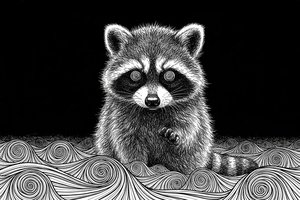 The Trickster’s Vertigo
A Masterpiece of Psychological Surrealism In The Trickster’s Vertigo , digital artist Sophie Fournier delivers a profound exploration of the hypnotic and the uncanny. Drawing deep inspiration from the Junji Ito studio style, this work utilizes the st...
The visual vocabulary of Surrealism is built upon the architecture of the dream, where the laws of physics and time hold no dominion. Consider the hypnotic allure of works like Sophie Fournier’s
The Trickster’s Vertigo, where the use of high-contrast, intricate textures creates a sense of the uncanny. Through obsessive, fine lines and swirling, concentric spirals, the artist captures a state of controlled tension, much like the way a dream can feel both incredibly vivid and hauntingly otherworldly. This technique mirrors the way our minds process fear and fascination, using visual rhythm to pull the viewer into a void where reality begins to blur.
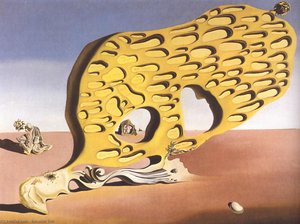
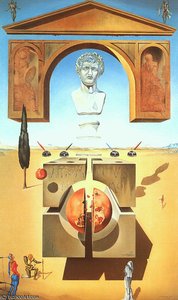
In a similar vein, the legendary Salvador Dalí mastered the art of the
meticulous hallucination. His works often feature landscapes that feel both hyper-realistic and impossible, utilizing techniques like atmospheric perspective to create a sense of infinite, unsettling depth. In pieces such as
Accommodations of Desire, the use of recurring motifs like eggs serves to evoke themes of transformation and latent potential. By rendering these fantastical elements with such precise, almost photographic detail, Dalí forces us to accept the illogical as something tangible. This tension between the recognizable texture of a shell or a landscape and the impossible nature of its arrangement is precisely what allows the subconscious to manifest on the canvas, inviting us to wander through a meticulously crafted dreamscape.
Symbolic Narratives: Decoding Hidden Meanings in Surrealist Masterpieces
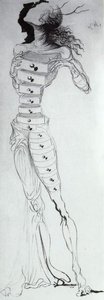 Figure with Drawers for a Four-part Screen
A Surrealist Echo: Figure with Drawers for a Four-part Screen Salvador Dalí’s “Figure with Drawers for a Four-part Screen,” painted in 1934, isn't merely a portrait; it’s an unsettling and profoundly evocative exploration of the human psyche. Rendere...
Beyond the initial shock of the surreal lies a rich, layered tapestry of symbolism waiting to be unraveled. Every element within a Surrealist composition often functions as a signifier for deeper psychological states or historical truths. Take, for instance, the profound work of Kara Walker, whose use of silhouette serves as an active excavation of history. By stripping away color and detail, Walker uses the starkness of form to confront uncomfortable legacies of race, gender, and violence. Her work demonstrates that Surrealism can be a tool for social and historical reckoning, using the surreal imagery of the silhouette to unearth wounds that are often hidden in the light of day.
This decoding process extends into the more personal realms of symbolism as well. In Dalí’s
Figure with Drawers for a Four-part Screen, the fusion of organic human forms with geometric, functional objects like drawers suggests the compartmentalization of the mind—the idea that our personalities are composed of hidden layers and secret chambers of memory and desire. For the collector, the joy of studying these works lies in this continuous discovery; a single painting becomes a narrative puzzle. Whether it is the presence of an egg representing new life or a distorted clock marking the fluidity of time, these symbols act as a bridge, connecting the viewer’s personal experiences to the universal language of the human soul.
The Architecture of Illusion: Creating Emotional Resonance Through Space and Light
 Evoking Atmosphere: Mood, Space & Emotional Resonance in Artistic Representations
The Foundations of Atmospheric Perspective: Creating Depth & Illusion Wikipedia: Aerial perspective Aerial perspective, or atmospheric perspective, is the effect the atmosphere has on the appearance of an object as viewed from a distance. As the dist...
The emotional impact of Surrealist art is deeply tied to how artists manipulate space, light, and atmosphere to evoke specific moods. The concept of
atmospheric perspective—the way distance softens contrast and mutes color—is used not just to create depth, but to simulate the hazy, uncertain feeling of a fading memory or a rising dream. When an artist successfully captures the weight of air and the subtle shifts in light, they create a sense of presence that can be both comforting and deeply disorienting.
This mastery of atmosphere is perhaps most breathtakingly realized in architectural surrealism, such as the Dalí Theatre and Museum in Figueres. Here, the boundaries between art and reality are completely erased through a labyrinthine design that utilizes light to create celestial atmospheres contrasting with psychological shadows. In painting, this is echoed through techniques like
tenebrism, where violent contrasts of light and dark are used to spotlight emotional intensity. By controlling the interplay of shadow and illumination, artists can direct our gaze toward specific symbolic focal points, ensuring that the viewer’s emotional journey is as carefully choreographed as the composition itself. This manipulation of space ensures that the artwork is not just something we look at, but an environment we inhabit.
Curating the Psyche: Bringing Evocative Art into Your Personal Sanctuary
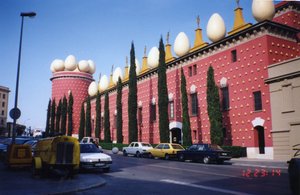 Dalí Theatre and Museum
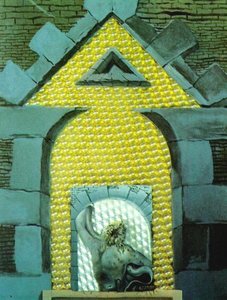
A Surreal Labyrinth: Stepping into Dalí’s Living Dream To enter the Dalí Theatre and Museum in Figueres is not merely to visit an exhibition, but to surrender oneself to a meticulously crafted hallucination. Located in the heart of the Spanish town w...
Integrating Surrealist-inspired art into a modern home is an act of intentional curation, a way to infuse your living space with depth, conversation, and intellectual curiosity. For the contemporary collector, selecting pieces that explore psychological themes allows for the creation of a sanctuary that reflects the complexity of the human experience. Whether it is a large-scale, multi-panel installation that spans a wide wall or a singular, striking canvas print that serves as a focal point in a study, these works bring an element of wonder and introspection to any room.
When choosing art for your collection, consider how the mood and color palette of a piece will interact with your existing decor. A high-contrast, monochrome work can add a sophisticated, dramatic edge to a minimalist space, while more colorful, dreamlike landscapes can provide a sense of expansive tranquility. The goal is to build a collection that feels personal and meaningful—a visual diary of your own interests and reflections. By bringing these evocative narratives into your home, you are doing more than decorating; you are inviting the profound mysteries of the mind to become a permanent part of your daily life.
At
ArtsDot.com, we believe that fine art should be an accessible discovery for everyone. Whether you are looking to commission a custom oil reproduction that reimagines a personal memory through a Surrealist lens or searching for a high-quality print to anchor a new room, our mission is to help you find pieces that resonate with your soul. From professional digital mockups to the exquisite texture of hand-painted canvases, we provide the tools and expertise to help you build a collection that is as profound and enduring as the masterpieces themselves.