The Alchemy of Divinity: Gold as a Symbol of the Eternal
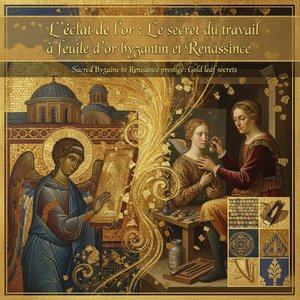 Gilded Glory: The High-Impact Art of Gold Leaf and Byzantine Masterpieces
The Alchemy of Divinity: Gold as the Flesh of the Gods The Allure of Gold in Art History: Symbolism, Technique & Cultural Significance The Ancient Roots: Gold as Divine Symbolism Wikipedia: Gold leaf Gold leaf is gold that has been hammered into thin...
To gaze upon a masterpiece of the Byzantine era is to encounter far more than mere pigment and metal; it is to witness a celestial phenomenon captured in physical form. Throughout the long, shimmering annals of art history, gold has functioned as an alchemical bridge between the terrestrial and the divine. It possesses a unique optical property that transcends the limitations of standard palettes, reflecting light in a way that breathes life into the canvas even in the most dimly lit galleries. This radiance does not simply sit upon the surface; it interacts with the viewer’s movement, shifting and shimmering as if the artwork itself were breathing, creating an ethereal glow that defies the boundaries of the material world.
From its earliest incarnations, gold has held a power far exceeding its monetary value. It was never merely a display of wealth or a testament to imperial prestige; rather, it was a material imbued with an otherworldly luminescence. In ancient Egypt, gold adorned sarcophagi and masks not just for status, but as the essential flesh of the gods, ensuring safe passage through the afterlife via its unchanging brilliance. This association with immortality—the idea that gold, resistant to tarnish and decay, mirrors the eternal nature of the divine—found its most profound expression within the Byzantine Empire. Here, the metal became a theological necessity, a way to represent the uncreated light of heaven within the reach of human sight.
Techniques of Transcendence: The Art of Goldbeating and Gilding
--- title: Gold-ground panel painting (video) | Khan Academy url: https://www.khanacademy.org/humanities/special-topics-art-history/creating-conserving/painting-materials-techniques/v/gold-ground-panel-painting hostname: khanacademy.org description: ...
The creation of such luminous surfaces required a level of craftsmanship that bordered on the miraculous. The process begins with gold leaf, which is gold that has been hammered into incredibly thin sheets—often as fine as 0.1 micrometers—through a meticulous process known as goldbeating. This extreme thinness allows the metal to become almost weightless, capable of conforming to the textures of the substrate and catching the light from the slightest angle. It is a labor-intensive discipline that demands absolute precision, as the material is so delicate it can be disturbed by a mere breath.
In the tradition of gold-ground panel painting, particularly during the 13th and 14th centuries, the process was a true labor of love involving multiple skilled artisans. The foundation began with building a panel from sturdy poplar planks, followed by applying successive layers of gesso to create a surface as smooth as ivory. Once the design was sketched in charcoal, the gold leaf was applied over a prepared adhesive. This meticulous layering ensured that the brilliance of the gold would remain vibrant for centuries. While the cost of gold bullion was significant, the extreme thinness of the leaf allowed artists to cover large areas, creating a luxurious, solid gold appearance that served as the perfect stage for sacred narratives.
The Golden Background: Mastering the Byzantine 'Gold Ground' Style
 Gold ground
Gold ground (both a noun and adjective) or gold-ground (adjective) is a term in art history for a style of images with all or most of the background in a solid gold colour. Historically, real gold leaf has normally been used, giving a luxurious appea...
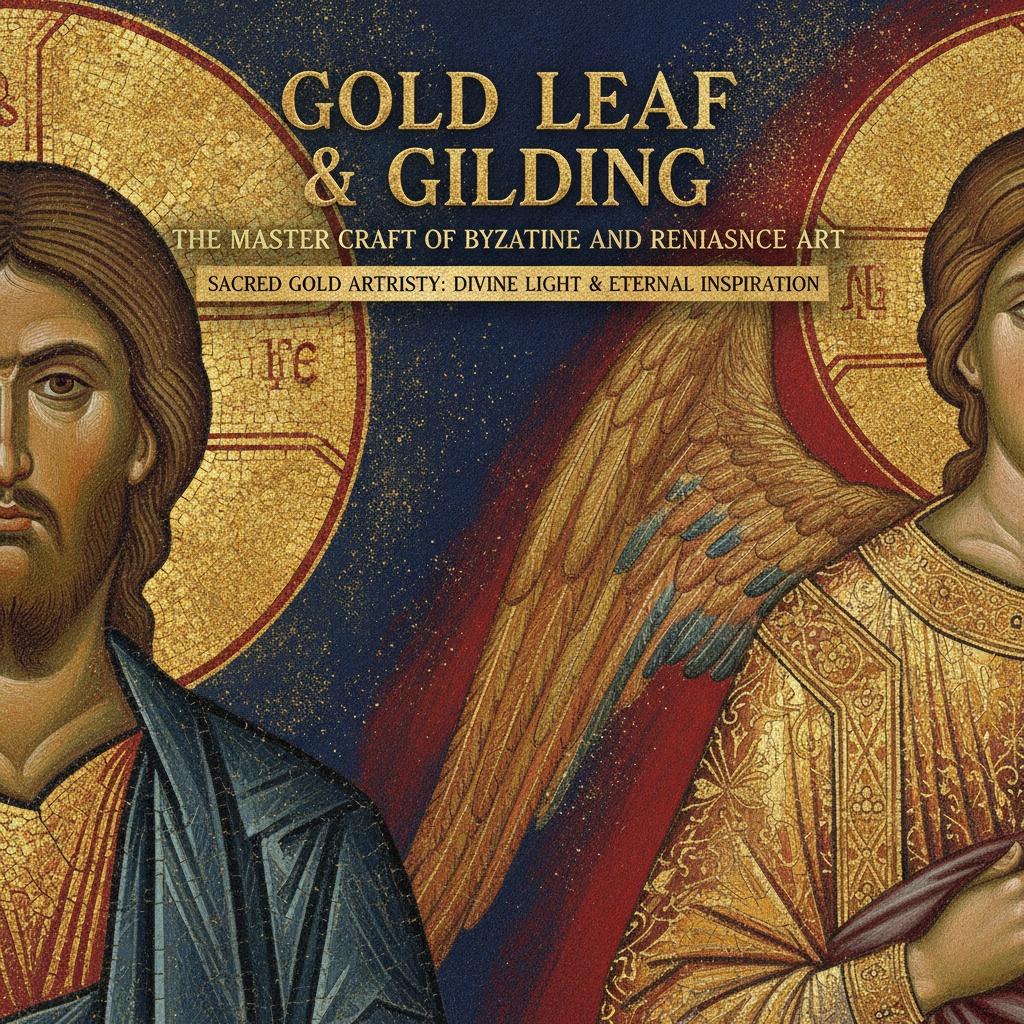
In art history, the term gold ground refers to a style where the background of an image is composed entirely or primarily of a solid gold color. This technique was the dominant style for centuries in Byzantine and medieval art, appearing in mosaics, illuminated manuscripts, and panel paintings. In the context of icons, this was not merely a decorative choice but a profound theological statement. By replacing a naturalistic landscape with a shimmering, featureless expanse of gold, the artist removed the subject from a specific time or place, situating them instead within a timeless, spiritual plane.
This technique found its most striking expression in mosaics and portable icons. In Roman mosaics, gold was initially used for fine details, but as Christian art evolved, it became essential for representing holy figures against a glistering background that suggested the presence of heaven. While full-length figures might occasionally stand on more naturalistic ground, the sky or surrounding atmosphere remained a sea of light. This style required immense skill to ensure the gold leaf interacted correctly with the viewer's perspective, creating a sense of depth and divinity that could not be achieved with standard pigments like lapis lazuli blue, which, though beautiful, lacked the reflective, active quality of gold.
Renaissance Radiance: Ghiberti and the Evolution of Gilded Sculpture
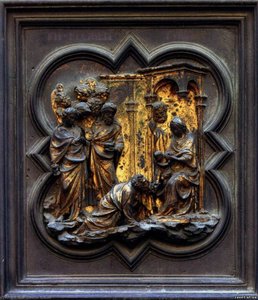
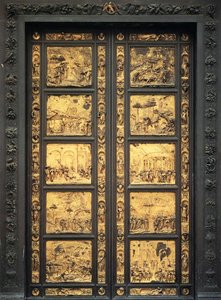
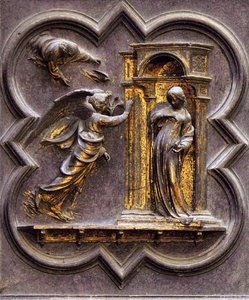
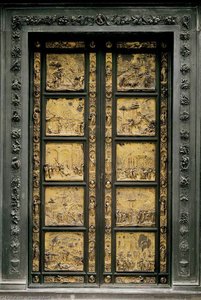
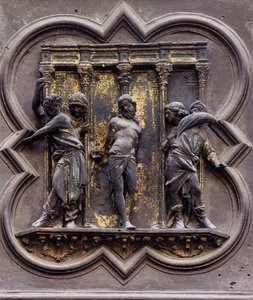
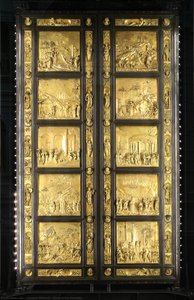 Door of the Paradise
Exquisite Masterpiece of Early Renaissance Art Step into the grandeur of the Italian Renaissance with this stunning gilded altarpiece, crafted by the renowned artist Lorenzo Ghiberti in 1452. Measuring an impressive 520 by 310 centimeters, this work ...
As the art world transitioned from the Byzantine era into the Italian Renaissance, the use of gold evolved from flat, symbolic backgrounds into complex, three-dimensional narratives. The masters of this era sought to marry the divine light of gold with the burgeoning interest in naturalism and human emotion. A pinnacle of this achievement is found in the work of Lorenzo Ghiberti, particularly his legendary Door of the Paradise. Created in 1452, this gilded altarpiece exemplifies the spiritual devotion and technical mastery of the period.
Ghiberti utilized high-relief gilded bronze sculpture to create scenes that felt almost alive. The luminous gold surfaces and intricate detailing created a captivating visual experience that elevated the sacred biblical stories. Unlike the static gold grounds of earlier centuries, Ghiberti’s work used gold to highlight movement, anatomy, and architectural depth. The extensive use of gold leaf enhanced the luminosity, creating a radiant glow that captured light from every angle, emphasizing both the regal and the divine qualities of the narrative. This era marked a shift where gold no longer just represented a void of heaven, but actively illuminated the physical reality of sacred history.
Preserving the Glow: The Longevity and Chemistry of Gilded Masterpieces
The enduring beauty of these gilded works is a testament to both the quality of the materials and the sophisticated chemistry employed by master artists. To ensure that a painting survives for generations, specific preservation techniques are required. In high-quality reproductions, such as those we produce at ArtsDot.com, we utilize flexible gesso to prevent the cracking that often plagues older works. We also use specific oils, such as safflower, for our whites to prevent the dreaded yellowing effect over time.
Every hand-painted oil reproduction is finished with a protective coat of Damar varnish. This layer serves as a vital shield, protecting the delicate pigments and gold surfaces from dust, moisture, and atmospheric pollutants. For those seeking an even more historical aesthetic, we offer an optional Aged & Cracked (craquelure) finish on most paintings, replicating the beautiful texture of centuries-old masterpieces. By understanding the chemistry of art—from the stability of the pigments to the strength of the stretcher bars—we ensure that the celestial glow of these historical treasures can be enjoyed in modern spaces for decades to come.