The Strategic Role of Murals: Establishing Visual Anchors in Hospitality Design
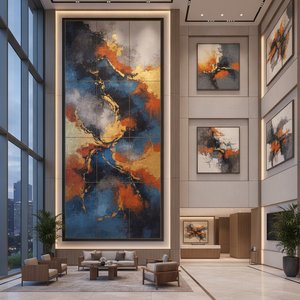
In the high-stakes arena of hospitality design, a room is rarely just a physical space; it is a narrative waiting to be told. For the procurement professional and the hotel designer, the primary challenge lies in creating an immediate, indelible connection with guests while maintaining a consistent brand identity across diverse environments. This is where the concept of anchoring becomes vital. An anchor is a strategic focal point that grounds a room’s aesthetic, preventing a large lobby or a grand corridor from feeling adrift in a sea of transient decor. Murals, by virtue of their immense scale and visual gravity, offer an unparalleled opportunity for this type of architectural grounding. Unlike smaller, framed pieces that function merely as accents, a mural commands the entire visual field, shaping the very atmosphere of a space. By utilizing large-scale wall art, designers can transform ordinary transit zones into immersive destinations, turning a simple hallway into a cultural landmark that resonates with prestige and depth.From Historical Grandeur to Modern Luxury: Leveraging Mural Styles for Brand Identity
To master the use of murals is to understand the profound vocabulary of art history. Throughout the ages, large-scale wall art has served as a powerful medium for storytelling and cultural documentation. From the ancient, evocative cave paintings of Lascaux to the breathtaking Renaissance frescoes of Michelangelo in the Sistine Chapel, murals have consistently reflected societal values and historical narratives. For a modern hotel brand, tapping into this heritage can provide a sense of permanence and luxury. Consider the impact of Mexican Muralism, led by the legendary Los Tres Grandes—Diego Rivera, José Clemente Orozco, and David Alfaro Siqueiros. Their work transformed public walls into epic chronicles of identity and resilience, using vibrant, dynamic compositions to convey strength and community. Integrating such motifs into a commercial interior allows a designer to introduce themes of historical continuity and social realism, which is particularly effective in high-traffic areas like grand staircases or atriums. Whether it is the structured elegance of Pompeian styles or the groundbreaking abstraction of Wassily Kandinsky, selecting a specific mural era allows a brand to curate a very specific emotional response, ranging from classical sophistication to avant-garde energy.Technical Implementation: Integrating Large-Format Murals and Frescoes into Architectural Plans
 Mural by Masai
Explore Louis Michel’s vibrant mural of a hummingbird! This colorful street art piece, featuring plush toy-inspired details, raises environmental awareness. Discover its urban setting & unique style.
Achieving Cohesion: Coordinating Color Palettes and Textures Around a Central Mural
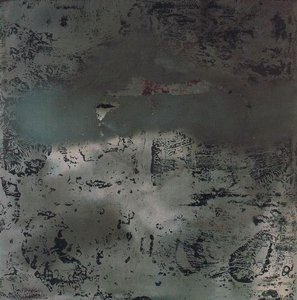 Palette And Flowers
Explore 'Palette And Flowers' by Georges Braque, a captivating abstract work showcasing textured color fields and subtle movement. A key example of Braque’s exploration of form and color.
Logistics and Procurement: Managing Large-Scale Art Commissions for Commercial Projects
 Woman Red Hair, Large Mouth, Large Foot
Influenced by action painting and featuring a striking red-haired woman with oversized features against a vibrant yellow and pink background.
The Impact of Scale: Using Multi-Panel Layouts and Custom Dimensions to Define Spatial Flow
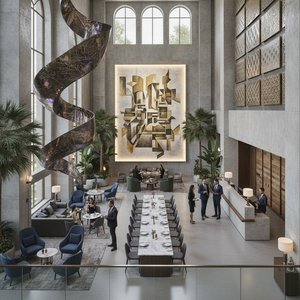
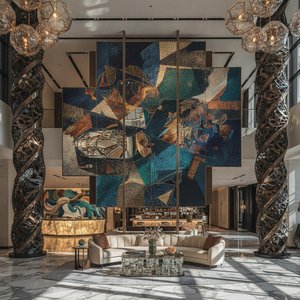
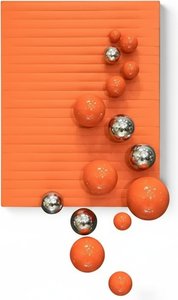
Scale is the most potent tool in a designer's arsenal when using murals to define spatial flow. In large hotel lobbies or expansive corridors, a single, massive image can act as a directional guide, leading the eye through the space and creating a sense of movement. The "multi-panel" trend offers a modern architectural solution to this challenge, allowing a single masterpiece to be split across three, four, or even five panels. This technique is particularly effective for wide walls or grand staircases, where it breaks up the visual weight of the art while maintaining a unified narrative. Furthermore, the ability to customize dimensions allows for "bespoke" wall coverage that respects the unique proportions of each room. Whether it is an abstract stainless steel sculpture providing a modern, luxurious focal point or a large-format canvas mural that expands the perceived depth of a smaller lounge, the strategic use of scale ensures that the art does not just occupy space—it defines it. Through careful planning of dimensions and panel configurations, designers can manipulate the perception of volume and direction, ultimately crafting an environment that is both structurally sound and emotionally resonant.This article was prepared for the professional design community by ArtsDot.com. For expert art consultations and large-scale procurement solutions, visit our platform to explore our extensive catalog of hand-painted masterpieces.