The Fundamentals of Cubism: Understanding Geometric Fragmentation for Interior Curation
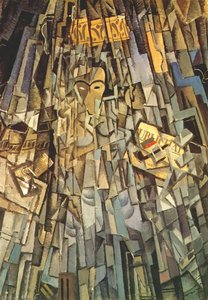
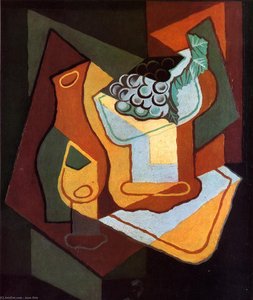
To understand the profound impact of Cubist portraits on a contemporary interior, one must first grasp the radical departure this movement represented from the traditions of the past. Emerging in Paris around 1907 through the audacious visions of Pablo Picasso and Georges Braque, Cubism rejected the long-held belief that art should merely mimic nature or adhere to the rigid rules of perspective and foreshortening. Instead, these pioneers sought to represent reality by deconstructing it into its essential geometric components. By reducing subjects—whether a human face or a simple still life—into a series of interlocking planes, facets, and angles, they created a visual language that emphasizes the two-dimensionality of the canvas while simultaneously offering multiple viewpoints at once.
For the discerning designer, this fragmentation offers a sophisticated way to introduce movement and intellectual depth into a static environment. The Cubist approach is not merely about breaking things apart; it is about a reconstruction of perception. When we observe a Cubist portrait, we are not looking at a single, frozen moment in time, but rather an accumulation of perspectives that challenge the viewer to engage more deeply with the composition. This complexity provides a rich, textured experience for guests, transforming a simple wall into a site of active contemplation and discovery.
Architectural Synergy: Integrating Cubist Perspectives into Modern Hotel Lobby Design
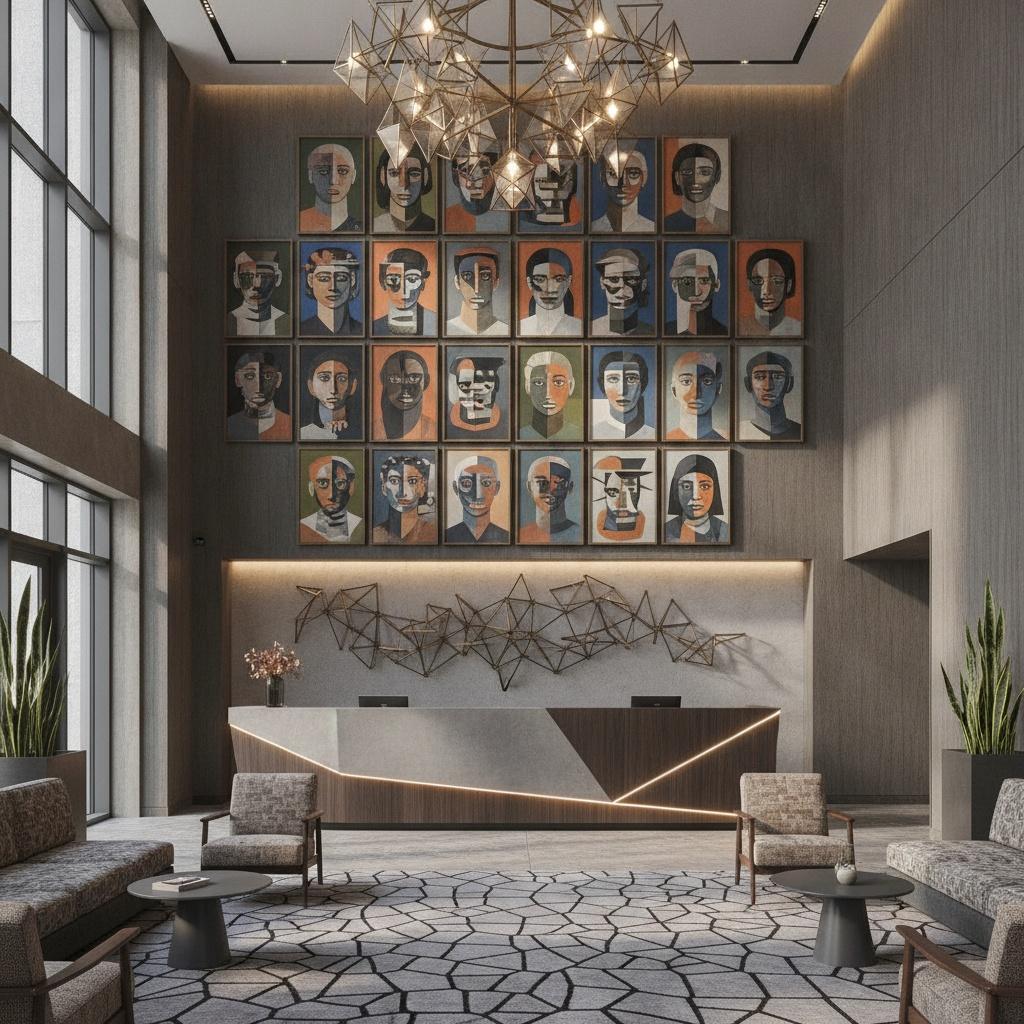
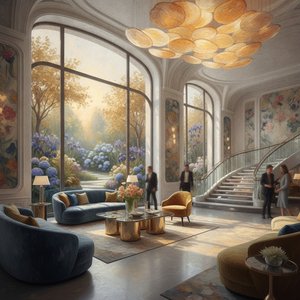
In the realm of high-end hospitality, the lobby serves as the primary architectural statement, setting the tone for the entire guest experience. The geometric rigor of Cubism possesses an inherent synergy with modern architectural trends, particularly those characterized by clean lines, structural transparency, and minimalist forms. Integrating Cubist portraits into a hotel lobby allows for a seamless dialogue between the physical structure of the building and the art it houses. The sharp angles and intersecting planes found in works inspired by Picasso or Braque can echo the steel, glass, and concrete elements of contemporary construction, creating a cohesive and intentional design narrative.
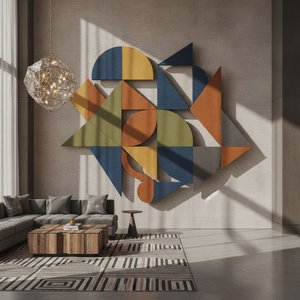
Beyond mere aesthetic alignment, Cubism offers a unique tool for managing spatial perception. Because Cubist works often utilize a shallow, relief-like space, they can add visual interest to large, imposing walls without overwhelming the architectural scale. The fractured planes can act as a bridge between different zones within an open-plan lobby, guiding the eye through the space with rhythmic complexity. When placed strategically near structural pillars or within recessed alcoves, these works reinforce the building's geometry, making the art feel like an organic extension of the architecture itself rather than a mere after-thought.
Strategic Color and Form: Utilizing Cubist Portraits to Define Hospitality Brand Identity
Color and form are the most potent tools in a designer's arsenal for establishing brand identity. In the context of luxury hospitality, where every detail must communicate a specific level of prestige and character, Cubist portraits offer unparalleled versatility. The movement’s evolution—from the somber, monochromatic depths of the Blue Period to the warmer, more vibrant palettes of the Rose Period and beyond—allows designers to tailor the emotional resonance of a space to their brand's specific mission. A boutique hotel seeking an atmosphere of quiet introspection might lean toward the muted, earthy tones of Analytic Cubism, while a high-energy urban lounge could benefit from the bold, saturated hues found in more modern, synthetic interpretations.
Furthermore, the structural nature of Cubist forms allows for precise color coordination with existing interior elements. A designer can select works that highlight specific accent colors within the upholstery, carpeting, or custom millwork, creating a sense of curated perfection. This use of geometric abstraction does not just decorate; it defines. By utilizing the rhythmic repetition of shapes and the strategic placement of color planes, a designer can evoke feelings of stability, dynamism, or luxury, ensuring that the visual identity of the hotel is both memorable and deeply integrated into the guest's sensory experience.
Scale and Composition: Implementing Multi-Panel Cubist Works in Large-Scale Corporate Spaces
One of the most significant challenges in furnishing expansive corporate lobbies or grand hotel corridors is managing scale. A single, standard-sized painting often fails to command the necessary presence on a massive, uninterrupted wall. This is where the trend of multi-panel or "split" compositions becomes an essential strategy for the professional decorator. Cubist art is uniquely suited for this application; because the style is already predicated on fragmentation and the reassembly of planes, splitting a single masterpiece across three, four, Res or even five panels feels entirely natural and architecturally intentional.
These multi-panel configurations allow for a breathtaking expansion of the artwork's footprint, enabling a design to wrap around corners, span wide staircases, or dominate entire feature walls. The seamless flow of brushstrokes and color across the gaps between panels creates a modern, cinematic effect that draws the viewer into the composition. For large-scale corporate environments, this approach provides a sense of grandeur and continuity, turning a structural void into a monumental focal point that reflects the scale and ambition of the organization.
Sourcing and Procurement: Managing High-Volume Orders for Authentic Cubist Reproductions
For procurement managers and hospitality decorators, the successful execution of an art program relies on operational reliability, scalability, and budget management. When furnishing multiple rooms or entire hotel chains, the ability to source high-quality, consistent reproductions is paramount. The challenge lies in finding a supplier who can provide the depth of a vast catalog—offering everything from classic Cubist masters to custom "remixed" versions—while maintaining the rigorous standards required for professional installations.
Effective procurement requires a partner who understands the complexities of large-scale orders, including the need for standardized sizing, clear pricing structures, and efficient logistics. Whether you are selecting from ready-to-ship oil paintings or commissioning bespoke, hand-painted reproductions that match a specific color palette, the process must be streamlined. This includes receiving professional digital mockups to visualize the art on your specific walls before production begins, ensuring that every piece arrives as intended. In an industry where timelines are tight and budgets are strictly monitored, having access to a reliable supply chain—complete with VAT-compliant documentation, international shipping expertise, and a 100% satisfaction guarantee—is the foundation of a successful design project.
At ArtsDot.com, we specialize in supporting the professional needs of the hospitality and corporate sectors. From our extensive library of over 465,000 works to our specialized services for multi-panel compositions and custom color matching, we provide the tools necessary for large-scale art integration. Our commitment to excellence ensures that every hand-painted oil reproduction meets museum-grade standards, delivered with the reliability and efficiency that modern procurement demands.