Introduction
To step into the world of Post-Impressionism is to leave behind the mere observation of light and enter a realm where color breathes, shapes vibrate, and the artist's inner psyche dictates the landscape. While the Impressionists sought to capture the fleeting, sun-drenched moments of reality, the masters who followed—the Post-Impressionists—decided that art should do more than reflect the eye; it should speak to the soul. They traded the soft, hazy edges of a summer afternoon for bold outlines, expressive pigments, and a structural depth that fundamentally altered the course of Western art history.
Emerging in the late 19th century, this movement was not a single, unified school but rather a powerful collection of individual visions. From the swirling, emotional skies of France to the structured, geometric explorations of pointillism, these artists reacted against the perceived limitations of their predecessors. They sought to infuse their canvases with symbolic meaning and permanent form, using thick impasto strokes and unnatural, emotive color palettes to convey feelings that a simple photograph could never grasp. It was a period of profound cultural transition, where the stability of the old world began to dissolve into the fragmented, vibrant energy of the modern era.
Today, these works remain profoundly meaningful because they represent the birth of modern subjectivity. When we look at a Post-Impressionist masterpiece, we are not just looking at a landscape or a portrait; we are witnessing the moment art became an intimate language of human emotion. The textures of the paint and the intensity of the hues continue to resonate in our contemporary visual culture, influencing everything from graphic design to cinema.
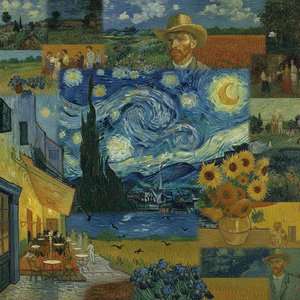
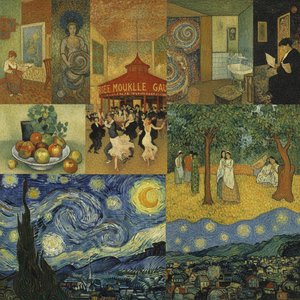
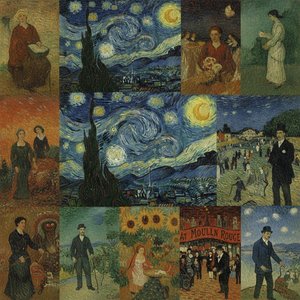
In the following selection, we invite you to walk through a curated gallery of impact. We have identified ten definitive masterpieces that encapsulate this era's revolutionary spirit—works that pushed the boundaries of what paint could achieve and paved the way for the abstraction and expressionism that would follow. Prepare to encounter colors that pulse with life and compositions that continue to challenge and enchant the modern viewer.
Starry Night (New York, MoMA) - vincent willem van gogh
 Starry Night (New York, MoMA) - vincent willem van gogh
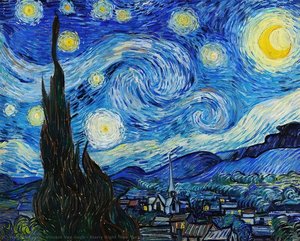
Painted in 1889 during a period of profound personal struggle at the Saint-Paul-de-Mausole asylum, Vincent van Gogh's Starry Night is far more than a nocturnal landscape; it is a visceral expression of inner turmoil and an enduring testament to the artist’s unique vision. This masterpiece defines the Post-Impressionist movement through its revolutionary use of impasto , where thick, layered strokes of paint create a tactile surface that seems to pulse with cosmic energy. The swirling patterns dominating the sky are not mere observations but deeply felt emotions, rendered in a dramatic interplay of vibrant yellows and deep, nocturnal blues.
As you observe the towering cypress tree acting as a dark, vertical anchor against the luminous crescent moon, you witness the intersection of earth and heaven. The peaceful village below offers a quiet contrast to the turbulent heavens, evoking themes of loneliness, awe, and spiritual yearning. To possess such a work is to invite a transformation into your space, turning a simple room into a gallery of the soul where the sublime power of nature remains eternally alive.
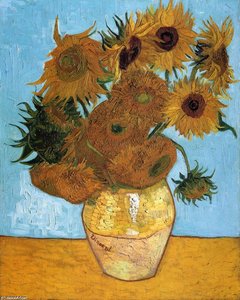
Sunflowers - vincent willem van gogh
A radiant burst of sun-drenched gold, Sunflowers by Vincent van Gogh captures the very pulse of life through a lens of vibrant, emotional intensity. As we navigate this collection of the Top 10 Masterpieces That Defined the Post-Impressionism Art Movement , this 1888 masterpiece stands as an essential pillar due to its revolutionary use of the impasto technique. Van Gogh does not merely paint flowers; he sculpts them with thick, rhythmic brushstrokes that create a tactile, three-dimensional energy, moving far beyond simple representation into the realm of pure feeling.
The painting’s mastery lies in its symbolic duality—the brilliant yellows evoke warmth and friendship, while the wilting petals whisper of mortality. This profound emotional depth and the bold, expressive color palette have left an indelible mark on visual culture, influencing generations of artists and designers alike. Today, this transformative energy can be integrated into your own professional or personal environment. Through high-fidelity oil reproductions, you can bring the luminous, life-affirming presence of Van Gogh’s vision into any home, hotel, or corporate space, making museum-grade beauty an accessible part of your daily landscape.
The Night Cafe - vincent willem van gogh
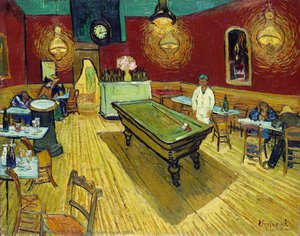 The Night Cafe - vincent willem van gogh
A heavy, restless energy vibrates through the air of The Night Cafe by Vincent van Gogh, a work that captures the profound psychological tension of a late-night sanctuary. This masterpiece earns its place among the top ten Post-Impressionist works through its radical departure from mere observation; Van Gogh does not simply paint a room, he paints an emotion. Through his signature thick impasto technique and a jarring, clashing palette of blood-red walls and sickly green ceilings, he communicates the 'terrible passions' of the human condition.
The painting’s distorted perspective and swirling, energetic brushstrokes create a sense of isolation and nocturnal unease that has influenced visual culture for over a century. It is an irreplaceable pillar of the movement because it transformed color into a language of pure feeling. Today, this transformative power remains accessible to all; through high-fidelity oil reproductions, you can bring the dramatic light and evocative depth of Van Gogh’s vision into your own home, office, or personal gallery, creating a space of profound character and historical resonance.
Cafe Terrace on the Place du Forum, Arles, at Night - vincent willem van gogh
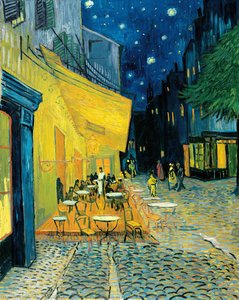 Cafe Terrace on the Place du Forum, Arles, at Night - vincent willem van gogh
In Cafe Terrace on the Place du Forum, Arles, at Night , Vincent van Gogh achieves a breathtaking synthesis of light and emotion that serves as a cornerstone of the Post-Impressionist movement. Painted in 1888, this masterpiece rejects the traditional black of night, opting instead for a vibrant dialogue between warm, glowing yellows and deep, celestial blues. The thick, tactile impasto technique creates a rhythmic energy, where every visible brushstroke pulses with the artist's internal vitality.
As you observe the café’s golden glow acting as a beacon against the violet shadows, you are witnessing more than a street scene; you are experiencing a profound exploration of human connection and solitude. The composition uses strong diagonals to draw the eye into the heart of Arles, creating a sense of depth that feels both intimate and infinite. Owning such a work is not merely a purchase; it is an inheritance of a legendary lineage of taste. It allows the transformative power of Van Gogh’s color palette to become a permanent part of your own architectural narrative.
Harmony in Red - Henri Matisse
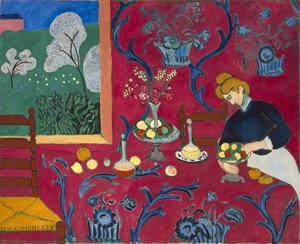 Harmony in Red - Henri Matisse
In Harmony in Red , Henri Matisse transcends mere domesticity to present a profound meditation on the emotional resonance of color. This masterpiece stands as a cornerstone among the top 10 masterpieces that defined the Post-Impressionism art movement , acting as a bridge between traditional representation and the radical liberation of Fauvism. The painting captures a woman in a quiet moment of fruit preparation, yet the scene is far from ordinary; it is a carefully orchestrated symphony where the saturated, crimson walls dissolve the boundaries between subject and space.
Matisse utilizes a flattened perspective and bold, non-naturalistic tones to create a visual language that feels strikingly modern. The interplay of deep magentas against cool greens evokes a sensory richness that continues to influence contemporary interior aesthetics and minimalist design trends. By prioritizing expressive pigment over photographic realism, Matisse invites the viewer into a world where color functions as a primary emotional narrator, making this work an enduring icon of artistic innovation and structural harmony.
Sleeping Gypsy - henri julien félix rousseau (le douanier)
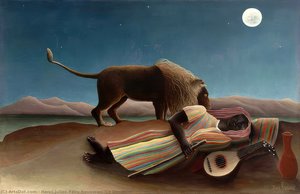 Sleeping Gypsy - henri julien félix rousseau (le douanier)
Henri Rousseau’s 1897 masterpiece, Sleeping Gypsy , serves as a profound cornerstone of the Post-Impressionist era, offering a dreamscape where vulnerability meets primal power. The scene is bathed in an ethereal, lunar glow, casting long shadows across a landscape that feels both familiar and unsettlingly surreal. As a traveler rests in peaceful surrender, a majestic lion approaches, creating a tension that transcends mere representation to touch upon the very essence of fate.
Executed in Rousseau’s signature Naïve style, the work rejects academic realism in favor of flattened perspectives and bold, organic forms. The vibrant stripes of the figure's garments and the stark, moonlit silhouette of the predator create a visual language that famously captivated legends like Picasso. Owning Sleeping Gypsy by Henri Rousseau is not merely an acquisition; it is an inheritance of a profound artistic lineage. At ArtsDot.com, we bring this legacy to your walls, allowing you to host a piece of art history that continues to pulse with mystery and symbolic depth.
Self Portrait - vincent willem van gogh
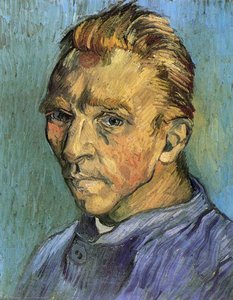 Self Portrait - vincent willem van gogh
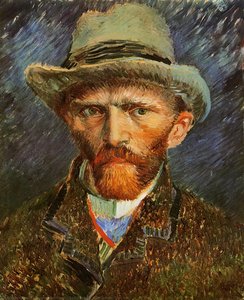
To stand before a masterpiece is to witness a soul laid bare through the medium of pigment and light. In this profound exploration of identity and psychological depth, we encounter Self Portrait by Vincent Willem van Gogh . Painted in 1889 during his time at the Saint-Paul-de-Mausole asylum, this work serves as a cornerstone of the Post-Impressionism movement, moving far beyond mere likeness to capture raw, human vulnerability.
The canvas vibrates with Van Gogh's signature impasto technique; thick, rhythmic brushstrokes create a tactile topography that mirrors his internal turbulence. A palette of earthy ochres and warm browns clashes against cool, swirling teals, creating a visual tension that is both haunting and hypnotic. His direct, piercing gaze demands an emotional connection, pulling the viewer into his world of intense color and structured chaos. As one of the top 10 masterpieces that defined Post-Impressionism, this portrait remains a timeless testament to how expressive art can transform a space, turning a simple wall into a window of profound emotional resonance.
Portrait of Patience Escalier - vincent willem van gogh
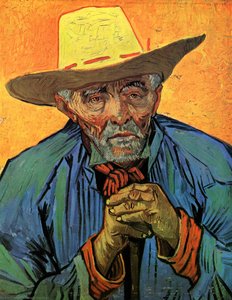 Portrait of Patience Escalier - vincent willem van gogh
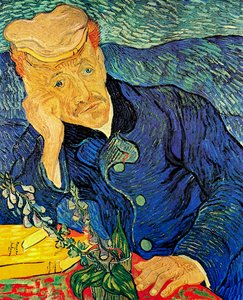
The profound impact of Portrait of Patience Escalier by Vincent van Gogh lies in its visceral materiality. To observe this work is to encounter the heavy, sculptural impasto technique that defines Post-Impressionism; the thick, rhythmic application of oil paint creates a landscape of ridges and valleys across the subject's weathered face and white beard. Van Gogh moves beyond mere representation, using swirling strokes of ochre, orange, and deep violet to translate the psychological weight of the Provençal shepherd into a tactile experience.
This masterpiece stands among the top 10 defining works of the movement because it replaces academic realism with raw, subjective emotion. The visible energy of every brushstroke captures a sense of movement and life that a flat print simply cannot replicate. At ArtsDot.com, we specialize in preserving this three-dimensional quality for collectors. Our hand-painted oil reproductions are meticulously crafted on cotton canvas to honor the original's texture, ensuring that the light catches every raised stroke, bringing the soulful, heavy textures of Van Gogh’s Arles period into your professional or private space.
Where do we come from what are we where are we going - Eugène Henri Paul Gauguin
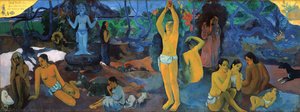 Where do we come from what are we where are we going - Eugène Henri Paul Gauguin
In Where do we come from, what are we, where are we going? by Paul Gauguin, the light does not merely illuminate; it breathes a spiritual weight upon the Tahitian landscape. Rather than traditional chiaroscuro, Gauguin employs a diffuse, atmospheric glow that dissolves harsh boundaries, creating a dreamlike state where cool blues and deep greens merge with sun-drenched ochres. This masterful command of light—moving from the soft shadows of infancy to the twilight of old age—is precisely what secured this work's place among the top 10 masterpieces that defined the Post-Impressionism art movement .
The way the light interacts with the flattened planes of color creates a profound sense of mystery and depth. When reproduced as a high-quality oil painting, these subtle transitions and rich, symbolic tones bring an unparalleled layer of luxury and contemplative energy to any contemporary space. The painting’s ability to evoke both tranquility and existential longing makes it a transformative centerpiece, offering a sophisticated focal point that invites viewers to lose themselves in its rhythmic, luminous storytelling.
Two Women on the Beach - Eugène Henri Paul Gauguin
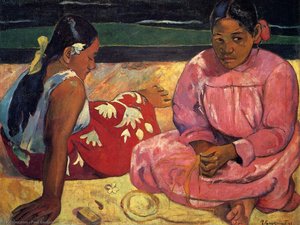 Two Women on the Beach - Eugène Henri Paul Gauguin
A sun-drenched moment of Tahitian stillness, Two Women on the Beach by Paul Gauguin captures a world far removed from European industrialism, inviting viewers into a realm of profound sensory intimacy. As part of our exploration of the Top 10 Masterpieces That Defined the Post-Impressionism Art Movement , this work stands as a pillar of stylistic revolution. Gauguin moves beyond mere observation, utilizing Cloisonnism to define figures with bold, dark contours and flat planes of saturated ochre, pink, and deep red.
This painting is indispensable to the Post-Impressionist canon because it rejects photographic realism in favor of emotional truth and symbolic depth. The simplified forms and vibrant, heavy brushstrokes create a rhythmic, almost musical atmosphere that resonates with modern sensibilities. At ArtsDot.com, we believe in democratizing this level of beauty; through our high-fidelity, hand-painted oil reproductions, you can bring the transformative, exotic presence of Gauguin’s Tahitian reverie into your own home, office, or professional gallery space.
Conclusion
As we draw the curtain on this journey through the vibrant, emotive landscapes of Post-Impressionism, we find that these works are far more than mere relics of a bygone era or static subjects in a museum gallery. They are living, breathing presences—pulsating with the rhythmic brushstrokes of Van Gogh, the structural brilliance of Cézanne, and the luminous color theories of Seurat. To study them is to witness the moment where art moved beyond simple observation into the profound depths of human feeling and psychological truth.
These masterpieces possess a unique power to transcend time, offering a quiet sanctuary of beauty in our modern, often hurried lives. They do not merely hang on a wall; they breathe life into a room, casting a glow of historical grace and creative passion upon every corner they inhabit. By bringing these textures and tones into your own home, you invite a daily dialogue with the masters, turning your personal space into a continuous celebration of human resilience and imagination.
We invite you to continue this exploration and find the piece that speaks to your own spirit within our full collection . Let these timeless echoes of light and color serve as a permanent reminder of the enduring beauty that exists whenever the human heart dares to express the unseen.