The Dawn of Realism: Breaking from Academic Tradition
In the early nineteenth century, the corridors of the French Academy were dominated by rigid hierarchies and idealized subjects. History painting, mythology, and grand religious narratives reigned supreme, often at the expense of the lived reality surrounding the artist. However, a quiet rebellion was brewing on the outskirts of Paris, far from the polished marble of the salons. This movement, which would come to be known as the Barbizon School, sought to dismantle the artifice of Neoclassicism in favor of something far more profound: truth. By turning their gaze away from the heroic and toward the humble, these artists initiated a seismic shift in the perception of landscape, transforming it from a mere backdrop for human drama into a protagonist capable of expressing deep emotion and spiritual resonance.
This revolution was not merely about subject matter; it was an ontological shift in how humanity related to the natural world. The Barbizon painters rejected the staged, theatrical compositions of their predecessors, choosing instead to find majesty in the tangled thickets, the damp earth, and the shifting mists of the French countryside. This pursuit of realism laid the groundwork for a new era of artistic integrity, where the artist's duty was no longer to embellish reality but to witness it with unyielding honesty.
The Soul of the Forest: Fontainebleau as an Artistic Sanctuary
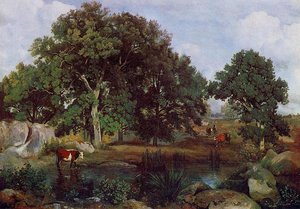
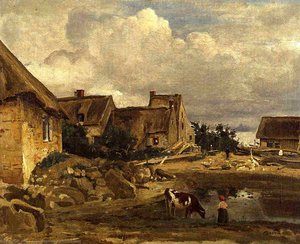
At the heart of this movement lay the Forest of Fontainebleau, a sprawling, verdant expanse that served as both a laboratory and a sanctuary for the wandering painter. For artists like Jules Coignet and Louis Auguste Lapito, the forest was not just a location; it was a living, breathing entity. The dense groves and ancient rock formations provided an infinite variety of textures and light conditions, inviting a level of study that no studio could replicate. Within these woods, the boundaries between the observer and the observed began to blur.
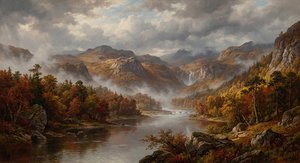
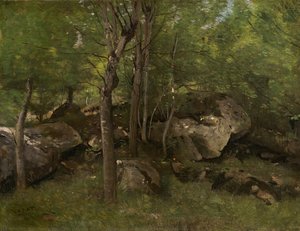
The landscape of Fontainebleau offered a unique topographical complexity—a tapestry of rugged stones, serene glades, and winding paths. In works such as Rocks in the Forest of Fontainebleau, one can sense the artist's reverence for the geological permanence of the earth contrasted against the fleeting movement of light. This sanctuary allowed painters to explore the poetic interplay of shade and sun, creating scenes that felt less like static images and much more like captured breaths of time. The forest became a symbol of the untamed spirit, a place where the soul could reconnect with the primordial rhythms of nature.
Masters of Light and Shadow: The Pioneers of the Barbizon Movement
To speak of the Barbizon School is to invoke the names of masters who possessed an almost supernatural ability to translate atmosphere onto canvas. Jean-Baptiste-Camille Corot stands as perhaps the most luminous figure of this era. His mastery of light was not merely technical; it was lyrical. In his detailed depictions of the Fontainebleau landscape, Corot utilized a delicate palette to capture the silvery, ethereal quality of dawn and dusk, creating scenes that feel both grounded in reality and touched by a dreamlike grace. His ability to balance structural precision with soft, atmospheric washes of color remains a benchmark of landscape excellence.
Alongside him, artists like Jules Coignet pioneered techniques that utilized light and shade to create depth and volume, imbuing the landscape with a tactile presence. These painters understood that light is the architect of form; it defines the curve of a branch, the weight of a stone, and the depth of a valley. Through their meticulous observation, they moved beyond simple representation, using the interplay of chiaroscuro to evoke the quiet moods of the natural world—the melancholy of a rainy afternoon or the vibrant energy of a sun-drenched clearing.
Plein Air Revolution: Capturing the Ephemeral Beauty of Nature
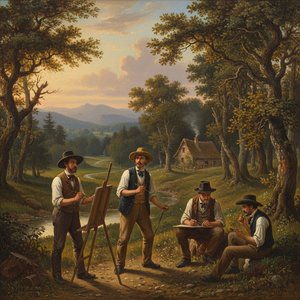
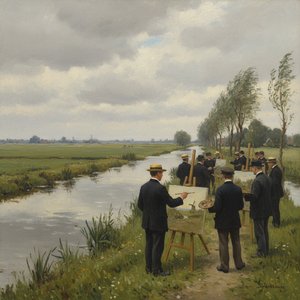
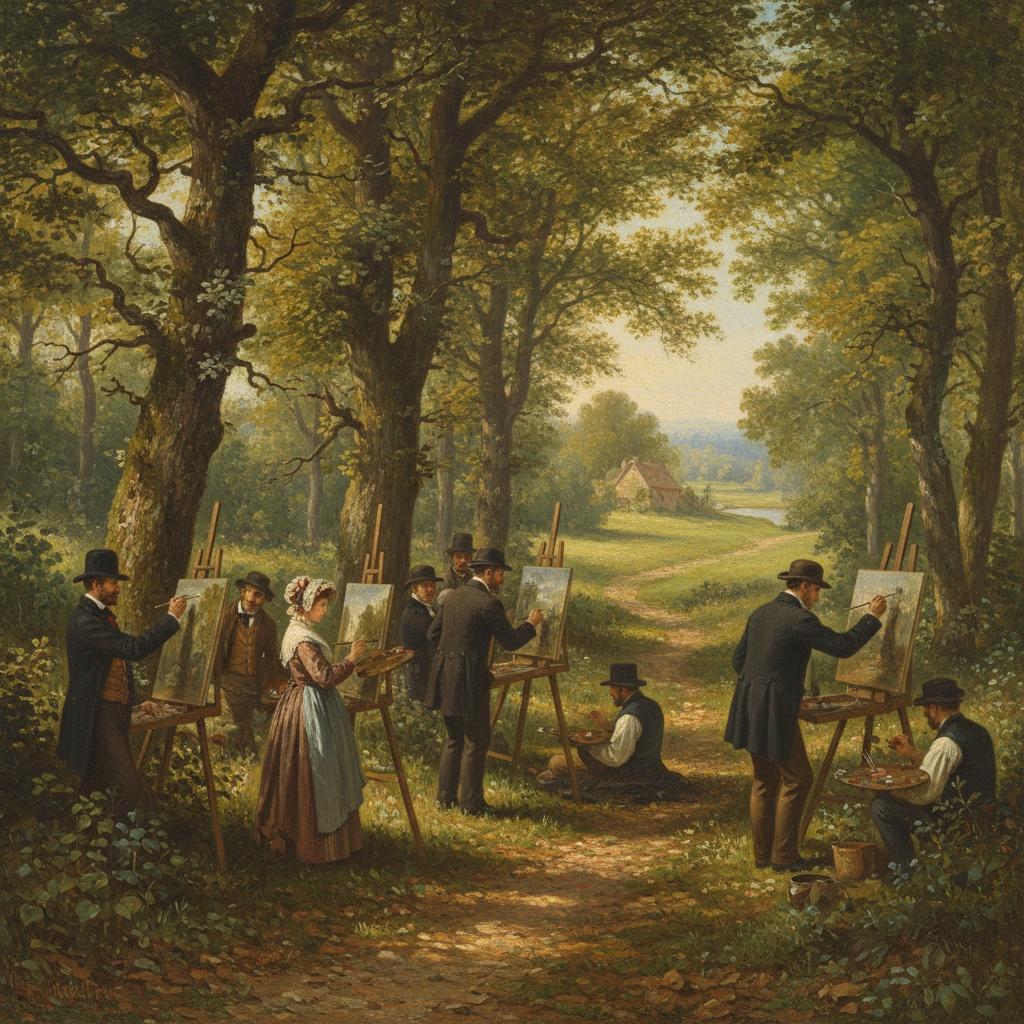
Perhaps the most enduring legacy of the Barbizon painters was their commitment to en plein air—the practice of painting outdoors, directly in the presence of the subject. This was a radical departure from the traditional method of sketching outdoors and completing large-scale works within the controlled environment of a studio. By bringing their easels into the elements, these artists embraced the unpredictability of weather, the changing angle of the sun, and the very essence of the atmosphere.
This technique demanded a new kind of agility and a heightened sensitivity to the ephemeral. To paint en plein air is to engage in a race against time; one must capture the precise moment before a cloud obscures the sun or a breeze disturbs the surface of a pond. This approach fostered a more spontaneous, textured style of painting, characterized by visible brushstrokes that mirror the vitality of the subject matter. It was through this direct engagement with the environment that the Barbizon artists were able to imbue their landscapes with an authentic sense of life, making the viewer feel as though they could step directly into the cool, damp air of the French woods.
Legacy and Influence: From Barbison to the Impressionist Dawn
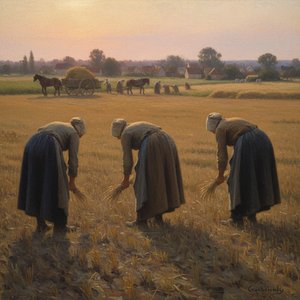
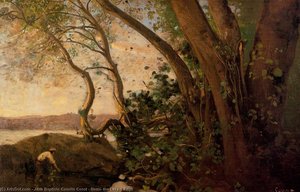
The ripples of the Barbizon revolution extended far beyond the borders of France and the era of its peak. The movement’s emphasis on light, atmosphere, and the direct observation of nature served as the essential precursor to Impressionism. One can trace a clear lineage from the atmospheric studies of Corot to the groundbreaking works of a young Claude Monet. In pieces such as Woodbearers in Fontainebleau Forest, we see the seeds of Impressionism already germinating—the focus on seasonal change, the broken brushwork, and the profound interest in how light dissolves form.
The Barbizon School fundamentally changed the trajectory of Western art by legitimizing the landscape as a subject of high intellectual and emotional importance. They taught subsequent generations that there is profound beauty to be found in the ordinary, and that the most powerful truths are often found in the quietest corners of the natural world. Today, as we look upon these timeless masterpieces, we continue to experience the same sense of wonder and peace that first drew those pioneering artists into the heart of the forest.
Discovering the Masters with ArtsDot
At ArtsDot.com, we are dedicated to preserving the profound beauty of art history for the modern collector. Our platform offers a curated selection of exquisite reproductions that capture the very essence of the Barbizon School. Whether you seek a meticulously handcrafted oil painting that replicates the tactile impasto of the masters or a high-fidelity Giclée print for your home, our mission is to bring the soul of the museum into your personal space. From custom commissions that allow you to reimagine history to expert consultations for your interior design, ArtsDot provides a bridge between the timeless legacies of the past and the aesthetic needs of the present.