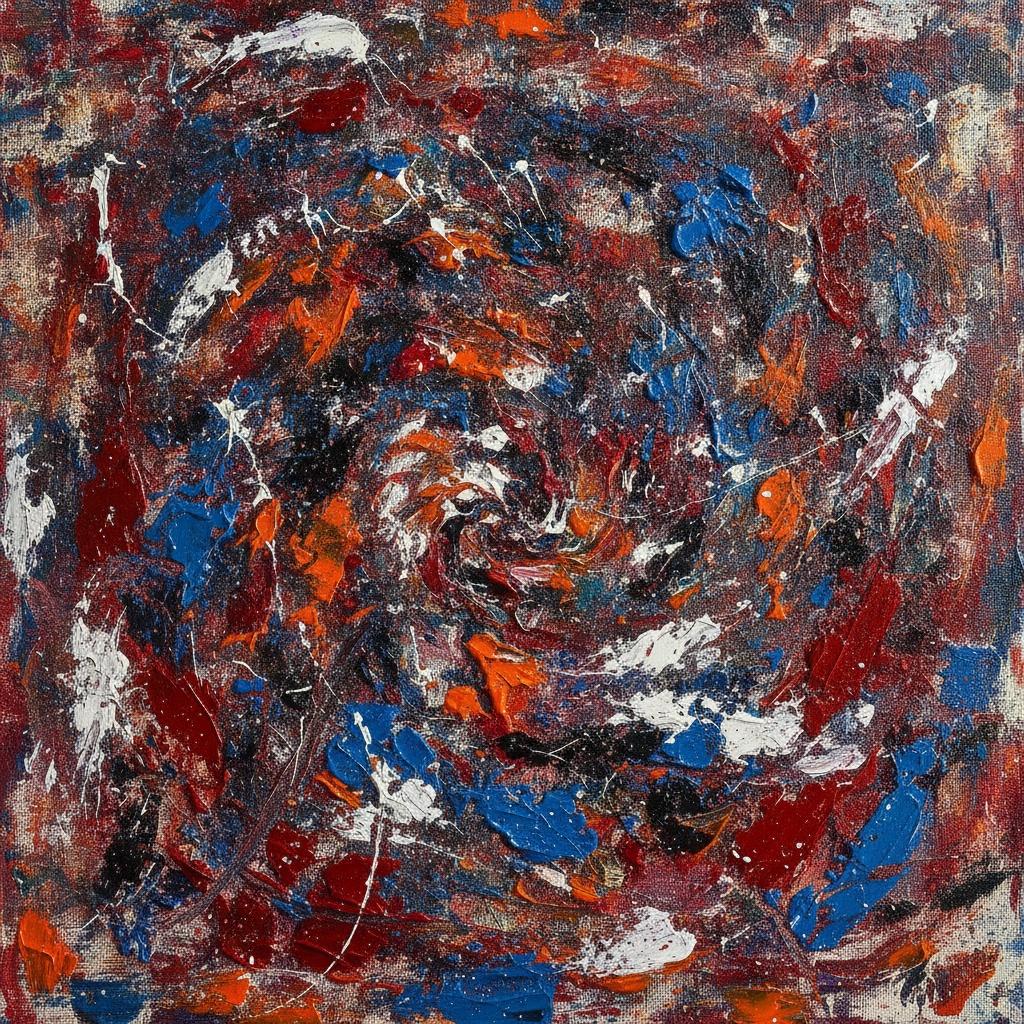
The Post-War Explosion: Chaos, Trauma, and the Birth of a New Visual Language
 Beyond Form: A Definitive Guide to the Emotional Power of Abstract Expressionism
The Post-War Rupture: Historical Context and the Birth of the New York School Abstract expressionism Abstract expressionism in the United States emerged as a distinct art movement in the aftermath of World War II and gained mainstream acceptance in t...
To understand Abstract Expressionism, you have to look past the beautiful chaos and see the wreckage of a world in flux. We aren't talking about a polite stylistic shift; we are talking about a seismic rupture. Emerging from the heavy, suffocating atmosphere of the post-World War II era, this movement was the visual scream of a generation grappling with unprecedented trauma and existential uncertainty. The old rules—the representational forms that tried to make sense of reality—had failed. How could you paint a recognizable landscape or a serene portrait when the collective psyche of humanity had been shattered by global conflict?
In the 1940s and 50s, the center of the art universe shifted from the traditional hubs of Europe to the gritty, electric streets of New York City. This was the birth of the New York School, a group of rebels who rejected the social realism of the previous decade in favor of something far more visceral. They turned inward, looking toward the subconscious and the raw, unedited impulses of the human spirit. Influenced by the psychological depths explored by Carl Jung, these artists sought to articulate what words could not: the anxiety, the passion, and the profound dislocation of a modern age. It was art stripped bare, liberated from narrative constraints, and fueled by an urgent need for individual freedom.
Action Painting: The High-Octane Energy of the Canvas as an Arena
Action painting, sometimes called "gestural abstraction", is a style of painting in which paint is spontaneously dribbled, splashed or smeared onto the canvas, rather than being carefully applied. The resulting work often emphasizes the physical act ...
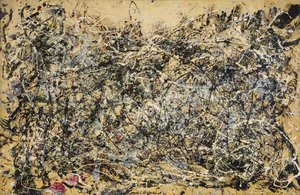
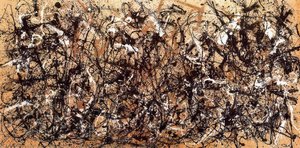
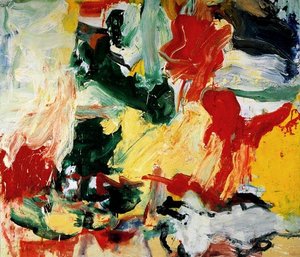
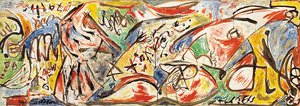
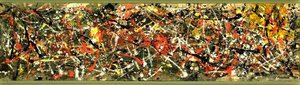
If you want to feel the pulse of this movement, you have to look at Action Painting. This isn't just a technique; it is a performance. Often referred to as gestural abstraction, this style treats the canvas not as a surface for a finished image, but as an arena in which to act. The critic Harold Rosenberg famously captured this essence, suggesting that the painting itself was merely the physical residue of a much more significant event: the act of creation.
Imagine the sheer kinetic energy required to execute such works. Artists like Jackson Pollock and Franz Kline didn't just apply paint; they danced with it. Through techniques like dripping, splashing, and smearing, the movement of the artist’s entire body became embedded in the work. There is a raw, unpolished intensity here that feels more like street art or a high-energy live performance than a traditional studio session. Every drip and every heavy, black stroke by Kline carries the weight of a physical struggle. This was gestural abstraction at its most extreme—a spontaneous, automatic outpouring where the process was just as vital, if not more so, than the final result.
Color Field Mastery: Finding Deep Resonance in Minimalist Intensity
Abstract Expressionist painters rejected representational forms, seeking an art that communicated on a monumental scale the artist's inner state in a universal ...
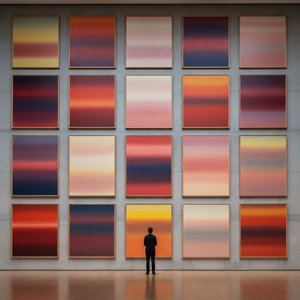
While some artists were busy turning the canvas into a battlefield of motion, others were exploring a different kind of power: the monumental stillness of Color Field painting. If Action Painting is a scream, Color Field is a deep, resonant hum that vibrates in your very bones. This approach moved away from the frantic gestures of Pollock and toward large-scale, immersive expanses of color that demand your full attention.
Think of the works of Mark Rothko or Clyfford Still. These aren't just paintings; they are environments. By utilizing massive canvases and layered, luminous tones, these artists created a sense of infinite depth. There is no focal point to distract you, no recognizable object to anchor your gaze. Instead, you are enveloped by color. This style seeks to communicate universal emotions—tragedy, ecstasy, doom—through the sheer weight of pigment. It is a meditative, almost spiritual experience that uses scale and saturation to trigger a primal emotional response, proving that sometimes, the most profound impact comes from the quietest intensity.
The Legacy of the New York School: From Street Vibe to Global Iconography
Neo-expressionism is a style of late modernist or early-postmodern painting and sculpture that emerged in the late 1970s. Neo-expressionists were sometimes called Transavantgarde, Junge Wilde or Neue Wilden ('The new wild ones'; 'New Fauves' would be...
The ripples of the New York School didn't stop at the edge of the canvas; they reshaped the entire visual landscape of the 20th century. The movement’s defiance and its embrace of subjectivity paved the way for everything that followed, from the aggressive textures of Neo-expressionism in the late 70s to the bold, graphic punch of Pop Art. The DNA of Abstract Expressionism is everywhere—in the way we use color to evoke mood in digital design, in the raw energy of contemporary street murals, and in the high-impact aesthetics of modern branding.
The movement proved that art could be a direct conduit for the human condition without needing to "look like" anything. It broke the boundaries between the artist's physical movement and the final object, creating a legacy of authenticity that continues to inspire collectors today. Whether it is the subtle power found in the grids of Agnes Martin or the heavy, oil-caked surfaces celebrated by critics like Clement Greenberg, the influence of this era remains an essential pillar of modern visual culture.
Modernizing the Edge: Bringing Abstract Energy into Contemporary Interiors
 Abstract Expressionism's 10 Defining Masterpieces |
Introduction To gaze upon these ten canvases is to step into a realm where emotion reigns supreme, where the very act of painting became a visceral outpouring of the human spirit. The Abstract Expressionist movement, born in the aftermath of World Wa...
In today's design-conscious world, bringing Abstract Expressionism into your space is about more than just decoration; it is about injecting visual impact and soul into your environment. For the urban professional or the design enthusiast, these pieces serve as powerful anchors for a modern interior. A large-scale, textured abstract piece can transform a minimalist room from cold to captivating, providing a focal point that sparks conversation and reflects a sophisticated, culturally literate taste.
The beauty of this movement lies in its versatility. You can pair the aggressive, dark strokes of a gestural work with sleek, industrial furniture, or let the soft, luminous layers of a Color Field piece harmonize with a bright, airy loft. At ArtsDot.com, we specialize in bringing this high-impact energy to your walls. We understand that you shop for visual impact and bold identity. Whether you are looking for a hand-painted oil reproduction that captures the thick, tactile impasto of a masterpiece or a high-quality print that brings a splash of color to a gallery wall, our mission is to make this legendary energy accessible. Elevate your space with art that doesn't just sit on a wall—it commands it.