
The Caribbean Soul: Pissarro’s Vibrant Origins and the Birth of an Eye
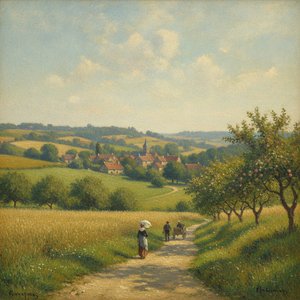 Camille Pissarro: A Visionary Journey Through the Heart of Impressionist Art and Light
From St. Thomas to Paris: The Diverse Origins of a Visionary Artist Camille Pissarro: Pioneer of Impressionism & Father of Modern Art – A Legacy Explored Early Life & Influences: From St. Thomas to Parisian Beginnings Jacob Abraham Camille Pissarro’s...
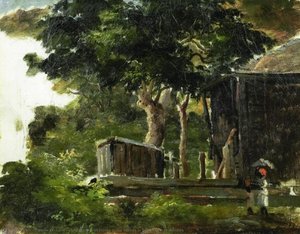
Before he became the steady hand guiding the Impressionist revolution, Jacob Abraham Camille Pissarro was a child of the tropics. His story does not begin in the muted, gray studios of Paris, but amidst the sun-drenched, multicultural warmth of Charlotte Amalie, St. Thomas. Born in 1830 within the Danish West Indies, Pissarro’s early visual vocabulary was written in the intense, rhythmic colors of the Caribbean. The vibrant light of his homeland, filtered through a heritage of Portuguese and French-Jewish lineage, instilled in him an early sensitivity to the nuances of the natural world that no Parisian academy could ever replicate.
This foundational period was far from academic; it was visceral. While his later life would be defined by the structured streets of France, his artistic soul remained rooted in the observation of raw, unadorned beauty. Even during his time working as a cargo clerk in bustling harbors, the movement of light on water and the energetic pulse of local life served as his first true subjects. This unique perspective—a blend of exotic luminosity and a deep-seated appreciation for everyday existence—provided him with a lens that was fundamentally different from his contemporaries, allowing him to approach the canvas with an eye attuned to the very essence of light.
Mastering the Moment: The Revolutionary Technique of Light and Atmosphere
 Impressionism
Impressionism was a 19th-century art movement characterised by visible brush strokes, open composition, emphasis on accurate depiction of light in its changing qualities (often accentuating the effects of the passage of time), ordinary subject matter...
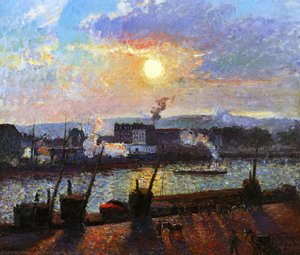
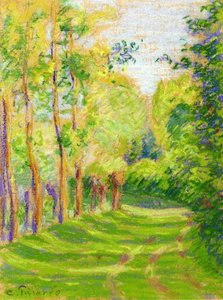
To step into a Pissarro landscape is to enter a world where color refuses to sit still. He was not merely a painter of scenes, but a master of the ephemeral. As a pioneer of plein air painting, Piss.arro abandoned the stifling constraints of the traditional Salon to work directly under the sky, chasing the fleeting transitions of dawn and dusk. His technique became a revolutionary language of broken brushstrokes and layered pigments, designed to capture the shimmering, atmospheric effects that define the Impressionist movement.
In masterpieces such as View of Rouen, one does not simply see a town; one feels the humidity of the river and the subtle gradations of tone across stone walls. Pissarro utilized a vibrant palette, often employing broken color to create a sense of luminosity that mimics the way light actually hits the human retina. He avoided the trap of precise, photographic representation, choosing instead to convey the impression of a moment. By layering colors rather than blending them into smooth, lifeless gradients, he achieved a tactile depth and a shimmering vitality that makes his works feel as though they are breathing on the canvas.
Rural Rhythms: Capturing the Essence of French Landscapes and Everyday Life
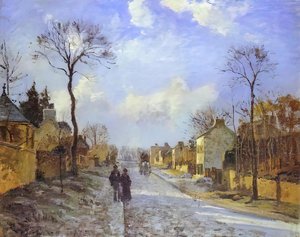 The Road to Louveciennes
A Moment of Leisure: Camille Pissarro's "The Road to Louveciennes" Camille Pissarro’s “The Road to Louveciennes” offers a serene glimpse into the heart of rural France, circa 1876. This captivating Impressionist landscape isn’t merely a depiction of ...
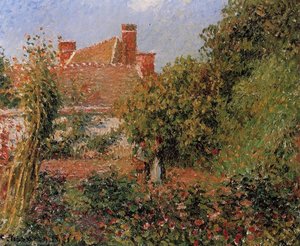
While many artists of his era sought grand historical narratives or dramatic, heroic subjects, Pissarro found divinity in the ordinary. His devotion to the rural landscapes of Pontoise, Louveciennes, and Éragny-sur-Epte transformed simple dirt roads and quiet village squares into profound meditations on human existence. In works like The Road to Louveciennes, there is a palpable sense of peaceful contemplation. He captures the quiet rhythm of life—a group of figures strolling along a dusty path, the movement of a horse, or the gentle sway of greenery—imbued with a dignity that requires no artifice or grandeur.
This commitment to the "common man" and the natural environment created an art that was both accessible and deeply moving. His landscapes are characterized by a harmonious composition where humanity and nature exist in a delicate, symbiotic balance. Whether depicting the lush greenery of La Cote du Jallais or the industrious spirit of a harvest, Pissarro’s work serves as a timeless record of the French countryside. He documented the changing face of the land with an unwavering sensitivity to tonal variations, ensuring that even the most modest scene was elevated to a level of poetic significance.
The Architect of Impressionism: Pissarro’s Influence on Modern Art Masters
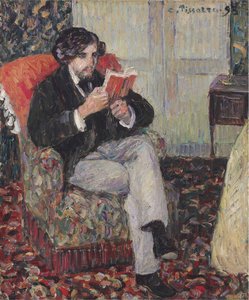 félix pissarro
Felix Pissarro: A Legacy Painted in Light and Shadow Felix Pissarro (1830-1903) stands as a cornerstone of Impressionism, inextricably linked to his father, Camille Pissarro, whose pioneering explorations of plein air painting profoundly shaped the a...
Pissarro’s importance in the canon of art history cannot be overstated; he was the "dean" of the Impressionist painters, acting as the vital glue that held a group of radical rebels together. His role was both technical and paternal. To younger legends like Paul Cézanne, he was a mentor—a man to consult, a figure of wisdom. Even the great Paul Gauguin looked to him as a master. Pissaxo’s ability to navigate the transition from the Realism of Courbet to the scientific precision of Neo-Impressionism alongside Seurat and Signac demonstrates an unparalleled artistic evolution.
He was the only artist to exhibit in all eight of the official Impressionist exhibitions between 1874 and 1886, a testament to his resilience and his unwavering belief in the movement's core philosophy. By fostering a community of artists who challenged the rigid hierarchies of the Academy, he paved the way for the birth of Modern Art. His influence flowed through the veins of Post-Impressionism, providing the structural and coloristic foundations upon which the next generation of visionaries would build their own revolutions.
From Canvas to Contemporary: Reimagining Pissarro for the Modern Collector
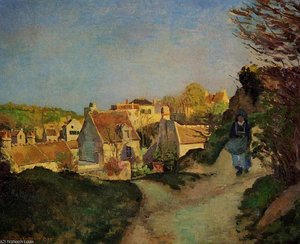 La Cote du Jallais, Pontoise.
Experience Camille Pissarro’s idyllic ‘La Cote du Jallais, Pontoise’ – a captivating Impressionist scene of rural life with a woman strolling along a dirt road amidst lush greenery and charming village details. Discover this beautiful artwork and bri...
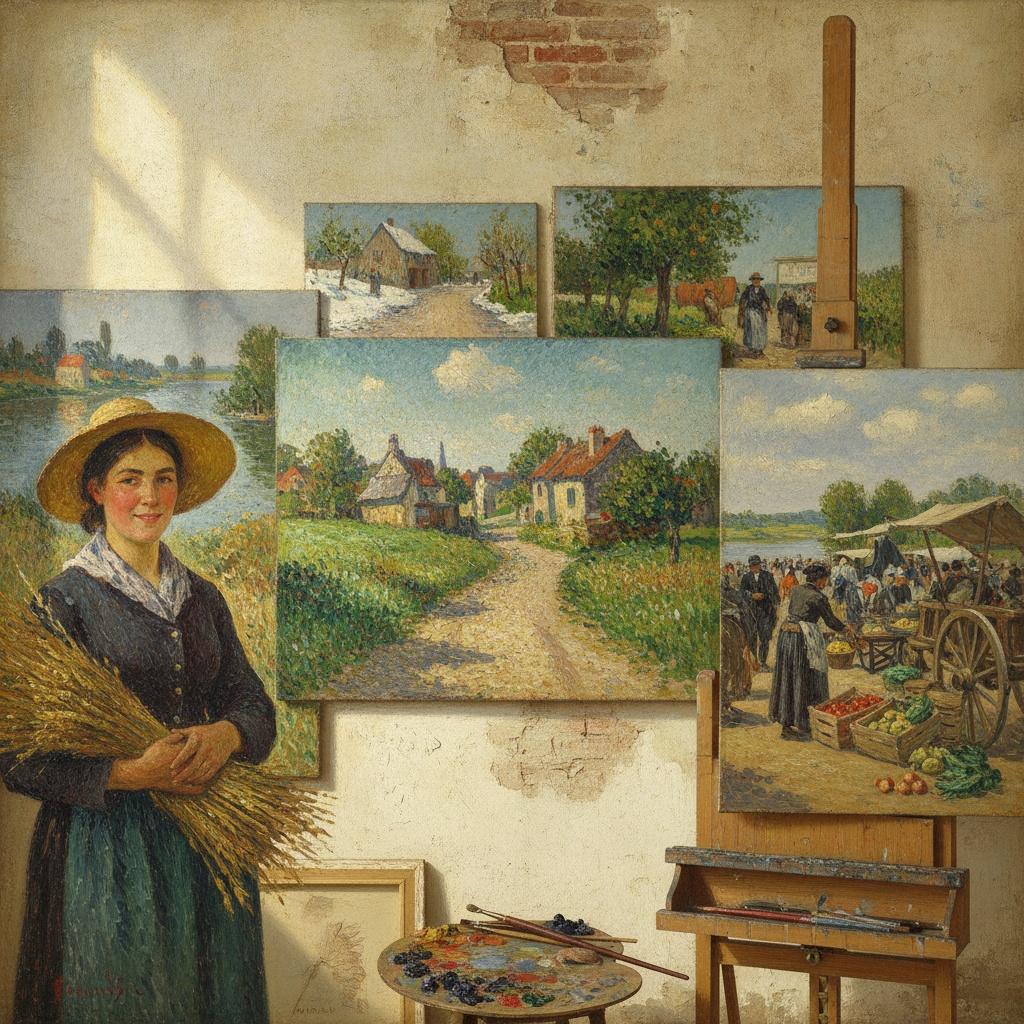
For the contemporary collector, Pissarro’s work offers more than just historical value; it offers a way to inject soul and light into the modern living space. In an era of digital saturation, the tactile depth of his hand-painted oil reproductions provides a much-needed connection to the physical world. At ArtsDot.com, we celebrate this legacy by allowing you to "remix" history. Imagine the impact of a large-scale, multi-panel Pissarro-style landscape spanning a modern architectural feature, or the ability to transform a personal memory into a masterpiece using his light-drenched, impressionistic technique.
Our service goes beyond mere copying; we offer a bridge between the 19th century and the 21st. Whether you are seeking a bespoke commission that captures a family milestone in the style of Pissarro or looking to curate a collection of high-impact, textured oils that command attention, our artists bring academic excellence to every stroke. We invite you to explore the intersection of historical mastery and contemporary design, bringing the vibrant, enduring spirit of Camille Pissarro into your home through meticulously crafted, museum-grade art.